|
|
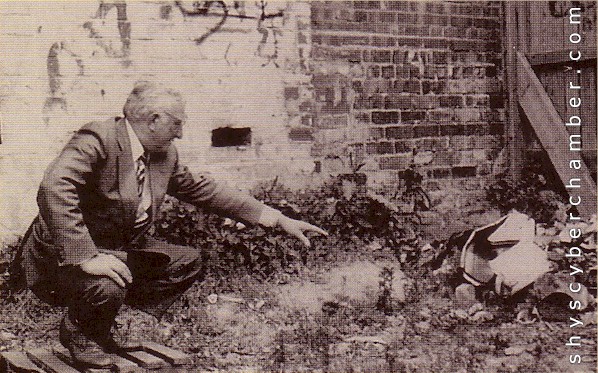
Jayne MacDonald had been dancing the
night away at Hofbrauhaus, a German-style 'Bierkeller' near Leeds city
centre. There she had fallen into conversation with 18 year old
Mark Jones, and they had left, along with some others, at 10.30pm.
Jayne suggested getting some chips, but by the time they had found
somewhere selling them and had eaten, she had missed her last bus.
The couple made their way towards the estate where Mark lived, so that
his sister might run Jayne home. The car was not there, and they
continued walking towards Chapeltown, the red-light district of Leeds,
and lay down in a school field until some time after 1.00am.
Then, having arranged to meet the following week, Jayne started
walking towards home.
As the Yorkshire Ripper cruised Chapeltown, his eyes alighted on a
young girl in a blue gingham skirt walking alone.
As Jayne emerged into the street lights of Chapeltown Road, she was
unaware that she was being watched from a white Ford Corsair.
She passed the Hayfield Pub, then turned left down Reginald Terrace,
one of the many side streets running off the main road. Parking
his car, the Ripper got out and began to follow the teenager on foot.
The first blow struck the back of her head with such force that it
sent her slumping to the ground. The Ripper dragged her away
from the well-lit pavement into a nearby adventure playground and,
shrouded in darkness, hit her twice more before savagely stabbing her
once in the back and repeatedly in the chest.
Her body was found seven hours later, when some children made their
way into the playground between Reginald Street and Reginald Terrace,
just a short distance away from her home. The police knew at
once with whom they were dealing - the trademarks were unmistakable.
The man who had become known as the Yorkshire Ripper had already
claimed four victims, all prostitutes. But this one was
different - Jayne MacDonald was just 16 years old, by far the
youngest of his prey, and there was no way she could have been
mistaken for a prostitute.
Jayne was a sweet-natured girl who had recently found employment in
the shoe department of a local supermarket. The MacDonalds were
a happy, hardworking family. Despite Chapeltown's seedy
reputation, the majority of its population consisted of ordinary,
working-class people.
The death of Jayne MacDonald caused a public outcry. Petitions
were circulated calling for the re-introduction of capital punishment
and graffiti urging 'Hang the Ripper' appeared in Chapeltown.
Through the North of England, women began to live in fear. |
 |
JEAN JORDAN :
Jean Bernadette Jordan was 21, a prostitute and the mother of two
young daughters. She lived in Manchester with her common-law husband.
She was known to other prostitutes who frequented the Nile and Reno Clubs and
the local pubs of Moss Side as 'Scottish Jean'. The Ripper's first victim
outside Yorkshire, her body was discovered in Moss Side on 10th October, a new £5 note which the Ripper had given her was found in a compartment of her
handbag five days later. It was the first real clue to the identity of the
Ripper. |
|
|
On Saturday, 1st October 1977, Jean
Jordan, a 21 year old prostitute, climbed into the red Ford Corsair
near her home in Moss Side, Manchester. She accepted £5 in
advance, put it in her purse and directed the driver to some land
between the Southern Cemetery and some allotments much favoured by
prostitutes.
A couple of paces from the car, a hammer was smashed down with massive
force on the woman's skull. The hammer struck her again and
again, the driver in an uncontrollable rage, bludgeoning her 11 times
in all. He then dragged her lifeless body into the nearby bushes
where he intended to continue the assault. But a car startled
him, so he cut short the attack and made a quick getaway.
Ten days later, an allotment owner found the mother of two's naked
body and rang Chorlton-cum-Hardy police station.
Her head and face were so mutilated that it would be impossible for
anyone to recognise her and there was no identifying evidence among
her scattered belongings.
Jean's common law husband reported her missing and she was eventually
identified from her fingerprints, which matched those on a lemonade
bottle she had held shortly before leaving home for the last time.
Forensic evidence later established that the vicious knife wounds were
inflicted at a later date than the hammer blows - at some point within
a few hours after the murder, the Yorkshire Ripper had returned.
On 14th December 1977, the Yorkshire Ripper headed for the red-light
district of Leeds once more. There he picked up the 25 year old
prostitute Marilyn Moore.
Marilyn Moore had been visiting a friend and had decided to do some
business on her way home. Well aware of the danger, she felt
uneasy when she got into the car, but the driver's friendly and
relaxed manner reassured her. He mentioned two other prostitutes
he knew by by name and was obviously familiar with the area, as he
suggested a quiet place a short distance away.
After stopping at Scott Hall Street, the man lured her out of the car
on the pretext of using the back seat. Once out of the car, he
hit her several times with a hammer. But she began to scream at
the same time as a dog began to bark. The Ripper fled. |
|
|
YVONNE PEARSON :
Yvonne Pearson, 22, was a prostitute and mother of two who lived in
Heaton, where she shared a flat with her boyfriend. However, at the time
of her murder their relationship was foundering. She was killed on 21st
January 1978, but her body was not discovered until two months later in Lumb
Lane, Bradford. The killer had returned to the scene of the crime to place
a Daily Mirror, dated a month after her death, under the corpse's arm. |
|
|
VERA MILLWARD :
Spanish-born Vera Millward was a 41 year old prostitute and a
mother of seven. She was murdered on the night of 16th May 1978 in the
grounds of Manchester Royal Infirmary. Arriving in Britain shortly after
the war, she worked as a domestic help. Later she lived with a Jamaican
man and resorted to prostitution to support her large family. On the night
she died, she had popped out from their flat in Greenham Avenue to buy a packet
of cigarettes and to obtain some pain killing drugs from the hospital to ease
her chronic stomach problem. |
|
|
Two months after Yvonne Pearson's body was found,
Vera Millward - a frail, prostitute who, because of her poor health, looked at
least 15 years older than her 41 years - died in a well lit part of the grounds
of Manchester Royal Infirmary on the night of 16th May 1978. The Ripper
had hit the mother of seven three times on the head with a hammer, then slashed
her across her stomach.
When a gardener discovered her body at 8.10am on a rubbish pile in the corner of
the car park the following morning, he thought at first that she was some sort
of doll. Her body was slumped against a fence, her shoes placed neatly on
top of the body. She was partly covered by a grey coloured coat and a
piece of paper was placed over her badly mutilated head.
Between the months of June 1977 and May 1978, seven women had been attacked,
leaving five dead and two horrifically injured. But just as quickly as the
killing spree had accelerated, it abruptly stopped. For the next 11 months
the Yorkshire Ripper inexplicably went out of circulation.
For Sutcliffe, those months were some of the most significant in his life.
His mother's health had been failing for some time and a move to a new home at
the beginning of 1978 failed to revive her. On 8th November 1978, the
woman who had been the centre-piece of Sutcliffe's life died.
Devastated, he slumped into a deep depression. Consequently, it was not
until the following April that he regained his desire to kill.
On the night of Wednesday 4th April 1979, however, the Ripper struck again, this
time in Halifax. There was no red-light district for him to cruise.
Instead he circled several times around a park in the town before he caught
sight of a woman walking on her own. |
|
|
JOSEPHINE WHITAKER :
Josephine Whitaker was 19 years old and a clerk at the headquarters
of the Halifax Building Society. She lived with her mother and stepfather
and two brothers in Halifax. She was murdered on 4th April 1979 in Savile
Park playing fields. |
|
|
Just before midnight, he got out of his car and
casually fell in step with 19 year old Josephine Whitaker. He spoke to her
briefly, asking the time and then, when she took a short cut across the Savile
Park playing fields to her home in Ivy Street, he smashed the back of her skull
with a hammer and dragged her into the shadows, away from the street lights.
When he heard voices and saw two people approaching, he left without slashing
the body - his usual trademark.
Her body was found early the next morning. As the police studied it, a 13
year old boy on his way to do his paper round wondered what all the fuss was
about.
As he approached the policeman, he spotted a tan shoe which he recognised as
belonging to his sister. He raced home, panic-stricken, to tell his
parents. His mother saw that Josephine's bed had not been slept in and
rang the police to tell them her daughter was missing.
Like Jayne MacDonald, Josephine had been a respectable girl who lived at home
with her family and worked as a building society clerk. On the night of
her death she had been on her way back home from her weekly visit to her
grandparents.
Some size seven Wellington bootprints were found near Josephine's body and
traces of milling grease and tiny metal particles were discovered in her wounds.
George Oldfield called a press conference to say he now had a good impression of
the killer; he was looking for 'an artisan or manual worker... with engineering
or mechanical connections'.
With the murder of Josephine Whitaker, the Ripper was letting women known that
he had not mistaken Jayne MacDonald for a prostitute - he would attack any woman
who dared to walk the streets after dark. Overnight, all women in the
North of England lost their liberty.
The local prostitutes continued to work but were now carrying knives, hatpins
and sharpened scissors for their protection. |
|
|
THE RIPPER'S
WEAPONS :
The Yorkshire Ripper used a daunting array of household tools as
murder weapons - the police eventually retrieved 30 in all. His favoured
instrument of attack, however, was a ball-pein hammer, which has one flat and
one round end, although he also used a claw hammer. The mutilations were
carried out with an assortment of carving knives, chisels, hacksaws and
screwdrivers - at least two of which had been sharpened at the tip - as well as
a wooden-handled cobbler's knife. |
|
|
The problem the police faced was that nobody could
get inside the Ripper's mind. Why was he killing - and why could he not be
caught?
The truth was that the man they were seeking did not seem - at first, anyway -
to fit the typical picture of a murderer. He was a polite and
mild-mannered man, a hard-working employee, a good son and a loyal husband who
loved nothing better than to tinker with his car at weekends.
There was little about him that would raise eyebrows - certainly not enough to
make anyone suspect that he was a serial killer. |
|
|
YVONNE
PEARSON'S CRIME SCENE :
Horsehair from this settee was stuffed in Yvonne Pearson's mouth,
while the settee itself hid her body for two months. |
|
|
The eldest of John and Kathleen Sutcliffe's six
children, Peter - even as a child - often wondered jokingly if John Sutcliffe
was his real father. After all, John was a self-proclaimed man's man, a
local boy-about-town, as well as a famed local footballer, cricketer and actor -
a man for all seasons.
Peter, by contrast, was small and weedy from the start, weighing just 2.3 kilos
(5 pounds) when he was born on 2nd June 1946. The sickly baby grew into a
puny and introverted boy who clung to his mother's skirts, following her
everywhere. Indeed, it was quiet and solid Kathleen who provided
round-the-clock stability, seven days a week.
Unlike the other Sutcliffe children, Peter never quite managed the art of
surviving daily life comfortably in the council estate world of Bingley, a
somewhat dour town just 10km (6 miles) north of Bradford along the Aire Valley.
Peter refused to play with the little boy who lived just a few houses away,
preferring to read or play at home near his mother. At St Joseph's RC
Infants and Junior School, his frail physique and shy manner marked him out as
an easy target for bullying. He made few friends and, by the time he moved
on to Cottingly Manor Secondary School in 1957, the bullying had become so bad
that he once played truant for two full weeks, hiding in the loft of the
family's home.
Peter was considered the most intelligent child of the family, but he
nevertheless failed his 11-plus exams. When he left school at the age of
15, traditionally the cross-over point into manhood, Peter still confounded his
family. |
|
|
THE ROYAL
STANDARD :
Peter first met Sonia in the disco of the Royal Standard in
Bradford. Later, they were often seen to be kissing and cuddling in a
corner of the bar. |
|
|
Kathleen arrived in the bar believing she had a assignation with her boyfriend,
only to be forced by her husband to show the whole family the new nightdress she
had bought for the occasion.
Peter was devastated by the revelation. Yet, having discovered earlier
that Sonia had had a secret boyfriend, Peter indicated to his father that he
understood how he must have felt. For his part, John Sutcliffe came to
believe that the traumatic discovery of his mother's affair may well have
triggered off the Ripper inside his son.
'It shook him rigid. He worshipped his mother and I think now that what I
did turned his mind,' he remarked some time later.
One psychiatrist involved in the case agreed, explaining that Sutcliffe's
mother's affair could have propelled him into an acute psychotic state. |
|
|
PETER &
SONIA :
Peter Sutcliffe and his wife Sonia. After they were married they
went to live with Sonia's parents in Tanton Crescent, Bradford.
When he was just 23 years old, Peter Sutcliffe had his first
encounter with a prostitute - an incident that led him to become one of
Britain's most infamous and vicious, serial killers. |
|
|
In 1969, Peter Sutcliffe's long-term relationship
with his future wife, Sonia, was suddenly threatened when he discovered that she
was seeing another man. Overwhelmed with jealousy and desperate to even
out the score, he decided to seek out a prostitute in Bradford's red-light
district. But this first encounter was to repel him and give birth to an
inner rage that would eventually lead to multiple murder.
Having agreed to pay her £5 for sex, Sutcliffe handed the girl a £10 note.
But when she never returned the change, he felt 'cheated and duped'.
That same year, Sutcliffe carried out his first attack, hitting a prostitute
over the head with a heavy stone in a sock. When she reported it to the
police, he was let off with a warning. But his next encounter with the
police led to a fine, after he was found lurking in a garden in possession of a
hammer. He was charged with being equipped to steal and later fined £25 -
but Sutcliffe had a quiet different purpose for the hammer in mind. |
|
|
PETER
SUTCLIFFE'S IN LAWS :
Peter and Sonia joined her parents on a holiday in Czechoslovakia
in late 1975 after visiting Rome on the way.
Peter and Sonia's marriage
certificate was drawn up on 10th August 1974. The couple had finally
decided to marry after an eight year long courtship. Neither was a
churchgoer, but Sonia had once been impressed by a Baptist wedding service, so
the couple decided to have one too. |
|
|
Over the next six years, Sutcliffe's obsession
with wreaking revenge on prostitutes was outweighed by his relationship with
Sonia. Although she had ended her affair, their relationship was tested in
a new way, when in 1972 she began having a nervous breakdown that she did not
truly recover from until 1976.
It was largely due to Sutcliffe's loyalty and attentiveness that she managed to
pull through the worst of her illness, and his support won him the respect of
her family. The couple were finally married in 1974 but, a month before
their first anniversary, Sutcliffe made his first serious attack.
On Friday 4th July 1975, Anna Rogulskyj left her home in Highfield Lane,
Keighley, after an argument with her boyfriend and went to a pub in Bradford.
She returned home later, still angry, and at about 1am decided to look for him
at his flat nearby. But despite her banging on his door - and putting her
shoe through a window in frustration - he did not answer.
As Anna headed back home, Sutcliffe struck her on the back of the head three
times with a ball-pein hammer. He then raised her blouse and slashed her
stomach. But, just as he was about to stab her, he was frightened off.
She was found an hour later and taken to Leeds General Hospital. Her
injuries were so bad that she was read the last rites. But, after a 12
hour emergency operation on her brain, Anna Rogulskyj survived.
Fortunately for Sutcliffe, however, the operation, which had involved removing
minute bone splinters from her brain, had also effectively erased any
recollections of her attacker. |
|
|
TREVOR
BIRDSALL :
Peter Sutcliffe's close friend and drinking partner, Trevor
Birdsall, was with Peter just prior to the attack on Olive Smelt. He later
confided in his wife, Melissa, that he suspected Peter of being the Ripper. |
|
|
Six weeks later, Peter Sutcliffe and his long-time
drinking companion, Trevor Birdsall, made one of their frequent drinking trips
from Bradford to the Royal Oak in Halifax. After several drinks, they were
on their way home when Sutcliffe spotted Olive Smelt, a 46 year old office
cleaner, who had been in the same pub.
Sutcliffe left Birdsall in the car and followed the woman down an alleyway.
He overtook her and, after turning round to make some off-hand remark to her
about the weather, he struck her twice on the back of the head. As she lay
on the pavement, he slashed her across the back, but was again disturbed by a
passerby and returned to the car.
When Birdsall read about the attack in the paper the next day, he guessed that
Sutcliffe had been the assailant but, as his loyal friend, said nothing.
Like Anna Rogulskyj, Olive Smelt survived. But the attacks were not linked
initially, and it was to take more than three years for the police to
acknowledge that they were the work of the Yorkshire Ripper. By then,
Sutcliffe had become a multiple murderer.
After returning from a summer holiday with Sonia and his in-laws in
Czechoslovakia and Italy, Sutcliffe attacked a 28 year old prostitute from
behind on 30th October 1975. He lifted his hammer and brought it down
sharply onto the back of her head. He then struck for the second time,
shattering her skull and killing her. Instead of running from the dead
body, he took out a knife and stabbed it 14 times in the stomach and chest.
This was Sutcliffe's first murder. |
|
|
WILMA MCCANN :
A 28 year old Scot and mother of four, born in Inverness, she had moved in
1970 to Leeds to be close to her brothers. Wilma McCann was often drunk,
and had faced convictions for theft and disorderly conduct. |
|
|
The next morning Wilma McCann's body was found on the bleak playing fields just
off Harrogate Road, Leeds, by a milkman on his rounds in Chapeltown. As he
peered through the early morning mist, he saw a shapeless bundle lying on the
frosted grass. Wilma McCann was sprawled face upwards on the ground, her
hair matted with blood, her body exposed. Her jacket and blouse were open,
her bra was pushed up and her trousers pulled down below her knees.
The previous night, Wilma McCann had put on her
favourite outfit - a pink blouse, white flares and dark blue bolero jacket.
At 7.30pm she left the house, telling her oldest daughter, Sonje, to keep the
three younger children in bed and the front door locked. She had always
liked a good time and a drink and set off on a tour of a few of her favourite
pubs. She was seen coming out of a nightclub at about 1am, carrying a
carton of chips and curry sauce. She took a lift from a stranger and was
never seen alive again.
She died just steps from her home. There seemed to be no sexual motive for
her murder but her purse, the clasp bearing the word 'Mumiy' which had been
inscribed by her daughter, was missing. In the absence of any other
motive, the police treated her killing as a callous by-product of robbery.
In fact, it was the first in a long line of vicious killings that was to strike
fear into the hearts of women in the North, particularly those who lived and
worked in the Chapeltown area.
While the death of Wilma McCann was being dismissed as an isolated incident, 42
year old Emily Jackson carried on life with her husband and three children in
the respectable Leeds suburb of Churwell, 9km (5 miles) to the west of
Chapeltown. |
|
|
EMILY
JACKSON :
Emily Jackson was a 42 year old part time prostitute. Outwardly she
maintained a respectable appearance, living with her husband, Sydney and three
children in Churwell, west of Leeds. In 1971, one of their sons had died
from a fall at the age of 14. |
|
|
It was early in the evening of 20th January 1976 when Emily and her husband
arrived at the Gaiety public house on the Roundhay Road, a well known watering
hole for Chapeltown prostitutes and their would-be clients. Within minutes
of their arrival at the pub, Emily, a part time prostitute, left her husband in
the main lounge and went looking for business. At closing time, Mr
Jackson, still alone, drank up and took a taxi home, assuming that his wife had
found a man for the night.
It was still dark the next morning when a worker
on early shift noticed a coat on the ground, not far from the Gaiety pub.
Underneath lay Emily Jackson's body. She was lying face down with her
breasts exposed but her knickers still in place. Like Wilma McCann, she
had been dealt two massive blows to the head with a heavy hammer. Her
neck, breasts and stomach had been lacerated with stab wounds, but this time the
killer had stabbed at her body over 50 times with a Philips screwdriver.
In the autumn of 1976, Peter Sutcliffe had secured a new job which was to afford
him good opportunities to extend his travels and to carry on killing without
suspicion from his wife. As a lorry-driver witch Bradford engineering firm
T & W H Clark, it was expected that he would work long, irregular hours and
travel across the country. His bosses were more than delighted with his
manner and work, finding him meticulous and courteous. The job suited
Sutcliffe too. It gave him more scope and a new freedom to kill. |
|
|
IRENE
RICHARDSON :
A 28 year old Scot who had separated from her husband and taken up part time
prostitution to make ends meet, she was the mother of two daughters who had been
fostered a month before her death. |
|
|
Like Emily Jackson, Irene Richardson was a part
time prostitute living a precarious existence in a squalid rooming house in
Chapeltown. On the evening of Saturday 5th February 1977, she left her
room half an hour before midnight to go dancing. The next morning, a
jogger was making his way across Soldier's Field, a public playing field, when
he saw a body on the ground behind the sports pavilion.
When the police arrived, they found a sickeningly familiar scene. Irene
Richardson had received three massive blows to her head, shattering her skull
like an egg-shell. Her skirt was pulled up, but her coat had been draped
in pointless propriety over her buttocks. Her calf-length boots had been
removed from her feet and now lay neatly on her thighs. In awful contrast
to this decorum, her neck and torso had been peppered with savage knife wounds
and her stomach had been stabbed so viciously that her intestines spilled out.
A postmortem indicated no sign of sexual intercourse and that she had died only
half an hour after she had left her lodgings. |
|
|
PETER
SUTCLIFFE :
When Sutcliffe took a job as a long-distance driver in 1976, he found himself
in a position where he could murder with ease. This publicity shot, with
Sutcliffe behind the wheel, was used on a works calendar. |
|
|
After the murder of Irene Richardson, there could be no denying that serial
killer was on the loose. As details of her death came to light, the
Yorkshire media were not slow to draw parallels with that other woman-killer who
still stalks police files and the public imagination - Jack the Ripper.
The unknown murderer of Wilma McCann, Emily Jackson and Irene Richardson had now
been given a name - the Yorkshire Ripper.
Patricia 'Tina' Atkinson was a Bradford girl who
lived just around the corner from Oak Lane. She counted herself lucky that
she did not have to ply the increasingly dangerous car trade. Instead she
could work out of her own flat where she lived, alone, after her divorce.
She was attractive, slim and dark haired, and there was no shortage of clients
visiting her. The Leeds murders had sent a shiver of fear through the
working girls in Bradford. But two months had passed since Irene
Richardson's body had been found. Besides, the Ripper had only struck in
Leeds. Tina Atkinson felt she had little to worry about. |
|
|
 PATRICIA
'TINA' ATKINSON :
'Tina' Atkinson was a 32 year old prostitute who had married an Asian
immigrant, Ray Mitra, in the early 1970's. But he later filed for divorce,
taking custody of her three daughters. She was the only victim to be
killed at her home, where she openly plied her trade. |
|
|
On 23rd April 1977, Tina was planning a night out
at her local bar, the Perseverance. It was a pleasant spring evening.
Dressed in her favourite black leather jacket, blue jeans and a blue shirt, she
had a good drinking session with her friends, reeling out at about 10pm to make
her way to another local haunt, the Carlisle pub on nearby Lumb Lane.
It was on her way back from the Carlisle that her path crossed that of the
Yorkshire Ripper. She had barely set foot in her flat when Sutcliffe
lunged at the back of her head, hitting her four times with the full weight of
his hammer. He then flung her on to the bed and plunged a knife into her
stomach seven times.
She was not seen all the next day, and people assumed she was sleeping off the
previous nights excesses. But, the following evening, friends dropped
round and found the door to her flat unlocked. When they entered, they
found her mutilated body on the bed, shrouded in blankets. But what most
interested police this time was a clue in the shape of a size seven boot print
on the bottom bed sheet - identical to the print that had been found on Emily
Jackson's thigh. |
|
|
PETER
SUTCLIFFE :
To those who met him, Peter Sutcliffe came across as an obliging, courteous
man who never lost his temper. But festering inside was a sadistic serial
killer. |
|
|
In his youth, Peter Sutcliffe was a quiet, shy boy. He
wasn't aggressive, resentful or irresponsible - in fact, he showed
characteristics that are the very opposite of the type of personality that
psychiatrists would normally associate with sexual aggression and murder: he was
invariably meticulous, courteous and thoughtful, as well as being a hard worker.
Due to his gentle disposition, it was practically impossible to provoke him into
anger or to make him assert himself. As if to underpin his shaky
self-confidence, he became preoccupied with riles and procedures. He was,
in short, a conformist who would always toe the company line. So how did
he develop into the maniac who smashed women's skulls and then repeatedly
stabbed them?
The Sutcliffe home was no place for a sensitive boy like Peter. His father
was a dominant extrovert and his brothers shared many of their father's 'manly'
characteristics.
The atmosphere was heavy with sexuality - even Peter's mother, a reserved,
down-trodden woman, had an extramarital affair.
A certain degree of criminality was also condoned; Peter's father, John
Sutcliffe was arrested for breaking and entering, one of his brothers was always
in and out of jail, and some of his friends were burglars.
As a matter of survival, the acutely shy boy began to develop qualities that
would make him less of a misfit. He did body-building, drove at high speed
through built-up areas and started to frequent pubs on a regular basis. He
also boasted of sleeping with prostitutes, which was almost certainly a fantasy.
He was, however, morbidly fascinated by the whole idea of women selling their
bodies for money, and found it hard to believe they charged so little for an act
that held him in awe. The truth is that he was too shy to approach them.
It was probably Sonia's affair in 1969 that breached this shyness and started
the chain of events that led him towards serial killing. |
|
|
INVESTIGATION BLUES :
Northern England was in the grip of Ripper fever as he left a trail of
blood and not much else. He was running rings around the police
and the events of the summer of 1979 did nothing to help - on the
contrary, they led the police on a wild goose chase. |
|
|
In an agony of jealousy, he tried to avenge himself by having sex
with a prostitute. It was a disaster. He failed to get an erection
and the prostitute not only swindled him out of £5, but humiliated him later
when he met her in a pub by telling the rest of the customers what had happened.
For an oversensitive person who set so much store by his hard-earned masculine
image, such a loss of face was deeply bruising; it also stirred all his
childhood insecurities about being inadequate. He became fixated on the
idea of revenge. One day, while eating fish and chips in a friend's van,
he thought he saw the prostitute who had swindled him and attacked her by
hitting her on the head with a stone that he kept in a sock - apparently just in
case he should meet her again.
After this incident he kept out of trouble for five years, although his
obsessive hatred of prostitutes did not subside. He sometimes approached
women he thought looked like prostitutes and asked them crudely if they were 'on
the game'. If they were, he would ask how much they charged and then,
driving off, would jeer 'Is that all you're worth?' It was totally
uncharacteristic behaviour, but seeping hatred was turning him into a dual
personality.
This aggressive self-assertion was like a balm to Sutcliffe's fragile ego.
But it was only a matter of time before the verbal attacks were to become
physical - and Sutcliffe turned to killing.
Despite the fact that the majority of his attacks were not overtly sexual, it is
highly likely that Sutcliffe found the act of assaulting and mutilating his
victims provided some sort of intense sexual release.
By the time Sutcliffe turned his attention from prostitutes to 'respectable'
women, he had become addicted to sadistic assault. He had tapped into the
part of his psyche where, even though it was for the briefest of moments he
could rise above the blandness of his everyday personality.
Attached to the back of the can of his truck was a notice in Sutcliffe's
handwriting: 'In this truck is a man whose latent genius if unleashed
would rock the nation, whose dynamic energy would overpower those around him.
Better let him sleep?' This is a clear description of the power he felt
when he killed. |
|
|
IN THE FRAME :
By the end of 1977, five of the eleven women Sutcliffe had attacked had
survived. Each tried to provide a description of her attacker. Olive
Smelt, attacked in August 1975, described him as aged about 30, 5 foot, 10
inches tall (1.78cm), with a beard. But detectives failed to confirm a
link with the Ripper until three years later.
In May 1976, Marcella
Claxton described her attacker as having a black, crinkly beard. But her
statement was treated with scepticism, not least because the police considered
her to be unintelligent. Then a year later, Maureen Long described him as
a man of about 36, over 6 foot tall (1.83cm), with big hands and collar length
hair.
The photofit that Marilyn
Moore produced in December 1977 was uncannily close, but not close enough, as
the police insisted that no reliance should be placed upon this kind of
evidence. There were also identifications offered by the public. The
result was that |
|
|
Another explanation for Sutcliffe's urge to kill was that he was
insane. His claim that he had been following instructions from God to
clear the streets of prostitutes led three psychiatrists who examined him before
the trial to diagnose him as a paranoid schizophrenic.
The problem with diagnosing this illness is that the symptoms are relatively
easy to feign. In Sutcliffe's case, it was not until he had several
interviews with psychiatrists, after two months of custody, that he made his
claim about the voices. He never once mentioned his divine mission to
friends or family, and he also killed women who were clearly not prostitutes.
Furthermore, Sutcliffe had experience the symptoms of schizophrenia through
Sonia when she suffered her nervous breakdown. She talked of being the
second Christ and of feeling pain in her hands as a result of being nailed to
the cross.
Maybe, as the prosecution would maintain, Sutcliffe deliberately tried to
mislead the doctors about his mental condition. But after he was sent to
prison he suffered rapid mental deterioration, and it soon transpired that he
really was experiencing hallucinations and delusions.
Those who believed that Sutcliffe was not mad at the time of the killings argue
that he lost his sanity after the trial because of the stress of prison.
But paranoid schizophrenia is not believed to be caused by stress, whereas
relapses of the illness are. So it may have been possible that Sutcliffe
was slipping in and out of madness during his five year killing spree.
On one occasion, many years previously, while drinking in
a pub, Sutcliffe suddenly appeared to go off in a trance. Oblivious to all
around him, he grabbed his glass, stuck it up in the air, then brought it
violently down on the table in front of him, soaking a man standing nearby with
bear. In retaliation, the man poured his beer over Sutcliffe, who did not
so much as flinch and never mentioned the incident again.
The parallel between the action of raising the glass and smashing it down and
the hammer blows to his victims' heads seems to reinforce the possibility that
Peter Sutcliffe suffered from temporary hallucinations. Perhaps they
occurred in the form of a seizure or trance, leaving him relatively normal
between episodes, but making him highly dangerous while they lasted. |
|
|
DO YOU RECOGNISE THIS HANDWRITING :
Clues to identify the killer were few and far between, when the police received
letters claiming to be from the Ripper. Would they provide a breakthrough
or were they a hoax? The first two letters weren't taken seriously but
when a third letter arrived it contained details that indicated it could,
perhaps, be genuine. |
|
|
It had become clear to police and public alike that the Yorkshire Ripper could
no longer be perceived as a selective killer. His victims were apparently
chosen at random and now included an 'innocent' teenage girl from a respectable
family. Understandably, the public hue and cry was deafening, demanding
immediate action. The effect on the investigation was galvanizing.
With the death of Jayne MacDonald in June 1977, the investigation took a
dramatic twist. Up until now, each murder had been investigated on an ad
hoc basis, with a different investigating officer allocated to each case,
according to where the murder took place. It was then up to the Ripper
Room in Millgarth to establish any common links that came to light. At
this point, Ronald Gregory, the Chief Constable of West Yorkshire, appointed his
most experienced detective to lead the biggest murder inquiry the country had
ever known. The man brought in to head the operation was George Oldfield.
A detective for most of his 31 years in the force, Oldfield removed from his
desk-bound job as West Yorkshire's Assistant Chief Constable. From day
one, Oldfield made it clear that he was willing to stake his considerable
reputation on the case and immediately set about recognising the inquiry's
resources. With a renewed sense of purpose, the police interviewed almost
700 residents in 21 streets in the immediate vicinity of Reginald Terrace, where
Jayne MacDonald's body had been found, and took 3500 statements, many of them
from prostitutes. After a fortnight, however, the leads began to dry up.
Nevertheless, Oldfield remained outwardly buoyant, and two days after Maureen
Long, miraculously survived an onslaught at the hands of the Ripper in the early
hours of 11th July 1977, he informed a press conference that 'the investigation
is beginning to bubble', and implied that the police were close to a
breakthrough.
Oldfield's claim was beginning to sound hollow when, three months
later, the police stumbled on the first major lead since the boot print clues.
Five days after the mutilated body of Jean Jordan was discovered in Manchester
on 10th October 1977, the local police found her handbag with a bran new £5 note
neatly folded in an inside pocket. They were convinced it must have been
given to her by the killer. |
|
|
HELP US CATCH THE RIPPER :
The campaign included a special 'Ripper' newspaper with information about the
murders. The paper also contained a number of key questions that, if
answered, might have identified the killer. An appeal was also made to
employers to come forward if any of their staff had been in Sunderland on
specific dates. |
|
|
The discovery of the note breathed new life into the flagging
investigation. Within hours, Chief Superintendent Jack Ridgeway - in
charge of the Manchester CID - had contacted the Ripper Room across the Pennines
and established that they were hunting for the same man. With George
Oldfield's blessing, Ridgeway set up his own team of investigators and launched
a campaign to trace the batch of
£5 notes from which the one in police possession originated.
The Bank of England traced the note to one of a batch issued by the Shipley
branch of the Midland Bank four days before Jean Jordan's death. The batch
had been used as payroll for 30 local businesses, who between them employed
about 8000 people. Undeterred, the Manchester Police set about
interviewing them all. Working steadily through the list of names, the
police arrived at the Sutcliffe's home in Heaton a month after Jean Jordan's
death. Peter Sutcliffe had received a wage packet from T and W H Clark
just days before the killing. Helpful and courteous, Sutcliffe told the
policemen that he had stayed in on the night of the murder and had gone to bed
around 11.30pm.
When asked about his whereabouts on the night the Ripper
revisted the murder scene, eight days later, Sutcliffe was able to claim that he
was hosting his own housewarming party. Sonia supported both these stories
and, later, Sutcliffe's mother confirmed that he had driven her and John
(Sutcliffe's father) back to their home in Bingley. The detectives left,
satisfied that Sutcliffe had water-tight alibis, and filed a five paragraph
report clearing his name.
Six days later, on 8th November, he was interviewed again,
this time by two different policemen. Sutcliffe and Sonia replied as
before and even consented to the house being searched. Nothing was found.
With the discovery of Yvonne Pearson's body on 26th March,
public disquiet about the lack of progress was putting increasing pressure on
the police 'to do something'. Partly in response
to this, a special Ripper Squad, consisting of 12 crack detectives was set up at
Millgarth in Leeds to centralise the hunt. The man in charge, who was
appointed special assistant to George Oldfield, was Detective Chief
Superintendent John Domaille.
At the same time, a surveillance operation mounted in the
red-light districts of West Yorkshire towns to interviews owners of cars spotted
regularly in these areas. By August 1978, Sutcliffe's red Corsair car had
been seen in Lamb Lane in the Manningham area of Bradford on seven occasions.
On 13th August, three months after Vera Millward had become the Ripper's ninth
victim, the police paid Sutcliffe a third visit. |
|
|
HELP US STOP THE RIPPER FROM KILLING AGAIN :
Advertising hoardings appealing for help from
the public appeared on walls throughout the Ripper territory, in a further
attempt by the police to catch the killer. |
|
|
The interviewing officer, unaware that Sutcliffe had already been
questioned ten months earlier about the
£5 note, accepted Sutcliffe's explanation that he
regularly travelled through the area on his way to work - again, confirmed by
Sonia - and, with no other grounds for suspicion, the officer left satisfied.
On the fourth occasion - 23rd August - Sutcliffe was question about the tyres on
his car. The police were checking treads that might match tracks first
identified at the scene of Irene Richardson's murder, back in February 1977.
As usual, Sutcliffe was accommodating and unruffled, betraying absolutely
nothing.
By the end of April 1979, the Ripper's rampage had been going on three and a
half years. Ten women were dead, Josephine Whitaker, his last victim,
having perished in Halifax at the beginning of the month, and the police were
still no nearer to finding him. In fact, they were sinking further and
further into a morass of conflicting information, media-perpetrated myth and
conjecture. As the killings became more indiscriminate, so the
investigation was being suffocated by the sheer volume of mounting paperwork.
Cruelly, just when it seemed that the luck of the investigation team could get
no worse, it duly did. On the morning of 18th June 1979, a buff-coloured
envelope, containing a black cassette tape, landed on George Oldfield's desk.
When Oldfield placed the tape in a recorder and switched it on, a flat Geordie
(Tyneside) voice filled the room. The message, purporting to be from the
Ripper himself, taunted Oldfield for his lack of progress.
The tape had not arrived unheralded. In March 1978, two anonymous letters
were sent from Northeast England to destinations in Yorkshire. They were
posted in Sunderland five days apart. One was addressed to George
Oldfield, the other to the northern office of the Daily Mirror. Signed
'Yours respectfully, Jack the Ripper', the letters were initially discounted as
the work of a hoaxer because they had been written after Yvonne Pearson's
disappearance, but before her body was discovered, and the writer had given the
wrong number of victims. The letters were allowed to disappear into the
obscurity of the filing system.
Almost exactly a year later, a third letter arrived. It had been posted to
catch the 1.45pm collection in Sunderland on 23rd March 1979. Handwriting
experts confirmed that the same person had written all three letters. The
third letter made it clear that the next victim might possibly be in Bradford's
Manningham area, but definitely not Chapeltown as it was 'too bloody hot there'
because of the efforts of the 'curserred coppers'. The bizarre language,
and the general cast of the letters - so close to the gleeful sadism of the
original Ripper's taunting notes in the last century - rang warning bells in the
minds of some of the police. Unfortunately, these were muffled by the
clamour to find the lead that would break the case open.
For George Oldfield, the third letter was significant as it mentioned the fact
that Vera Millward had recently received medical treatment at the hospital in
the grounds of which her body was found. He believed, wrongly and fatally
that this information could only have come from Vera herself. It had, in
fact, been published in the Daily Mail at the time of her death. A
re-reading of the second letter, sent two months before Vera was killed, made
reference to targeting an 'older one'. On this basis, the West Yorkshire
Police made a breathtaking leap and concluded that the writer was the Ripper.
George Oldfield called a press conference, and the Sunderland theory was aired
for the first time. He also revealed that traces of engineering oil had
been found on one of the letters, similar to traces found on Josephine
Whitaker's body. The public was asked to come forward with any information
they had about anybody who might have been in Sunderland on the days the letters
were posted. For the first time, the response was overwhelming.
Although the envelope in which the tape was sent was in the same hand writing as
the 'Geordie' letters, George Oldfield wanted to keep the tape from the public
scrutiny for a while. In probably his last concession to objectivity, he
was concerned that it could still be a hoax. But his superior, Chief
Constable Ronald Gregory, thought that such a distinctive voice would be easily
identified if the public were allowed to hear it. Two days later, news of
the tape and its contents had somehow seeped through to the press. The
international media machine was about to swamp George Oldfield. |
|
|
BARBARA LEACH'S CRIME SCENE :
Detective Chief Superintendent Jim Hobson and Assistant Chief Constable George
Oldfield examine the ground at the scene of Barbara Leach's death. |
|
|
At a hastily called press conference the world's press crammed
into the modest lecture hall at the police detective training school in
Wakefield. Oldfield's career and the reputation of his force was on the
line. He seemed to regard the Ripper's outrages as a personal challenge to
him and was grimly determined to defeat his opponent. The press conference
announced the start of a huge publicity campaign. The public could dial in
and listen to the Geordie Ripper tape in the hope that someone, somewhere, might
recognise his voice. Within a few days of the press conference and
publication of the tape, more than 50,000 calls had flooded in.
Meanwhile, Oldfield decided to bring in two language experts from Leeds
University - Stanley Ellis and Jack Windsor Lewis. After six painstaking
weeks they were able to verify the accent as genuine Wearside, pin-pointing it
to Castletown, a small suburb of Sunderland.
The West Yorkshire police moved in - 11 detectives were installed in a
Sunderland hotel and 100 officers in the town prepared to get their man.
Media coverage reached saturation point. In theory, it should have been
only a matter of time before the Geordie Ripper was found. The police were
moving through a very small town - only 4000 people lived in Castletown - and
with a very fine toothed comb.
But as the investigation failed to uncover the Ripper, men less emotionally
involved in the case than Oldfield began to acknowledge that the Geordie Ripper
was a cruel hoaxer who knew he would not be discovered because he had a
cast-iron alibi for all the relevant times. Northumbria police, never
entirely convinced, made their doubts public.
Despite the mounting reservations, the Chief Constable of West Yorkshire issued
a Special Notice instructing his men that 'a suspect could be eliminated from
their enquiries if, among other things, he did not have a Geordie accent'.
The timing of this directive was most unfortunate. One month later, on
29th July 1979, Peter Sutcliffe was interviewed by DCs Laptew and Greenwood
after his car - now a red Sunbeam Rapier - had been spotted in the red-light
area of Lumb Lane 36 times in the previous three weeks.
As before, Sutcliffe claimed that he travelled that way to and from work.
However, many of these sightings had been late at night and, dissatisfied with
Sutcliffe's explanation, Laptew decided to take the research further.
Laptew discovered that Sutcliffe had a criminal recording dating back to 1969,
and he filled out a report suggesting Sutcliffe be interviewed by one of the
senior detectives. Laptew's report was eventually passed on to his
superiors, but because Sutcliffe spoke with an unmistakably Yorkshire accent and
his handwriting did not match the Geordie letters, his suspicions were ignored.
By the middle of August the investigation's policy of carrying out blanket
interviews in the Northeast had failed to produce a single useful clue. At
the same time George Oldfield, overworked and overweight, suffered a near fatal
heart attack and was taken off the inquiry. After two years on the case,
and no closer to catching the Yorkshire Ripper, this was the final blow to his
pride. |
|
|
BARBARA LEACH :
A vivacious, smiling girl who had gained A levels in English and Religious
Knowledge, Barbara Leach, 20, was a social sciences student about to embark on
her third year at Bradford University. Her father was a bank clerk in
Kettering. She shared a flat with other students in Grove Terrace just
across from the campus, and enjoyed cooking and horse riding. She and her
flat mates often went to the Mannville Arms pub, where they enjoyed listening to
the live music. |
|
|
In the early hours of the morning of 2nd September 1979, the
Ripper claimed his 11th victim. Aware that the red-light districts were
now under heavy surveillance, he chose instead to head for a quiet residential
part of Bradford. He cruised the streets around Little Horton, an area
where many University students live, until he spotted Barbara Leach saying
goodbye to a group of friends outside the Mannville Arms pub and walking off on
her own.
He accelerated past her, turned left into Ash Grove, stopped the car, opened the
door and waited for her to walk past him. He then struck her from behind
with a hammer. Dragging her into a nearby side-alley, he stabbed her
repeatedly before discarding the body in a dustbin recess and slinging an old
carpet over it. Barbara's body was not found until the following Monday
afternoon. Like Josephine Whitaker she had been stabbed with a specially
sharpened screwdriver.
Barbara's death caused the biggest out-cry yet. The initial shock at the
death of a university student was rapidly overtaken by indignation, as the
realisation of the fact that all women were at risk hit home.
Alarm bells were also ringing in the heads of the two voice specialists, Stanley
Ellis and Jack Lewis. Their suspicions that the 'Geordie connection' might
not be the real Ripper had already been stirred by the lack of results in the
investigation's trawl of the Northwest and the fact that none of the survivors
of the Ripper's assaults had noticed a trace of a Geordie accent in their
assailant. Barbara Leach's murder finally convinced them. Three
weeks after her death, they wrote to the officers in charge of the investigation
outlining their concerns. Their opinions were ignored.
In early October, Chief Constable Ronald Gregory announced the launch of another
big-budget, high-profile advertising campaign, nicknamed 'Flush Out the Ripper'.
The main focus of the campaign was the Geordie Ripper tape. The immediate
effect on the investigation was to plunge it even further into darkness.
The Ripper Room, already creaking under the weight of information gathered from
the previous murders, was promptly inundated with tip-offs; by the middle of
November the list of possible suspects had spiralled to 17,000.
To help ease the pressure, a former head of Scotland Yard's Terrorist Squad,
Commander Jim Neville, was sent to Yorkshire as an advisor. He returned to
London a month later, having contributed nothing to the inquiry.
In January 1980, DCS Ridgeway and his team from the Manchester force returned to
Bradford to review the £5 note inquiry. They succeeded in narrowing the
field down to about 300 suspects - including Peter Sutcliffe - and they were now
in possession of another piece of evidence: a photocopy of the boot print
found by Josephine Whitaker's body in Saville Park. Over the following
three weeks, Sutcliffe was interviewed three times, on the first occasion
wearing the very boots the police were looking for. They failed to notice
them.
One week later, Sutcliffe was questioned by the same officers - his eighth
interview to date - and on 2nd February, much to his terror, he was asked to
provide a sample of his handwriting.
He had no cause for anxiety, however, as the police were as committed as ever to
the Geordie connection and Sutcliffe's handwriting did not match the script of
the Sunderland letters. Ridgeway returned to Manchester non the wiser.
|
|
|
MARGUERITE WALLS :
Marguerite Walls, 47, was known to her
friends as Margot. A civil servant in the Department of Education and
Science in Pudsey, she was going on holiday to the Lake District the following
day and had been working late to tie up some loose ends before Sutcliffe killed
her on her way home. She was unmarried and a member of the local walking
club, she normally walked to and her office in order to stay fit. |
|
|
As the summer of 1980 faded, the Ripper receded from the foreground of
public consciousness. He had not struck for nearly a year.
There was even talk that he might have 'burned out' or committed suicide.
Nor did it seem that such speculation was premature when the body of Marguerite
Walls, a 47 year old civil servant, was found, on 21st August, buried under a
mound of grass clippings in the wooded grounds of a magistrate's house, the day
after she had been bludgeoned and strangled with a piece of hemp. Her body
had not been mutilated.
The police were certain of only one thing
about the murder - it was not the work of the Yorkshire Ripper. The
Ripper's past 11 murders had established a distinctive pattern of killing and
mutilation, which this one did not appear to fit. When news of the murder
made the newspapers, the Ripper was not mentioned. It would not be until
Sutcliffe revealed that he had changed his method of assault deliberately to
confuse them that the police learned that this was the Ripper's 12th murder
victim.
Sutcliffe waited only a month before
seeking out his next victim. On 24th September he made his way to
Headingley in Leeds. At around 10.30pm, he attacked Dr Upadhya Bandara, a
34 year old mature student from Singapore, knocking her unconscious with two
hammer blows to the head after he had put a noose around her neck. He was
disturbed before he could kill her and fled.
Dr Bandara later made a full recovery in
hospital, but, once again, because of the attempted strangulation, the police
did not attribute this attack to the Ripper. In fact, Sutcliffe would
attack once more - a botched attempt on Theresa Sykes in Huddersfield on 5th
November - before the Ripper would make headline news again. |
|
|
JACQUELINE HILL :
The second student to be killed, Jacqueline
Hill, 20, had been on her way home when she was attacked. She had recently
moved from the outskirts of the city to an all-girls hall of residence at Leeds
University where she thought she would be safer. She was a quiet girl,
studying languages and hoping to join the probation service. She had a
boyfriend serving in the RAF. |
|
|
On Monday, 17th November, Jacqueline Hill,
a student at the University of Leeds, stepped off the bus opposite the Arndale
shopping centre in Headingley, Leeds, at about 9.25pm. On the short walk
from the bus stop to her hall of residence, Sutcliffe struck her down. He
dragged her body to some wasteland behind the shopping parade and stabbed her
repeatedly in the chest and once in the eye.
Half an hour later, a passing student stumbled across
Jacqueline's handbag, which was on the pavement some distance away from her
hidden body. Back at his flat, one of the student's flat mates noticed the
fresh splashes of blood on the side of the bag and rummaged through its contents
for clues of its owner. He found Jacqueline's cheque card.
The police were called and two officers duly arrived and made a half-hearted
search. The students suggested checking on Jackie's whereabouts but, to
their surprise, the officers decided that no further action was necessary other
than to report the handbag as lost property. Jacqueline Hill's body was
found the following morning by a passer-by. There was no mistaking whose
work it was.
Overnight, the Ripper tyranny reasserted itself in full force. But this
time the warnings to stay indoors after dark brought women throughout the North
onto the streets in 'Reclaim the Night' demonstrations.
The West Yorkshire police were demoralised, and it was now abundantly clear to
everyone concerned that the publicity campaign based on the Geordie Ripper tape
had lost all credibility. It had achieved nothing, apart from congesting
an already overloaded filing system with a surfeit of useless information.
In the eyes of many commentators, however, it was a reflection of the lack of
will to catch the Ripper that ran through the force.
George Oldfield, who had returned to the case earlier, was devastated that the
Ripper had struck again: 'This man is obviously very mentally ill and has got
this sadistic killer streak in him. He can flip at any time. We hope
fervently we can catch him before any more lives are lost.'
A week after Jacqueline Hill's murder, the Home Office agreed to the
formation of a committed of senior officers and forensic experts drawn from
outside the West Yorkshire police force, to be headed by Chief Superintendent
Jim Hobson, Oldfield's second in command. Oldfield himself was quietly
removed from the case.
This 'Super Squad', as the press dubbed them, was to fare no better. Six
weeks later, its members reached the same conclusion as the West Yorkshire force
- they had no idea how to crack the case. |
|
|
'RECLAIM THE NIGHT' :
Women in Bradford vent their anger after yet
another murder, while in Leeds the windows of a sex shop are smashed. It
was by now five years since the first killing and the police had made little
progress. |
|
|
It was about 10.50pm on the second day of the New Year, 1981, when Sergeant
Robert Ring and Probationary Constable Robert Hydes started their night shift.
Cruising along Melbourne Avenue in Sheffield - a well known haunt for local
prostitutes - they saw Olivia Reivers climbing into a Rover V8 3500. It
was a toss of a coin whether they would bother to investigate alleged
soliciting. They decided to go ahead.
The driver identified himself as Peter Williams and said, when questioned, that
the car was his own. Sergeant Ring, thinking that he recognised the women
passenger as a known prostitute, asked the man who she was. 'My
girlfriend,' answered the driver. 'What's her name?' asked Ring. 'I
don't know, I haven't known her all that long.' Sergeant Ring smiled: 'Who
are you trying to kid? I haven't fallen off the Christmas tree.'
The officers followed the usual procedure and radioed in the car registration
number for an operator to run a check on the police computers. Now the
driver told the officers that he desperately needed to relieve himself.
Bob Ring nodded and the man sidled over to the bushes lining the lane.
Under cover of darkness he removed a ball-pein hammer and sharpened knife from a
special pocket in his coat and hid them under the bushes. Olivia Reivers,
remonstrating with the policemen, had no idea that she was abusing the men who
had just saved her life.
By the time the man strolled back to his car, the police had established that
the number plates on it were false and were registered as belonging to a Skoda.
Both prostitute and client were taken to Hammerton Road police station for
further questioning. It was there that the man's real name was found to be
Peter William Sutcliffe.
At the station, Sutcliffe's main worry seemed to be that the police would tell
his wife that he had been picked up with a prostitute. Otherwise, he was
calm and obligingly forthcoming - after he had been to the lavatory and hidden a
second knife in the cistern. He readily admitted that he had stolen the
number plates from a scrap yard in Dewsbury, West Yorkshire.
Every force in the land had been issued with instructions to inform the West
Yorkshire Police if they picked up a man in company with a prostitute. So
Sutcliffe was locked up for the night and the next morning was taken, still
unprotesting, to Dewsbury police station for further questioning. He was a
chatty interviewee, explaining that he was a long-distance lorry-driver who
travelled regularly to the Northeast. Almost in passing he mentioned his
regular visits to the Bradford red-light district and that he had been
interviewed by Manchester CID about the
£5 note. |
|
|
WEST YORKSHIRE POLICE TEAM :
Assistant Chief Constable Oldfield, Chief Constable Gregory and
Detective Chief Superintendent Hobson of the West Yorkshire police looking
jubilant after Sutcliffe's arrest. But it was actually the South Yorkshire
police who actually caught him in Sheffield. |
|
|
Boyle could hardly believe his ears. After six years of fruitless
searching, the hunt was over, thanks to two ordinary policemen. It seemed
to be as much a relief to Sutcliffe as it was for his captors. 'Just
thinking about them all reminds me of what a monster I am,' he confided.
He did not want a solicitor present as he recalled - unprompted - the long list
of dead.
Over the following day and a half, Boyle and Smith took down Sutcliffe's
confession in a marathon dictation session that took almost 17 hours.
Asked why he had done what he did, Sutcliffe said that he began killing several
years after he was cheated by a prostitute in 1969. At the time, he
was feeling overcome with jealousy about Sonia, and had sought the companionship
of a prostitute. The encounter was a catastrophe. Sutcliffe did not
have sex with the woman and was deliberately short-changed. It was this,
he said, that drove him to kill any woman he judged to be a good-time girl.
At the end of the session, Sutcliffe signed the statement and identified the
knife and hammer found in Sheffield as his.
The news broke and the atmosphere of celebration filled the streets and pubs
where the Yorkshire Ripper had stalked.
Senior detectives could scarcely conceal their delight during the packed press
conference given after Sutcliffe's confession. |
|
|
SUTCLIFFE ARRESTED :
Sutcliffe is escorted from Dewsbury Magistrates Court under a
blanket, thus depriving the waiting crowds packing the streets from seeing his
face. |
|
|
By 4pm on 4th January, Dewsbury Town Hall had attracted a crowd of more
than 2000 people, all waiting to see the Ripper being brought to the court.
As the police van pulled up, an angry mob cried 'Hang the bastard!' and
'Killer!'. But they were deprived of seeing him, as he was ushered into
court under a blanket. At about 5pm he was charged with murdering
Jacqueline Hill between 16th and 19th November and stealing two car registration
plates worth just 50p. He was remanded in custody at Armley Jail in Leeds.
Sixteen weeks later, Sutcliffe stood trial at the Old Bailey's Number 1 Court.
That he came to trial at all was due to the forthright convictions of the judge,
Mr Justice Boreham.
In the eight weeks he had been in custody, the only reason Sutcliffe had given
for carrying out the killings was to exact revenge. But now he offered a
different explanation. He suddenly claimed that the murders had been part
of a divine mission brought about after hearing the voice of God while working
at Bingley cemetery.
Even before he had been formally charged, the Crown prosecution, defence counsel
and the Attorney General had all agreed that the Bradford lorry driver was
mentally ill, suffering from paranoid schizophrenia. A group of eminent
psychologists had been unanimous in their judgment. A short hearing would
be held, where Sutcliffe's plea of guilty of manslaughter on the grounds of
diminished responsibility would be accepted. After five years of
terrorising women in the North of England, it looked as if the Yorkshire Ripper
would be quietly put away. |
|
|
THE RIPPER TRIAL :
The Ripper trial developed into a major event. Members of
the public queued overnight for seats in the gallery, while seats were found for
MPs and coucillors.
Sutcliffe remained impassive throughout the two
days he was in the witness box, looking straight ahead with a calm, unwavering
stare. |
|
|
Mr Justice Boreham, however, was having none of this.
Barely concealing his irritation with both counsels, he threw out their
suggestion, ordered the court to reconvene in five days' time and made it clear
that the jury would listen to the evidence and decide, on behalf of the British
public, whether Peter Sutcliffe was a madman or a callous murderer.
Among those who gave evidence during the two-week-long trial were Sutcliffe's
drinking pals Ronnie and David Barker, who told how they often visited the
red-light districts with him; Trevor Birdsall, who revealed how he had suspected
his friend of being the Ripper; and Olivia Reivers, who had been Sutcliffe's
intended victim on the night he was arrested.
The prosecution, led by Sir Michael Havers, also showed that, contrary to
previous beliefs, there had been a sexual aspect to many of Sutcliffe's attacks.
He had stuck a sharpened screwdriver into Jacqueline Hill's vagina, had
scratched Olivia Smelt's buttocks with a hacksaw and had sex with Helen Rytka as
she lay dying. The prosecution used this evidence to prove that
Sutcliffe's claim that he was on a mission from God was a lie.
Much of the trial was taken up with the examination and cross-examination of
forensic psychiatrists Dr Hugo Milne of Bradford, Dr Malcolm McCulloch of
Liverpool and Dr Terence Kay of Leeds. Each had interviewed Sutcliffe and
provided the basis for the defence, led by James Chadwin QC, that Sutcliffe was
suffering from paranoid schizophrenia. But, under cross-examination, it
became clear that their diagnoses might not be altogether sound. |
|
|
CHEQUEBOOK JOURNALISM :
After the arrest, journalists fought to buy the stories of anyone
connected with the Ripper case. At one stage there were almost 100
reporters outside the Sutcliffe house and offers of several hundred thousand
pounds were put through the letter box.
Jacqueline Hill's mother Doreen started a
campaign to prevent newspapers from making further payments to Sutcliffe's
relatives. In 1983 the Press Council published a report on conduct in the
case which stated that complaints about chequebook journalism were specifically
laid against four newspapers.
During the trial, witnesses admitted receiving payments or promises of payment
from newspapers. All defended their actions, although the Council
concluded that Sutcliffe's relations were subject to unacceptable pressures by
some journalists. |
|
|
Sutcliffe's defence team had tried to dissuade Sutcliffe from
giving evidence under oath, but he refused to follow their advice. On
Monday 11th May, he stepped into the witness box and began to give evidence
which would last nearly two days. His high-pitched Bradford voice hardly
faltered as his defence counsel accompanied him through his recital of death.
He even laughed when he recalled that, when questioned about the boot prints
found on Emily Jackson's thigh and Tina Atkinson's bed sheet, the policeman had
not noticed he was wearing the very boots at the time.
Sutcliffe calmly explained his divine mission and the voices he had heard.
He claimed that God had told him to clean up the streets and had protected him
from the police for so long. 'They had all the facts for a long time.
But then I knew why they didn't catch me - because everything was in God's
hands.' Even under cross-examination, he remained unshaken. He also
conceded that he had been planning to do 'God's work' on Olivia Reivers when
police finally caught him.
Mr Justice Boreham summed up the case and the jury was led out to make its
decision. They had heard the evidence of the psychiatrists and seen their
convictions waiver under cross-examination. And they had seen and heard
the words of Peter Sutcliffe himself. Was this a man who was mad
pretending to be sane or a sane man pretending to be mad? |
|
|
SUTCLIFFE ARRESTED :
In a blaze of publicity, Peter Sutcliffe leaves the Old Bailey to
begin his 30 year prison sentence. |
|
|
After five hours of deliberation, the jury of six men and six
women returned to the court to notify the judge that they could not come to a
unanimous decision. They were told a majority decision would suffice and,
55 minutes later, returned.
Late in the afternoon of 22nd May 1981, Peter Sutcliffe rose to his feet to hear
the verdict. The jury found him guilty of 13 murders and seven attempted
murders by a majority of ten to two. Mr Justice Boreham sentenced Peter
William Sutcliffe to life imprisonment, with a recommendation that he should
serve at least 30 years for the 'cowardly' and brutal nature of the killings. |
|
|
PETER SUTCLIFFE :
The scars on Sutcliffe's face were still visible ten months after
the attack at Parkhurst, when he gave evidence against the assault. |
|
|
- The Yorkshire Ripper investigation was the most expensive and
labour-intensive hunt ever known in Britain. It cost about £4 million
and took five million police hours. Over 21,000 people were interviewed,
five million car registrations were taken and, at the height of the
investigation, between 500 and 1000 letters were received from the public each
day. Assistant Chief Constable George Oldfield, so long in charge of the
case, died in 1985. He had broken the oldest rule in the book - he
became emotionally involved. Ronald Gregory, Chief Constable of West
Yorkshire retired from the force in 1983.
- Peter Sutcliffe was incarcerated in the special
top-security wing at Parkhurst Prison on the Isle of Wight. In January
1983 he was attacked by a fellow inmate, who slashed his face with a broken
jar. He needed 84 stitches. In March 1984 he was moved to
Broadmoor high-security mental hospital in Berkshire. His faking of
mental illness - if faking it was - has rebounded on him. Sutcliffe's
mental state was so deteriorated that he is often totally incoherent.
- Sonia Sutcliffe was awarded a record £600,000
damages against Private Eye magazine in May 1989 for libel claiming that she
was aware that her husband was the Ripper. However, this was later
lowered to £160,000. A further bid to sue the News of the World failed,
as she lied about her financial resources, and she was ordered to pay huge
costs, which bankrupted her.
- Sonia Sutcliffe finally divorced Peter in 1994,
although she continued to visit him at Broadmoor afterwards. Despite his
crimes, she remembers the time he helped her out and has stayed loyal to him,
explaining to his father: 'Peter pulled me through my troubles, so I'm going
to pull him through his.'
- Jane Sutcliffe, Peter's sister, has recurring
nightmares. For months she dreamed of visiting her brother Peter in
prison to get him out. 'He's handcuffed to me and I take him to a cafe.
I cufflink him to the metal arm of the settee when I go to bed and take him
shopping with me when I wake up,' she explains.
- Anna Rogulskyj, attacked in 1975, was not at first
regarded as a victim. It took two years before the attack was recognised
for what it was. Having contemplated suicide several times, she was
finally awarded £15,000 from the Criminal Injuries Board.
- Doreen Hill, Jacqueline Hill's mother, believes that
her daughter's death accelerated the death of her husband, who was seriously
ill at the time. Mrs Hill avoids reading newspapers or watching TV news
broadcasts. Her reaction to Sutcliffe's sentence was: 'Simple
imprisonment was too good for someone who destroyed her [Jacqueline's] life.'
- In November 1996, it was revealed that, after he had
been sentenced, Sutcliffe admitted attacking women as early as 1969, six years
before the first murder for which he was convicted.
|