|
|
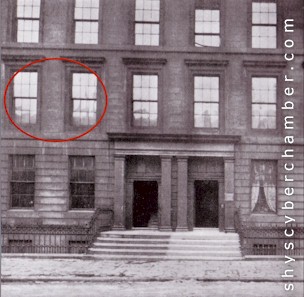
Adams told her of the mysterious cracking noises. 'Oh, it would
be the pulleys,' Helen replied casually, referring to the kitchen
clothes-line that needed oiling. Adams waited as she unlocked
the elaborate locks on the front door and entered.
At that moment, a man of about 30, in a lightish overcoat and dark
trousers, emerged from the spare bedroom to the right, smiled
courteously, walked calmly across the hallway and out of the front
door, without anyone speaking. He then fled down the stairs.
Adams, already concerned for Miss Gilchrist, decided to wait while
Helen went into the kitchen. The street door slammed, the
servant turned up the gas in the kitchen, and then called out that the
pulleys were alright. To Adams, she seem to lack any sense of
urgency. 'Where is your mistress?' he called out to the girl.
Helen walked across the hall into the dining room. Adams then
heard her scream, and rushed to join her.
Marion Gilchrist was lying on her back, her head near the fireplace
and her feet pointing towards the door. A rug covered her face,
while blood was splashed over the fireplace, coal scuttle and fire
irons, and even on the wall over the mantelpiece. |
 |
 FAITHFUL SERVANT :
Helen Lambie was Miss Gilchrist's
servant for about three years and often won the praise of her exacting
employer. She was known to both to Miss Gilchrist and her
mistress's relatives as Nellie.
Helen was a direct, unreflective girl who took little or no interest
in books or life around her, and quickly became stubborn when
challenged. At one time, she had a 'follower', a bookmaker named
Patrick Nugent, but she denied he was the man in the flat at the time
of the murder. Miss Gilchrist did not allow her to bring young
men back to the flat. Helen Lambie admitted to the extradition
hearing that she had told Nugent about the jewellery in the flat, but
said she had not seen him since September 1908.
Nugent was investigated and cleared, despite lingering suspicions that
he had gossiped about the jewels to an unscrupulous character. |
|
|
Adams and Lambie both ran downstairs to see if the mysterious visitor
was still in sight. He wasn't, so Adams went off down the road,
leaving Helen Lambie at the street door wringing her hands.
Laura Adams heard the commotion and came out; when she learnt what
happened, she went up to Miss Gilchrist's flat. The servant,
however, hurried to Blythswood Drive, a few minutes walk away, to
report the tragedy to Miss Gilchrist's niece, Margaret Birrell.
According to Detective Sergeant John Trench, who interviewed Helen
Lambie that same evening and Miss Birrell two days later, Lambie had
told Miss Birrell that she recognised the mystery man, and even named
him. His identity, however, was never made public, and he was
simply referred to by the initials A.B.
Meanwhile, Adams returned to No. 15 with a police constable.
They lifted the rug off Miss Gilchrist and found that almost every
bone in her face and skull had been crushed; her left eyeball was
missing and the right one was partly torn from its socket. And
yet she was still breathing faintly. A few moments later,
however, the breathing stopped.
A Dr John Adams - no relation to Arthur Adams - arrived at about
7.20pm. After examining the body, he looked around for a murder
weapon. It could have been the bloodstained coal scuttle and
fire irons, but there was also blood on the front legs and on the left
back leg of a chair that stood beside the body. |
|
|
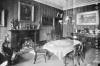 MISS GILCHRIST'S DINING
ROOM :
Miss Gilchrist's body was found in front of the fireplace - the position marked
by a partly hidden cushion on the floor. When her servant last saw her
alive, she was seated at the dining room table, reading, with her back to the
fire. |
|
|
At about 7.55pm, Detective Inspector John Pyper of Glasgow's Western
District reached the flat. He was soon followed by other
officers. In the spare bedroom, they found that a wooden box had
been forced open and documents left scattered on the floor. On
the table, there were several pieces of jewellery.
Helen Lambie returned soon after 8pm and explained to the police that
she had shut the flat and the street door when going out for the
paper, but had noticed the street door ajar on her return. But
more significantly, she told them that she would not be able to
identify the man she saw leaving the flat.
She was also unable to tell if any of the documents had been stolen,
but said that the only piece of jewellery missing was a
crescent-shaped brooch that had lain in a dish in the spare bedroom.
Details of the brooch were published in a police notice at 9.40pm.
Based on the information provided by Adams and the servant girl, a
description of the man seen in Miss Gilchrist's flat was published in
the following day's Evening Citizen: 'A man between 25 and 30
years of age, 5 feet 8 inches in height, slim build, dark hair, clean
shaven, dressed in light-grey overcoat and dark cloth cap.' It
declared that 'robbery appears to have been the object'. |
|
|
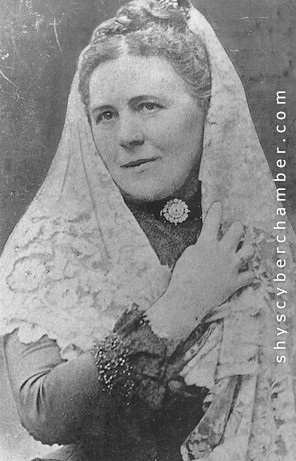
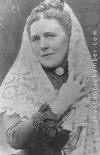 JEWELS & THE LADY :
Miss Gilchrist's jewellery was valued at her death at
£1,382 12s od, but it would
have cost twice that amount at 1908 shop prices. This was a considerable
sum at the time, but it was not a fortune. The collection of 60 or so
precious stones, mainly rubies, emeralds, sapphires and diamonds, had been
acquired over a period of 20 years and Miss Gilchrist (shown here in earlier
times) enjoyed having them set in bracelets, brooches and earrings. Most
were kept in the wardrobe in the spare bedroom, but some lay openly around the
flat in bowls or were pinned to the back of the curtains.
When Miss Gilchrist went on holiday, the entire
collection was moved to her Glasgow jewellers, R & W. Sorley, for safekeeping.
Miss Gilchrist had never been ostentatious, so it was only a local rumour that
she owned jewellery. And though she like to wear a ring and a brooch,
these would be hidden by her gloves and coat when she went shopping. |
|
|
The signs were that Miss Gilchrist, who lived in fear of being
burgled, knew the murderer. The front door of the flat was
fitted with three locks and the back windows were always closed.
Visitors had to pull a bell cord by the street door, and the latch was
released by a lever inside the flat itself. This would have
given Miss Gilchrist time to see who was coming up the stairs, and if
necessary, to retreat to safety behind her own front door.
There was no evidence of forced entry, and Miss Gilchrist's reading
glasses were neatly folded. Though alone, she had almost
certainly admitted her visitor without a qualm. Initially, this
was also the official view taken by the police, and it seemed to fit
Lambie's statement to DS Trench that she recognised the man.
However, for reasons unknown, the police dropped this line of inquiry.
Instead, they concentrated on another lead, which came from two
sources. At 6.55pm, just before Helen Lambie went out, one of
Adams's sisters, Mrs Rowena Liddell, had seen a man by the railings of
their flat as she arrived home. The man 'had a long nose, with a
most peculiar dip... You could not see that dip among thousands,' she
said, adding that he was clean-shaven, with dark hair and coat and a
brown tweed cap.
Three days later, on Christmas Eve, a 14 year old girl called Mary
Barrowman made a statement to the police. She spoke of walking
in the dark along West Princes Street soon after 7pm on 21st December
when a man ran down the front steps of No. 15 Queen's Terrace, looking
towards St George's Road, then turned west towards her. 'I
wondered what was wrong and turned around...' she said.
He passed her 'running all the time' and turned left into West
Cumberland Street. |
|
|
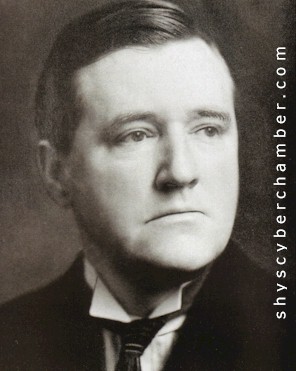
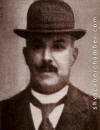 DETECTIVE SERGEANT JOHN THOMSON TRENCH :
Detective Sergeant John Thomson Trench visited
the flat on the night o f the murder. He was to play a crucial part in the
Slater case. The maid Helen Lambie, initially told him she knew the
intruder, but she later changed her story. |
|
|
Mary described the man as 29 to 30 years of age, tall and slim,
clean-shaven with a nose 'slightly turned to the right'. He had
on a fawn overcoat (which might have been 'waterproof'), dark
trousers, brown boots and a tweed cloth cap. This new
description was published in the Glasgow papers on Friday afternoon,
25th December. It whipped up public interest still further.
At 6.10pm on Christmas Day, a cycle dealer named Allan McLean reported
to the police that a fellow member of the Sloper Club, a gambling
haunt in India Street, had not been in for some days. McLean
said he had heard that, since 21st December, the man had been trying
to sell a pawnbroker's ticket for a diamond brooch. The missing
man's name was Oscar Slater.
Slater was a German Jew about 1.73m (5 feet and 8 inches) tall.
McLean said he had a slightly twisted nose and, soon after 7pm, led a
Detective Inspector Powell to Slater's flat at 69 St George's Road, a
few minutes' walk from 15 Queen Terrace. Having established that
their man lived there, the policeman returned at midnight with two
colleagues. They went up to the top floor. There was a
brass plate for 'Anderson' on it; however, it was the maid, Catherine
Schmalz, who answered their knock.
The housemaid grudgingly revealed that Slater had that very same
evening 'gone away for a holiday with Madame'. She later claimed
that the couple had gone to London, Catherine told the police that
Slater and 'Madame' had gone to America.
By the time the police had traced Slater and his mistress in
Liverpool, they had boarded the liner SS Lusitania bound for New York.
This time they were using the names Mr and Mrs Sando. The
Glasgow police lost no time in cabling the New York police, asking
them to arrest 'Otto Sando' and search his baggage for pawn tickets. |
|
|
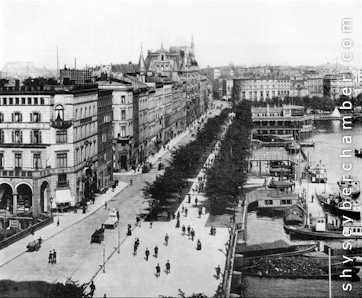
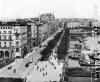 HAMBURG, GERMANY :
A teenage John Dillinger is photographed with his father on the
verandah of their Mooresville farm in Indiana. His swaggering
pose and direct gaze contrast pointedly with those of his father,
whose righteousness alienated him. |
|
|
Oscar Slater was born Oscar Joseph Leschinizer at Oppeln (now Opole,
Poland), in what was eastern Germany, in about 1870, the second son of
a non-religious Jewish family. His father was a baker. At
15, Oscar was apprenticed to a local German timber trader named
Schuttenberg.
Although Oscar did not do well at school, he showed a flair for
business when he moved to Hamburg, where he took a job as a bank
clerk. By the mid 1890s, the Leschnizer family was living in
Beuthen (now Bytom, Poland), a tough mining town in Upper Silesia.
Slater's brother and two sisters stayed at home, but Slater, now in
his early 20s, went abroad to escape military service and to see
something of the world.
Slater wandered around Europe and America, managing to get by, but
never getting rich. He made the first of many visits to Glasgow
in 1894, but he also tried his luck in Edinburgh, Hamburg, Brussels,
Paris, London and New York.
Having no regular job, he tended to get up at midday. He would
go to a music hall or drinking club in the evening, and only started
to earn his living - gambling at various dens - after midnight.
One among many of his London business cards read: 'Oscar Slater,
Dealer in Diamonds and Precious Stones, 33 Soho Square, Oxford Street,
W', but he most often posed as 'A. Anderson, Dentist'. |
|
|
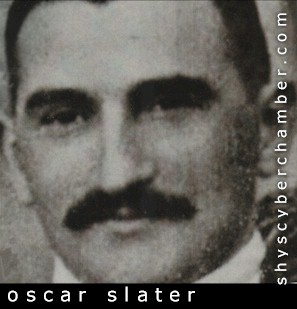
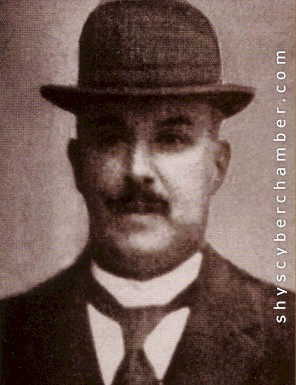
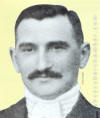 OSCAR SLATER :
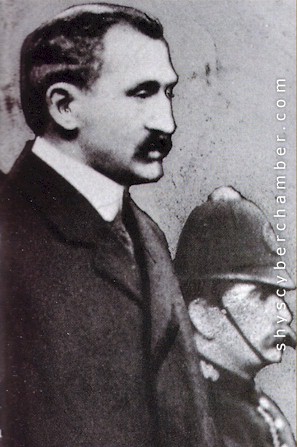
A photograph of Oscar Slater in 1908, the year he returned, fatefully to
Glasgow. It shows his strong square face with its slightly twisted nose,
his broad moustache and smart appearance. |
|
|
To his mother, Slater wrote that he made his money
subletting houses. He enclose £5 every three months, and a bit
more on birthdays. In 1907, he sent his mother £10, half the
cost of a cataract operation that she needed.
What Slater may have lacked in moral fibre, he made up for in
appearance. He was proud of his clothes, often wearing sober
black suits and a bowler hat.
Slater had been convicted of one crime before the Marion Gilchrist
affair. In 1899, while using the name Schmidt, he got into a
brawl in Glasgow, and had his nose broken. He was fined 20
shillings for disorderly conduct.
About seven years before his arrest, during a previous visit to
Glasgow, Slater married a woman called May Curtis. Her heavy
drinking led to separation four years later. Slater claimed that
he used aliases to prevent her tracing him and demanding money. |
|
|
MADAME JUNIO :
Andrée Junio Antoine, Slater's mistress, worked as a high-class
prostitute under the name of Madame Junio. But there was never any sign
that Slater was her pimp and she seemed perfectly capable of looking after
herself.
During their stay in London, in the autumn of 1908, Madame Junio received
gentlemen at her rented flat in Newman Street, in the West End. She
continued to accept male visitors after the move to Glasgow that winter.
Tall, attractive and robust, Madame Junio favoured dark costumes and heavy furs,
and often wore a blue or black hat with green feathers.
By late December 1908, Slater wanted to leave her, and reduced his mistress to
tears by insisting that she return to the Continent while he alone prepare the
ground in the United States. She did, however, end up going with him. |
|
|
When in London around 1904, Slater met a 20 year old Parisian woman
named Andrée Junio Antoine at the Empire Theatre. They then
travelled together to the United States as Mr and Mrs A. George and
were very happy. Slater managed a gambling club on West 26th
Street, New York during this period.
In 1908, they spent the summer in France and the autumn in London
before Slater journeyed once again to Glasgow, where Andree Antoine
and her servant Catherine Schmalz joined him in November. They
first stayed at the Central Hotel, then at lodgings in Renfrew Street.
IN November, they rented a flat in St George's Mansions at 69 St
George's Road.
Slater seems to have planned a long stay because he bought furniture
on hire-purchase. But opportunities in San Francisco beckoned
and Slater decided to try his luck in yet another city. |
|
|
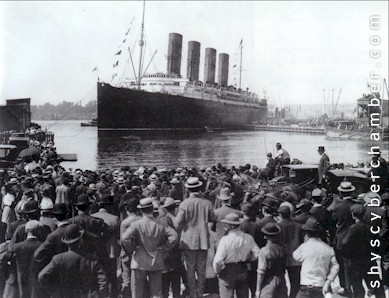
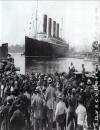 LUSITANIA :
Slater travelled to America with his
mistress on the 32,000 ton Cunard liner Lusitania, which plied the Liverpool-New
York route across the Atlantic. The ship was sunk in May 1915 after being
torpedoed by a German U-boat off the Irish coast. |
|
|
The Cunard liner Lusitania reached New York on
Saturday 2nd January 1909. Six detectives, acting on
instructions cabled from Scotland, boarded the shop and arrested Mr
and Mrs Otto Sando, alias Oscar Slater and his mistress, Andrée
Antoine.
A pawnbroker's ticket for a diamond brooch was found on Slater, who
told the police that he had never heard of Marion Gilchrist.
Slater was taken off to New York's Tombs prison, while Madame Antoine
was confined at the immigrant processing centre on Ellis Island.
The British authorities immediately started extradition proceedings,
but the police had yet to find any evidence linking Slater with the
murder. Edinburgh Professor John Glaister, one of the world's
leading forensic experts, had already concluded that the murderer had
used a weapon such as a claw-headed hammer. |
|
|
DAILY NEWS :
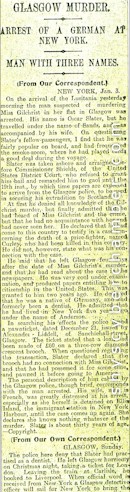
A report in the Daily News on 4th January 1909, sent by the paper's
New York correspondent, describes Slater's arrest and the police discovery of a
pawnbroker's ticket for a diamond crescent brooch. |
|
|
But no such weapon and no bloodstains had been found in
Slater's flat in Glasgow and, by the time of the arrest in New York,
the Glasgow police had discovered that the pawnbroker's ticket had
been issued on 18th November, over a month before Miss Gilchrist's
brooch went missing.
The case against Slater should have been dropped at this point, but
the extradition proceedings had been set in motion and the British
authorities had to prove their case against him in an American court
before the prisoner could legally be taken back to Scotland.
The three main witnesses, Arthur Adams, Helen Lambie and Mary
Barrowman, arrived in New York on 25th January, accompanied by DI
Pyper and William Warnock, chief criminal officer of the Glasgow
Sheriff's Court.
The hearing began the next day before Commissioner John Shields.
Charles Fox, Counsel for the Demanding Government, prepared the case
against Slater, who was represented by Hugh Miller. The drama
started before either side presented its case.
Slater, in handcuffs, was led into court along a corridor by two US
deputy marshals. Neither of the deputies wore uniforms, and the
little party walked right past the three witnesses from Scotland.
There had been no identification parade, although Miss Barrowman and
Adams had been shown poor photographs of Slater.
Minutes later, DI Pyper told the hearing that both women had
recognised the handcuffed Slater as he passed by, and he was the man
they had seen on 21st December. According to Pyper, both said,
'Oh, there is the man away into court.' |
|
|
TOMBS PRISON, NEW YORK :
Oscar Slater was held in New York's Tombs
prison, pending trial. Prisoners were taken from the Tombs, over the
escape proof bridge, into the court building on the left. |
|
|
Helen Lambie was the first of the three witnesses.
When questioned about the man in the flat, she said: 'I couldn't tell
his face. I never saw his face.'
'What were you all doing pointing to this man when I saw you standing
at the door?' Hugh Miller asked next. 'That was my business, and
none of yours,' Helen Lambie replied.
The witness said she recognised Slater by his walk and 'nothing else',
but Miller claimed her evidence had changed from the statements she
had made in England. In New York, she declared for the first
time that the intruder's coat was a fawn waterproof and his cap a
Donegal, a style of rimmed tweed cap showing woven tuffs. Until
now, both of these details had been mentioned only by Mary Barrowman.
Mary herself repeated what she had told the police in Glasgow but,
contradicting DI Pyper's testimony, she would not confirm that Slater
was the man she had seen leaping down the steps at No. 15.
Instead she used phrases such as 'something like him'. |
|
|
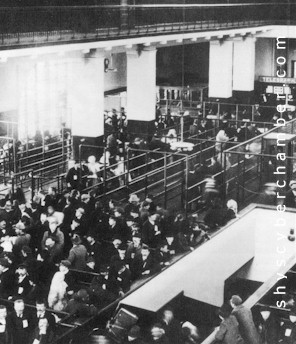
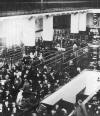 'ELLIS ISLAND, NEW YORK :
Newly arrived immigrants awaiting medical examination on Ellis Island in New
York harbour in abut 1904. Slater's mistress Andrée Antoine was kept there
while Slater was taken to the Tombs prison. |
|
|
She recalled the man's crooked nose. 'Kind of hulled out, so to
speak?' Miller asked. 'Yes,' she replied. Mary's last
words were that the man's nose was like that of William Warnock, the
Sheriff of Glasgow's representative in the court. Miller asked
Commissioner Shields to take 'judicial notice' of the two men's noses.
'Upon it may hang the life of my client,' he said.
Arthur Adams said that the man in the hall of Miss Gilchrist's flat
seemed 'rather gentlemanly-looking', perhaps a friend or a relative,
with the appearance of a 'commercial traveller'.
'Is there anybody in the room here that you identify as the man?'
Shields asked. 'I couldn't say positively,' Adams replied.
'This man [Slater] is not at all unlike him.' In
cross-examination, Adams he had noticed nothing odd in the man's walk. |
|
|
A PREJUDICED FORCE :
One of the many mysteries in the Slater case is why the police pursued him to
New York when they already knew that his diamond brooch could not have been
stolen from Miss Gilchrist's apartment.
This was not the only discrepancy. Slater
differed from the descriptions of the mystery man given to the police by Helen
Lambie and Mary Barrowman in almost every detail.
He was 38, only of medium height, but heavily built. He also sported a
moustache and had a nose that was not twisted. Furthermore, he was
unmistakably foreign, a fact that no witness pointed out.
The truth was that Glasgow, including the police force, was a tightly-knit
community, with an insular outlook. There was a profound distrust of
anything 'foreign', which was stirred to fever pitch by the murder. Even
Supt. Ord, the policeman in charge of the case, was reported to have said that a
Scotsman could not have done it. Given such prejudice, it is not hard to
see why the police acted in the way they did. |
|
|
Sworn depositions were then placed in evidence from other witnesses,
such as Allan McLean, who had told police of the pawnbroker's ticket
for the diamond brooch, and Gordon Henderson, club mast of the Motor
Club (a gambling den in India Street). He stated that Slater
arrived in the club in an excited state at 9.45pm on the night of the
murder, wearing a fawn overcoat and a cap like a Donegal, and tried to
cash a cheque.
Slater's counsel then tried to show that the accused man's journey to
America was not a sudden flight from justice. A New York diamond
dealer, David Jacobs, produced a letter Slater had written on 29th
November 1908, speaking of his plan to leave Scotland as business
matters 'are here very bad'.
However, the relatively favorable impression that the defence had
create was not conclusive because Slater was unable to pay for his
witnesses to cross the Atlantic. During an adjournment of
several days, the prisoner decided to cut his losses and face trial
back in Scotland. This, he reasoned would save time and money
and allow Andrée Antoine to be released from Ellis Island. |
|
|
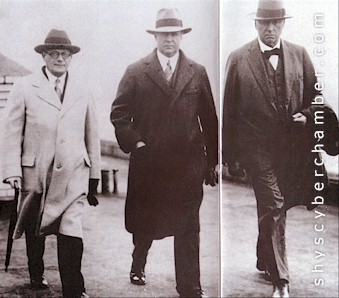
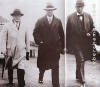 SLATER'S EXTRADITION COUNSEL :
Slater's counsel in the extradition proceedings were Hugh Miller (left) and
William Goodhart (centre) seen here with Deputy Marshal John Pinckley (right). |
|
|
On 6th February 1908, Miller announced his client's
intention and the court was not required to give a ruling. The
US State Department issued the extradition papers on 11th February
and, three days later, DI Pyper and Warnock escorted Slater onto the
Anchor liner the SS Columbia. Slater's sealed baggage was
put in the hold.
While Slater had been in America, there had been much adverse
publicity about him, focusing on his Jewishness and 'foreign'
background. So, after news of the extradition was reported, a
hostile crows gathered at a quay in the heart of Glasgow, on Sunday,
21st February, to watch the Columbia sail up the River Clyde and dock.
To avoid trouble, Slater was taken off at Renshaw, a town further
downriver.
At Glasgow police headquarters, Slater's luggage was opened and
searched. There was no Donegal cap, but there was a
fawn-coloured waterproof coat and among a set of light tools was a
small, claw-headed hammer - final proof, the police believed. |
|
|
LOITERING WITH INTENT :
During the Gilchrist
investigation, the police found 12 people who claimed to have seen a suspicious
man loitering near Queen's Terrace in the weeks before the murder. They
all said he was dark-haired, and most said he was clean-shaven. On 1st
December, a constable saw a foreign looking man with a moustache opposite No. 15
after dark, and saw him again nearby three nights later.
On four successive days, starting on 14th December, another witness said she saw
a clean-shaven man with dark hair staring at No. 15, and pointed him out to a
companion.
Eight others saw a loiterer in the area between 17th December and the murder
night. The final sighting was by Rowena Liddell, Adams's sister, only
minutes before the murder. |
|
|
On 21st and 22nd February, Slater was placed in an
identification parade with 11 other men. Nine were police
officers and two were railway workers. None looked 'foreign', so
that Slater easily stood out from the rest. Two had uneven
noses. No one resembled Slater.
Helen Lambie, Mary Barrowman and Arthur Adams repeated their New York
statements, though now the two women were definite in their
identification, contrary to their previous uncertainty. Other
witnesses also picked out Slater as either having been seen loitering
outside Miss Gilchrist's flat or running away from it - this was
hardly surprising, as Slater's photo had just been published in the
newspaper reports of his extradition.
Slater declared himself not guilty to murder at the formal pleading at
the Old Court, Jail Square, on 20th April. But so intense had
the atmosphere in Glasgow become that the trial was moved to the
calmer atmosphere of Edinburgh. |
|
|
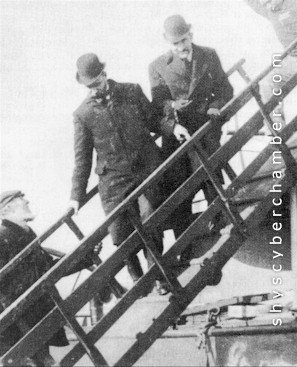
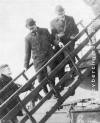 OSCAR SLATER :
Oscar Slater (right), is seen disembarking at Renfrew, near Glasgow. This
picture of the murder suspect was printed in the papers, spoiling his chances of
a fair trial. |
|
|
The trial of Oscar Slater for the murder of Marion
Gilchrist opened at the High Court in Edinburgh on Monday, 3rd May
1909, before Lord Guthrie as judge and a jury of 15 men.
Slater's counsel, A.L. McClure, was a competent advocate but he was
pitted against the Lord Advocate himself, Alexander Ure KC, a
prosecutor renowned for his moral fury.
McClure could match Ure in logic, but not in dramatic fire. In
addition, the Lord Advocate had the authority of the state behind him;
thus, from the outset the odds were firmly stacked against the
defence.
The 39 year old prisoner sat calmly between two helmeted constables in
a dock behind the tables for counsel. In his dark clothes,
Slater had a strange dignity that appeared to irritate his bewigged
accusers. His thick moustache, too, lent him a patrician air.
Under the Scottish judicial system, there are no opening speeches for
the defence or the prosecution. Instead, the Lord Advocate,
relying on forensic evidence, opened his case with the witnesses who
claimed to have seen Slater, or someone like him, in West Princes
Street. All of them were solid citizens and the accumulation of
evidence told heavily against the defendant. |
|
|
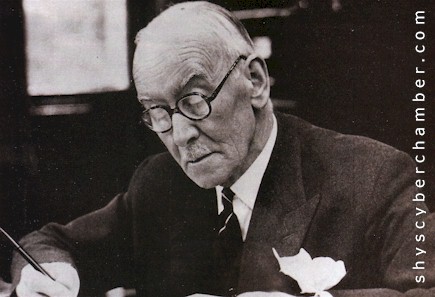
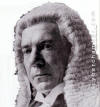 THE LORD ADVOCATE :
Mr Alexander Ure KC, prosecuted Slater. His address to the jury was filled
with lies, inaccuracies and character assassination. A Liberal MP from
1895 to 1913, Ure later became Lord Justice General, Scotland's chief criminal
judge. |
|
|
For the defence, McClure first attacked the integrity
of the witnesses' identifications in New York and Glasgow. In
the witness box, the Glasgow detective who had been one of the first
on the scene, John Thomson Trench, stated that Slater was the only
foreign-looking man in the Glasgow identification parade.
Counsel suggested it would have been fairer to place a suspect among
people who resembled him. 'It might be the fairest way, but it
is not the practice in Glasgow,' Trench said bravely - a clear point
to the defence.
Helen Lambie, testifying at the end of the first day, was quickly
shown to have contradicted herself on oath in New York and Glasgow.
Questioned about recognizing Slater in New York, she became childishly
evasive. 'You were down there for the purpose of identifying the
man?' McClure asked. 'No,' Miss Lambie replied, to general
surprise. 'What were you there for?' 'I do not know what we were
standing there for,' she replied. 'To identify a man.' 'The man
Slater?' 'Yes,' Lambie said, unaware of the obvious contradiction.
The next morning, 4th May, Detective Inspector Pyper stated that in
New York both Helen Lambie and Mary Barrowman had touched him on the
arm the moment they had seen Slater. 'Both on the same arm and
at the same time?' McClure asked sceptically. 'Yes.' 'And both
spoke at once?' 'Both spoke at once.' 'And both said the same thing?'
'Both said the same thing.' 'What did they say?' 'They said, 'Oh,
there's the man away into the court'.' |
|
|
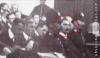 SLATER IN COURT :
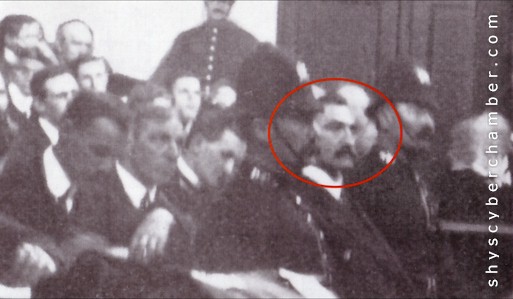
Throughout the trial, Slater (his face
encircled) sat in the dock with his head held high. Unfortunately, many
interpreted his prickly pride as arrogance. |
|
|
DI Pyper, realising that it was futile to try to salvage Helen
Lambie's evidence, agreed that she had said nothing about the
murderer's walk at any time until she was inside the New York court.
The Inspector also agreed that he had 'seen nothing distinctive in the
walk that Helen Lambie had imitated'. However, Pyper insisted
that he had not told the girls of Slater's imminent arrival in the New
York court.
Next, Arthur Adams faithfully repeated his account of events, saying
that the man in the hallway looked around 25 - 30 years old. 'He
was rather a commercial traveller's type, or perhaps a clerk,'
Adams said. '...he seemed gentlemanly and well dressed... I did not
notice anything about his way of walking at all.'
Adams flatly contradicted Miss Lambie's claim that she had not seen
the man's face fully. 'Yes, she saw the man because she stood
and stared and did not open her mouth,' Adams said. 'When he
passed her?' asked McClure. 'Yes, she had a good enough view of
this man.' 'She turned around?' 'She stood and looked and
never said a word,' the witness replied. 'Was she plainly taken
aback?' 'Yes, thoroughly,' Adams answered. 'And excited?'
'I think so.' Helen Lambie was now a discredited witness.
The 14 year old Mary Barrowman then repeated her story of a
clean-shaven man bumping into her in the street and confidently
identified the mustached defendant as that man. Under
cross-examination, she confirmed that he had been running 'at top
speed', with his cap over his eyes.
'You said the man was clean-shaven?' McClure asked. 'Yes.'
'Did you have a good look at him...?' 'Yes.' 'Are you
quite distinct about that?' 'Yes.' |
|
|
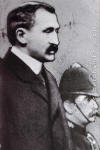 SLATER'S SENTENCING :
Even at Slater's moment of
sentencing, he retained an air of composure. |
|
|
McClure's purpose in this line of questioning became
clear when he called his own witnesses on the third day, 5th May.
But before then, the case against Slater gathered strength when many
of his former associates gave evidence. They described a shifty
man, often short of cash, the subject of speculation that he was a
pimp and even a killer, a man who gave few people his address or
surname and who signed documents with an alias.
The jury could not but be aware of the fact that beneath the
immaculate exterior was a man who disdained respectability by living
with his mistress. Moreover, he shamelessly lived by pursuits
that the majority of men, particularly respectable Scots jurors, were
likely to regard as vices. This impression was strengthened by
his former maid, Catherine Schmalz, who testified that Andrée Antoine
'received gentlemen'. Later, Schmalz testified that Slater
was at home when Miss Gilchrist was murdered, but her evidence did not
inspire trust.
McClure did not even try to explain to the jury that Slater was an
opportunist, but not a crook in the legal sense. He was a
foreigner to whom false names, temporary lodgings and a quick profit
came instinctively - but not murder. |
|
|
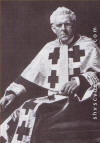 THE SCOTTISH SYSTEM :
Scotland has a different judicial system to that of England and Wales. In
Scotland, prosecutions are not started or carried out by the police, as was the
case in England and Wales before 1988. The decision to prosecute is made
by the Procurator Fiscal. He is accountable only to the Lord Advocate, who
occupies a complex post combining some of the duties of an English Home
Secretary with some of the Attorney General's.
The chief of the Scottish
judiciary has two titles. He is know as Lord President, and Lord Justice
General, when dealing with criminal cases. In this role, he nominated Lord
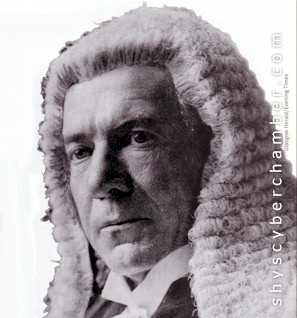
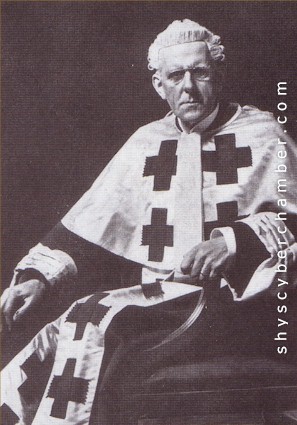
Guthrie (pictured) to preside over Slater's trial for murder. The two
posts are always held by one man.
The second most senior
criminal judge is the Lord Justice Clerk. The actual conduct of a trial is
managed by the Crown Office. An advocate hired to prosecute for the Crown
is known as the Advocate Deputy when the case is heard in court. |
|
|
On McClure's advice, Slater did not give evidence in case it gave
the prosecution a further opportunity to blacken his character. In
addition, McClure had dismantled much of the identification evidence and was
certain that Slater would be acquitted. He also called witnesses to prove
that Slater had talked of going to the United States as far back as November
1907, that he had not fled, and had a noticeable moustache on 21st December, the
day on which both Helen Lambie and Mary Barrowman had seen a clean-shaven man.
Alexander Liddell, a pawnbroker in Sauchiehall Street, also gave evidence that
he had issued the pawn ticket found on Slater over a month before the murder.
McClure had gambled that the jury would evaluate the evidence carefully, but he
decided not to emulate the theatrical, impassioned summary that could be
expected from the Lord Advocate. McClure did not foresee that the Lord
Advocate would make a closing speech which, for sheer puritanical bigotry,
remains unique in Scottish legal history.
In a volley of passionate rhetoric, delivered without notes and at full volume,
the Lord Advocate portrayed Slater, who had only one minor criminal conviction,
as a member of a sub-human species. He accused Slater of being a pimp - on
which subject there had not been a scrap of evidence - and other depravities,
but underlying this moral outrage was a clear vein of anti-Semitism. |
|
|
OSCAR SLATER'S ALIBI :
Slater's story of events on
the day of the murder - which he was not given the chance of relating
in court - was that he had risen late and, at 12.30pm, had raised a
further 30 from a pawnbroker on the diamond brooch he had pledged in
November. Two letters had arrived, one warning him that his wife
was trying to locate him, which meant trouble. After lunch, he
gave notice to the maid, Catherine Schmalz. Between 4.30pm and
6.30pm he posted some letters, sent a telegram and visited Gall's
public house and Johnson's billiard room. He tried, without
success, to sell the pawnbroker's ticket to his contacts Max Rattman
and Josef Aumann. They did not recall exactly when he left, but
Rattman gave evidence that Slater was wearing a moustache at this
time.
According to Slater, he left Johnson's at 6.35pm and walked home to St
George's Road, nearly 1.6km (a mile) away - the same distance as Miss
Gilchrist's flat. No witnesses were produced to account for the
next 15 - 20 minutes. Mrs Rowena Liddell, sister of Arthur Adams
- the victim's downstairs neighbour - said Slater was loitering
outside their building at 6.55pm, but Slater's maid assured the police
that he was dining at home by 7pm. |
|
|
'All moral sense in him has been destroyed,' ranted the
Lord Advocate. 'I say without hesitation that the man in the
dock is capable of having committed this dastardly outrage.'
Casting aside his profession's strict rules for accuracy, Ure
described Slater in gross terms that were patently anti-Semitic in
their meaning and claimed that his 'flight from justice' occurred
because his name appeared in the papers on Christmas Eve. This
was a blatant lie, because the court had heard evidence that Slater's
name was only published after he had left Glasgow.
The murder, the Lord Advocate continued in yet another unsupported
statement, 'was accomplished by a man who was on the hunt for jewels,
not money, and who knew how to deal with jewels...' The speech
was awesome, however, for its passion and power. When he finally
ran out of steam, after nearly two hours, the Lord Advocate picked up
his papers and strode out of court, abandoning the usual courtesy of
listening to the speech for the defence. |
|
|
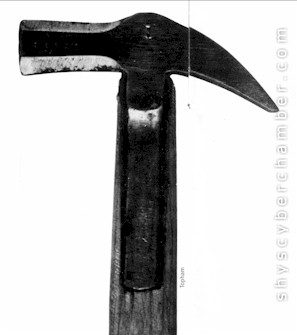
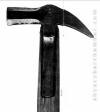 THE HAMMER :
This was the small hammer found in Slater's baggage. It belonged to a set
of household tools which Slater bought in Glasgow. |
|
|
More quietly, McClure argued that Slater's actions before his
journey to America were inconsistent with a murderer evading arrest. He
was seen about his usual haunts, trying to raise money, pawning objects for
cash, telling his barber he was leaving. McClure spoke in particular of
the poverty of evidence linking Slater to Miss Gilchrist or her flat and the
mood in the court was that the jury would reach the 'Not Proven' verdict by
which Scottish law acquits where there is any lingering doubt of guilt.
But for the defence, there was worse to come from the judge.
In his charge to the jury on the fourth and final day of the trial, Thursday 6th
May, Lord Guthrie spoke of Slater's character, villifying the defendant in the
most disgraceful way.
Guthrie then spoke words which, it is believe, no judge in the British Isles has
ever spoken before or since. He told the jury to ignore the most
fundamental of all principles of civilised justice, which is that a defendant is
innocent in law until proved guilty beyond a reasonable doubt.
'A man of that kind [reference to Slater as a pimp and a man of mystery] has not
the presumption of innocence in his favour...' the judge said. He later
went on to say: ' I suppose you all think that the prisoner possibly is the
murderer; you may very likely all think that he is probably the murder.
That, however, won't entitle you to convict him.' This was a more balanced
statement, but by the time the judge had made it, the damage had been done. |
|
|
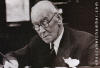 THE HAMMER IN QUESTION :
Professor John Glaister (pictured), Scotland's leading forensic expert,
testified that he believe that Miss Gilchrist was battered to death with a
claw-headed hammer. But he also admitted that he could not prove
positively that the one found in Slater's baggage was the actual weapon.
The rest of the evidence deepened the mystery of
why eye-witnesses saw no blood on the man in the hall. 'The man would have
his clothing more or less bespattered with blood,' Professor Glaister said.
He confirmed that no traces of blood had been found on any of the clothes or
belongings of the defendant.
Glaister's colleague, Dr Hugh Galt, said Slater's 224g (8oz) hammer - an unusual
type made to the 'Kent' pattern and intended for driving nails - could have
caused the wounds, but that a heavier weapon was more probably used.
Two defence experts also though that this hammer was too lightweight for the
assault. Dr Adams, the first doctor to see the victim, was not called and
nothing was heard of his theory that Miss Gilchrist was clubbed to death with
her chair, despite the blood all over it. |
|
|
The jury retired at 4.55pm. Slater chose to remain in the
dock during their deliberations, confident that he would soon be free. The
belief was shared by many in court. However, at 6.05pm, the jury returned
to declare that, by a majority, it had found Slater guilty. Gasps of
surprise spread round the court.
'My Lord, may I say one word? Will you allow me to speak?' the bewildered
defendant said, rising in the dock. Guthrie told him to sit down, but as
the verdict was being recorded by the clerk, Slater rose again. 'My Lord,'
he said, 'my father and mother are poor old people. I came on my own
account to this country. I came over to defend my right. I know
nothing about this affair. You are convicting an innocent man.'
Lord Guthrie then allowed Slater to continue after the verdict had been
recorded. 'My Lord,' Slater pleaded with high emotion, 'what shall I say?
I came over from America knowing nothing about the affair, to Scotland to get a
fair judgment. I know nothing about the affair, absolutely nothing.
I never heard the name [Miss Gilchrist]... I do not know how I can be connected
with the affair... I cam from America on my own account. I can say no
more.'
When Slater had finished, Lord Guthrie put the black cap on his head, and
pronounced the death sentence - Slater was to hang at Glasgow's Duke Street
prison on Thursday 27th May 1909. Ashen-faced, Oscar Slater was taken down
to the cells. As the courtroom slowly emptied, many of the spectators wore
worried frowns. |
|
|
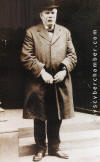 DETECTIVE LIEUTENANT WILLIAM GORDON :
Detective Lieutenant William Gordon made the initial inquiries at Slater's flat
at 69 St George Road. His evidence failed to incriminate Slater in any
serious way. |
|
|
Slater's execution was set for 27th May 1909. The gallows
at Duke Street prison in Glasgow had been prepared close to Slater's cell and
Andrée Antoine had been led away from her final visit, weeping helplessly.
Slater himself had written to 'My own dearly beloved parents' in Germany, saying
the police had fabricated the case.
His solicitor, Ewing Speirs, and the head of Glasgow's Jewish community, Rabbi
E. P. Phillips, led the campaign for a reprieve. At that time, there was
no Scottish Court of Appeal to take a second look at doubtful convictions, but
20,000 people signed a petition criticizing the evidence. It also became
known that only nine of the fifteen jurymen had voted for conviction. Five
had wanted a 'Not Proven' verdict, and one voted for acquittal.
During the campaign, Speirs produced a document entitled Memorial on Behalf
of Oscar Slater. This argued that the only important witness was Helen
Lambie, who had contradicted herself, and Mary Barrowman, who had seen the
fugitive for a moment. |
|
|
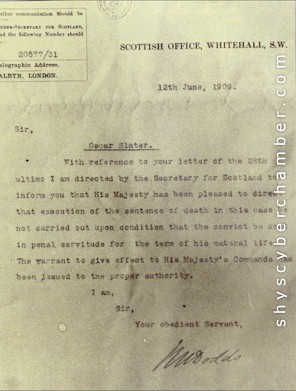
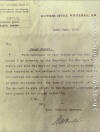 REPRIEVE LETTER
:
The letter granting Slater's reprieve. Lord Pentland, the Scottish
Secretary, also secured a 'Conditional Pardon' for Slater from King Edward VII
on 25th May 1909, though this was not made public until 1993. |
|
|
On the evening of Tuesday 25th May. a mere 36 hours before he was
due to die, Slater was informed that the Scottish Secretary, Lord Pentland, had
commuted the sentence to life imprisonment.
Speirs's Memorial was written to raise doubts about the evidence and so
justify a reprieve, rather than to prove that Slater was innocent. He
therefore included a deposition by a Glasgow teacher, Agnes Brown, who said she
recognised Slater as one of two men running from West Princes Street at the time
of the murder.
If this identification was correct, it tore Slater's alibi to shreds, but also
wrecked Mary Barrowman's story. Mary's account placed her almost at the
spot where Miss Brown saw the two men, but the teacher said she had seen no one
resembling the girl. Presumably it was this kind of confusion that
persuaded the authorities that Slater should not hang. |
|
|
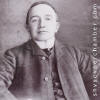 EWING SPEIRS :
Ewing Speirs (pictured), of the law firm Messrs J Shaughnessy & Son, was
Slater's lawyer who believed totally in his client's innocence. |
|
|
Convinced that Slater was completely innocent, Speirs then sent
the Memorial to Sir Arthur Conan Doyle, the Scottish creator of Sherlock
Holmes, who lived in London. The writer concluded that the trial was a
travesty and, after talking to witnesses, published The Case of Oscar Slater
in 1912. From this moment on, the Slater case was a cause célèbre.
'His [the murderer's] attention was given to a wooden box...' Conan Doyle wrote.
'Were the papers his object, and the abstraction of one diamond brooch a mere
blind?' However, Conan Doyle could discover nothing about the crucial
moment when Helen Lambie and the intruder looked at each other in the hall.
In response to Conan Doyle's publicity, the new Scottish Secretary, T. McKinnon
Wood, announced that nothing justified a review of the case. Nevertheless,
by the time, another name - A.B. - was being whipped around Glasgow as the
solution to the mystery.
There matters rested until March 1914. A Glasgow Solicitor named David
Cook then wrote to Conan Doyle detailing the series of sensational allegations
made by Detective Lieutenant John Trench, who had worked on the case from the
outset. |
|
|
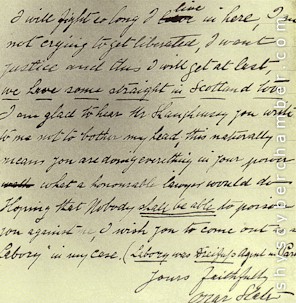
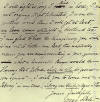 SLATER CORRESPONDENCE :
From Peterhead prison, Slater wrote to
Mr Shaughnessy, saying 'I will fight as long as I live in here'. |
|
|
Cook wrote that, according to Trench, Mary Barrowman's trial
evidence 'bears no relation' to her original statement to the police. He
also stated that Mary's employer told the police that she could not have been in
West Princes Street at the time of the murder. Helen Lambie, the letter
continued, had told Miss Birrell, the victim's niece, the name of the man in the
hall only minutes after the murder and repeated it tot he police that evening.
This was the source of the rumours about 'A.B.'.
These claims, if true, finally destroyed the case against Slater. Cook's
letter also spoke of confirmation from the Liverpool police that Slater used his
name at the North Western Hotel in Liverpool, on his way to New York on
Christmas Day 1908. This negated the police theory that Slater left
Glasgow secretly. At Cook's suggestion, Trench had made copied of the
statements and noted the page numbers of the police books, in which they were
entered.
These allegations were forwarded to McKinnon Wood who, on 23rd March 1914,
announced an inquiry into five specific aspects. Was the killer named on
the night of the murder? If so, did the police know this? Did Slater
flee or leave openly? Had the police known that Slater used his own name
when registering at a Liverpool hotel? Did Mary Barrowman mistake the date
of her walk down West Princes Street? |
|
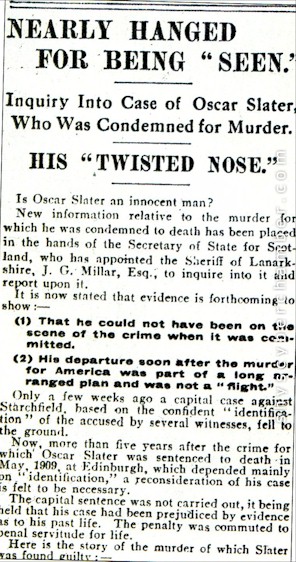
|
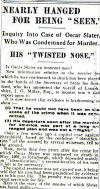 DAILY MIRROR :
Although the press was excluded from the 'Secret Inquiry', this article in the
Daily Mirror of 16th April 1914, reports on its task - to establish whether, in
the light of new evidence, Oscar Slater was innocent. |
|
|
The Sheriff of Lanarkshire, James Gardner Millar KC, conducted
what came to be known as 'the Street Inquiry' at the County Buildings in Glasgow
on 23rd - 25th April 1914. Both the press and public were excluded.
The hearing soon turned into a direct conflict between Trench and the witnesses,
who were not under oath.
Helen Lambie denied all Trench's allegations about the identity of the man in
the hall. Miss Birrell supported her, and Superintendent Ord denied
instructing Trench to interview Miss Birrell about the conversation with the
servant.
Supt. Ord said the man allegedly named by Helen Lambie had been routinely
investigated with others known to Miss Gilchrist and had 'nothing to do with the
murder'. Nothing existed on file to support Trench's contentions, he said. |
|
|
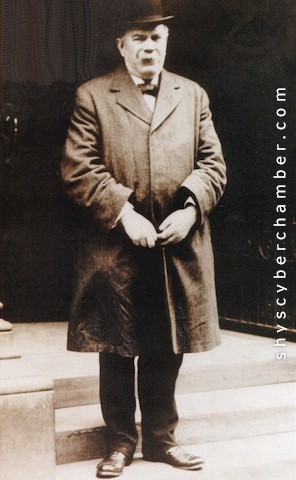
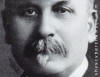 SUPERINTENDENT JOHN ORD :
Superintendent John Ord was head of the CID at the time of the Gilchrist murder.
At the 1914 'Secret Inquiry' he discredited Det. Lieut. Trench. |
|
|
Documents showing that Slater had not concealed his
identity in Liverpool were said to have been sent by the police to Procurator
Fiscal, but he was not called to the inquiry to explain why they were not
disclosed to the defence before the trial. In addition, Mary Barrowman's
employer denied saying she had got the date wrong, as Trench claimed.
Millar sent his conclusions to McKinnon Wood who informed the House of Commons
on 17th June 1914: 'I am satisfied that no case is established that would
justify me in advising any interference with the sentence.' In the same
month, the government issued a White Paper based on the conclusions of the
Secret Inquiry, but this time Slater's campaigners found support in a press that
had been, for the most part, sceptical of their case. Sir Arthur Conan
Doyle wrote that the inquiry 'savoured rather of Russian than of Scottish
jurisprudence'.
It was Detective Lieutenant Trench's brave stand that tipped the balance, as few
people would believe that he could question the honesty of his superiors,
breach the strict police rules of confidentiality and probably ruin his own
career, without the best reasons. |
|
|
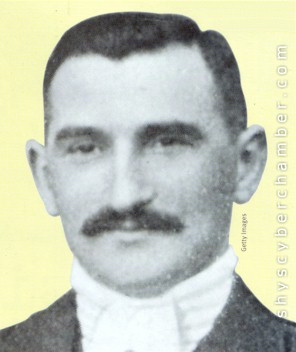
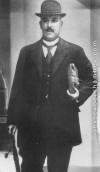 DETECTIVE LIEUTENANT JOHN THOMSON TRENCH :
Detective Lieutenant John Thomson Trench, who made the allegation of conspiracy
to pervert the course of justice by the Glasgow police, had joined the force 21
years before. His skills had earned him the General Efficiency
Certificate, the King's Police Medal and promotion to his present rank in 1912.
A tall, sturdy man,
proud of Scottish traditions, he had once served as a young lance-corporal in
one of Scotland's proudest regiments, the Black Watch.
He seemed likely to reach a senior rank in the police. Trench had a wife
and six children, and was popular with his colleagues. He had nothing to
gain by helping Slater, who character was despised, unless he believed a
principle was involved.
On 14th September 1914, Trench was dismissed from the force. |
|
|
Sir Arthur Conan Doyle, the writer and amateur detective who
campaigned to overturn the conviction of Oscar Slater, was born at Picardy
Place, Edinburgh on 22nd May 1959. He qualified as a doctor at Edinburgh
University in 1881.
As a student, Conan Doyle met the surgeon on whom he later modelled Sherlock
Holmes. the world's most celebrated fictional detective. This was Joseph
Bell of Edinburgh Infirmary, who could size up people at a glance.
By the time Slater's conviction in 1909, Conan Doyle was 60 and had completed
four Sherlock Holmes novels and 56 short stories, and most of his more serious
literary work. |
|
|
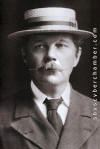 SIR ARTHUR CONAN DOYLE :
Sir Arthur Conan Doyle (1859 - 1930) received his knighthood in 1902 for his
medical field work in South Africa, during the Boer War. |
|
|
Conan Doyle's reputation as a sleuth was confirmed by his successful
campaign for George Edjali, a young Parsee solicitor wrongly convicted in 1903
of horse mutilation in Staffordshire and sentenced to seven years' imprisonment.
Conan Doyle toured the scene, questioned witnesses, found the prisoner too
short-sighted to have done the crime and demolished the evidence. After
three years in jail, Edjali was pardoned.
Conan Doyle was not able to study the scene of the West Princes murder, but he
travelled from his home in the south of England to interview as many witnesses
as he could.
In The Case of Oscar Slater (1912), Conan Doyle's deductions had the
deadly certainty of Sherlock Holmes at his best. Couched in diplomatic
language, he suggested that the maid Helen Lambie and the young Mary Barrowman
were liars, that the intruder had wanted a document, not a jewel, and may have
let himself in with duplicate keys, provided without the authority of Miss
Gilchrist. |
|
|
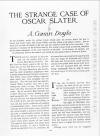 THE STRANGE CASE OF OSCAR SLATER :
This article based on the booklet by Sir Arthur Conan Doyle, tells the Slater
story, with its 'horror, its mystery and its enthralling interest'. |
|
|
Conan Doyle thought Miss Gilchrist may have been correct
in believing that her Irish terrier had been deliberately poisoned in September
908. This would have removed the threat posed by a guard dog. The
poison could have been administered by someone who knew the flat, as the
murderer clearly did.
Curiously, in one of Conan Doyle's most famous stories, Silver Blaze,
Sherlock Holmes solves a murder by recognizing the importance of a dog which did
not bark in the night because it knew the murderer. In the hallway of Miss
Gilchrist's flat, it was the maid Helen Lambie who did not 'bark'.
Conan Doyle saw the Slater case as a strain on Scottish justice and did not
believe there were grounds even for suspecting Slater in the first place,
let alone extraditing and charging him. 'Oscar Slater was a blackguard,'
he wrote, who 'might conceivably have committed the murder, but the balance of
proof and probability seems entirely against it'. |
|
|
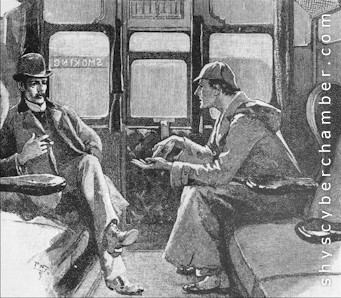
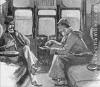 SHERLOCK
HOLMES :
In an illustration from one of Conan
Doyle's stories, the great Sherlock Holmes (right) explains things to his
faithful friend and foil, Dr Watson. |
|
|
Conan Doyle could not wholly conceal his sympathy for a man
'eating his heart out' in prison who had, the writer believed, been persecuted
for his morality, or lack of it, by a self-righteous society. This
sympathy for outsiders ran deep in Conan Doyle.
Sherlock Holmes suffered depressions and used cocaine to escape boredom, which
may reflect something of Conan Doyle's own intense dislike of inactivity.
Though Slater had pleaded for Conan Doyle's help, he was to show no more than
polite gratitude to him when he was finally released from the icy jail at
Peterhead. This is partly to do with Slater's anger at Conan Doyle for the
writer's slurs on his character. |
|
|
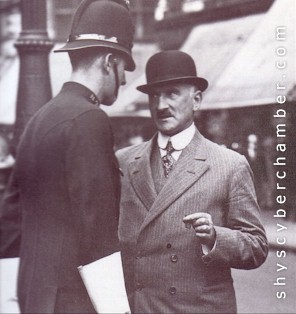
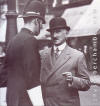 OSCAR
SLATER :
Oscar Slater, aged about 57, is seen here getting directions from a policeman in
London, in 1928, after his release from prison. The world was a different
place and he said he was 'bewildered' by the changes. |
|
|
In 1924, when Slater had already spent 16 years in prison, he
wrote to Conan Doyle from Peterhead prison in north-east Scotland, pleading for
one final effort. This pricked Conan Doyle's conscience. The
following year, the famous author received a letter from a Glasgow journalist
William Park, a skilled investigator who was researching a book on the case.
Park's letter hinted that too many reputations were at stake for the authorities
to admit an error.
Conan Doyle agreed to pay some of Park's expenses, wrote an introduction for his
book, and helped to get it published in 1927. This work, The Truth
about Oscar Slater, with its lucid assault on the evidence against Slater,
had the galvanizing effect that Conan Doyle had previously despaired of ever
achieving.
'The only reason for now refusing an inquiry must be a bad one,' the Law
Journal commented. The Police Gazette and Solicitors'
Journal agreed. The press having played a part in getting Slater
convicted, now helped to free him. |
|
|
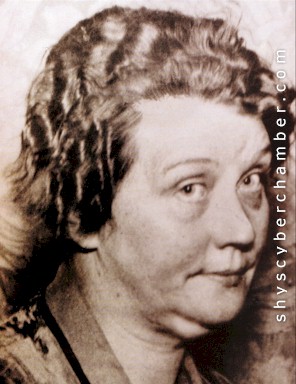
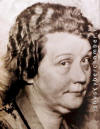 HELEN LAMBIE :
Prompted by William Park's book, the Scottish ex-Prime Minister Ramsay McDonald
joined the campaign to free Slater. Helen Lambie (pictured) was widely
discredited and in 1927 withdrew the evidence she gave at the 1909 trial. |
|
|
On 23rd October 1927, in a signed article in the Empire News,
Helen Lambie admitted that she had told the police the name of the man in Miss
Gilchrist's flat after the murder, and had committed perjury at the trial.
This disclosure showed that senior police officers had conspired to lie to the
'Secret Inquiry' in 1914. Miss Lambie was by then living with her husband
in the United States.
In Scotland, Park and another journalist traced Mary Barrowman, the other vital
witness. What she had to say also made sensational reading. In a
signed statement appearing in the Daily News of 5th November 1927, Miss
Barrowman said she was told what to say in her evidence by the Procurator Fiscal
of Lanarkshire, James Hart, who had ordered the prosecution of Slater.
Miss Barrowman, by this time was married and living in a Glasgow tenement, said
Hart bullied her into testifying that Slater was beyond doubt the man in the
street, when he merely resembled him. The case against Slater had
collapsed.
A week later, the Scottish Secretary, Sir John Gilmour, ordered his release on
licence. The prisoner emerged from the cold confines of Peterhead jail on
14th November, to be given refuge at the home in Glasgow of his old supporter
Rabbi Phillips. For all his toughness, Slater broke down and sobbed at the
sight of a bed made up with sheets and a hot-water bottle. |
|
|
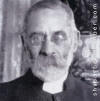 RABBI PHILLIPS :
Rabbi Phillips was a leader of Glasgow's small community
of some 8,000 Jews. He supported Slater in a personal capacity over a
period of 20 years - until Slater's release. |
|
|
Conan Doyle now insisted that Slater's supporters press for an
appeal to the recently established Scottish Court of Appeal. Shamed by his
persistent lobbying, the Scottish Office consented.
The new hearing began on 9th July 1928 at the High Court of Justiciary in
Edinburgh, before the Lord Justice General, Lord Clyde, and four senior judges.
Slater sat in a public bench, close to the dock where he had listened to the
death sentence nearly two decades before.
Stage by stage, the existing case against Slater was demolished. Helen
Lambie and Mary Barrowman, who were not called in person were discredited and
Craigie Aitchison KC, for Slater, attacked the argument that Slater fled Glasgow
and concealed his identity in Liverpool. |
|
|
CRAIGIE AITCHISON KC :
Craigie Aitchison KC spoke eloquently for Slater at the appeal hearing, but the
judges stood by the original verdict, despite the total lack of evidence.
The advocate's fees were paid by Conan Doyle. |
|
|
He said that the Lord Advocate had wrongly told the jury that
Slater obtained jewels dishonestly, that he knew that Miss Gilchrist owned
jewellery, and that his name had appeared in the Christmas Day press, prompting
his departure. There was never even any proof that Slater was aware of
Miss Gilchrist's existence.
Perhaps most worrying of all, Lord Guthrie, the original trial judge, had
instructed the jury that the presumption of innocence should be withdrawn in
Slater's case. Lord Guthrie had also suggested that Slater lived off the
proceeds of prostitution, when he certainly did not. It was this lie that
may have finally turned the jury against Slater.
The court also heard evidence that Slater was pointed out to Mary Barrowman and
Helen Lambie in New York, and that they had not spontaneously recognised him at
the time of the extradition hearing. 'Individually, the grounds of appeal
here are strong,' Aitchison proclaimed during his highly impressive, 14 hour
closing speech. 'But collectively, they are overwhelming.' |
|
|
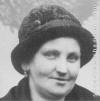 THE CONFESSIONS :
Helen Lambie's admission of perjury showed why she had lied about the meeting
with the man in the hall. 'When I returned from buying the evening paper
and encountered the strange man... he did not seem strange to me,' she wrote.
'When I told the police the name of the man I though I recognised, they replied
'Nonsense! You don't think he could have murdered and robbed your
mistress!' They scoffed so much... that I had allowed myself to be
persuaded that I had been mistaken.'
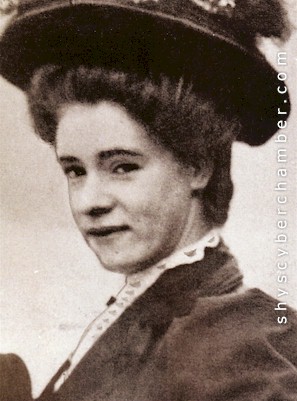
The 1927 confession of Mary Barrowman
(pictured at the same time) made it clear she had been pressurized by the police
to lie - to positively identify Slater. According to author Jack House,
Barrowman also confessed in private that she was nowhere near Queen's Terrace at
the time of the murder. She was a tool of the police. |
|
|
Their lordships delivered their ruling on 20th July 1928.
There were no grounds, they said, for holding the 1909 verdict to be unsupported
by evidence or unreasonable. The evidence that Slater was not concealing
his identity in Liverpool was irrelevant to the case.
But they did agree that Lord Guthrie had seriously misdirected the jury.
'The judgment of the court before whom the appellant was convicted should be set
aside,' they said. Slater was seen to stare, smile for a moment, then
leave court scowling. He had won, but only on a technicality.
Scottish justice could not accept that Slater was innocent. |
|
|
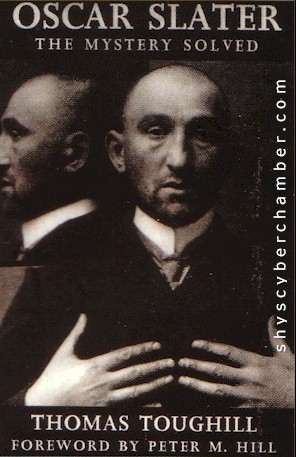
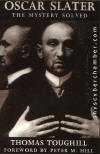 NAMING THE KILLER :
In 1993, Thomas Toughill, a historian
and one-time police officer in Hong Kong, published what is hitherto the most
detailed and convincing account of the Slater story.
From his book Oscar Slater: The Mystery Solved (pictured), Toughill
included, for the first time, sensational - but overlooked - documents found in
government files in Edinburgh. Two of these were anonymous letters to Lord
Pentland, the Scottish Secretary of State, which named the real murderer of Miss
Gilchrist - her nephew Wingate Birrell. (There was, says Toughill, no such
person as Austin Birrell as claimed in Jack House's book Square Mile of
Murder.)
According to Toughill, Slater was framed from the start by a conspiracy of
Scotland's most senior law officers in order to protect the real culprits -
members of two respectable families.
In Toughill's scenario, the murder 'arose out of a family squabble over her
will'. In order to get hold of it, the Charteris family got Miss
Gilchrist's unstable nephew Wingate Birrell to be smuggled into her flat by
Helen Lambie. When she left to buy a newspaper, Wingate let Francis
Charteris into the flat to search for the will. Wingate, confronted by
Miss Gilchrist, 'lost his temper', killed her and fled through the kitchen
window.
Charteris then met Lambie and Adams as he was coming from the spare bedroom.
Lambie, of course, knew him as a relative of Miss Gilchrist's. Wingate
escaped to London where he died of TB on 4th March 1909. |
|
|
 In
August 1928, Slater was awarded £6,000 compensation. He grudgingly
contributed £350 towards the £1,300 which Conan Doyle had spent on his campaign
and appeal, but voluntarily donated £200 to William Park, the Glasgow writer.
Park died soon after Slater's
appeal. A driven man, he had devoted himself to his book, only to see
newspapers claim the credit when Slater was exonerated. When Conan Doyle
died in 1930, Slater sent a cheque to the Memorial Fund
Detective Lieutenant John
Trench and the solicitor David Cook did not live to enjoy their vindication.
Trench rejoined his army regiment, served abroad during the First World War, and
retired. He died in 1919. Cook died two years later. |
|
|
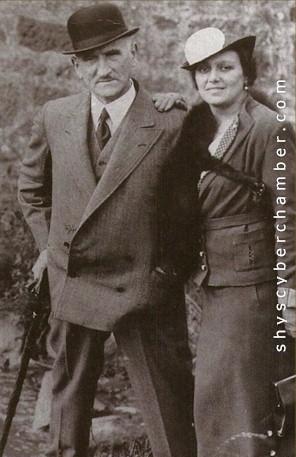
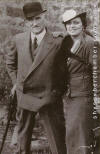 SLATER'S HAPPINESS :
Slater found happiness in marriage
late in life, with Lina Wilhelmina Schad (pictured with Slater), even though he
was interned as an enemy alien during the Second World War. |
|
|
Superintendent Ord of the Glasgow CID, a discredited man, died in April 1928,
between Slater's release and his appeal. He believed Slater guilty, but
refused money to tell his story to a newspaper, saying he had been sworn to
secrecy about the case.
In 1933, Helen Lambie returned
from the USA with her family to settle in her home town of Holytown, near
Glasgow. She later moved to the north of England, where she died in the
late 1950's. Mary Barrowman also returned to anonymity; she died of cancer
in 1934.
Oscar Slater stayed in
Scotland, buying antiques and learning to carve wood and ivory. In 1936,
aged 64, he married the 34 year old Lina Wilhelmina Schad. In 1939,
they moved to Ayr, where Slater died on 31st January 1948. He was cremated
and his ashes were scattered. |
|
|
SLATER'S DEATH :
Slater's death was reported in the News of the World on 1st February 1948.
He was described as a 'Silesian Jew whose name had echoed round the world'. |
|
|
In
1961, Dr Francis Charteris talked about his role in the Gilchrist murder case,
admitting that h was the man referred to as A.B. in the 1914 inquiry. But
he denied he was the man Helen Lambie saw in the hall. According to the
historian and investigator into the murder, Thomas Toughill, Charteris's version
was 'totally unconvincing', leaving no doubt that he was 'in truth the man who
walked past Lambie and Adams into West Princes Street that fateful December
night.'
In 1993, Thomas Toughill
published Oscar Slater: The Mystery Solved, which named the real murderer as
Miss Gilchrist's violent nephew Wingate Birrell,
and claimed that all evidence supporting Slater's innocence was suppressed in a
ruthless, official cover-up. |
|
|
BACK TO TOP |