|
|
At 9.45pm on the night
of 7th November 1974, a distressed and
bloodstained woman burst into the bar of The Plumber’s Arms, Lower
Belgrave Street, crying out "Help me, help me, help me. I’ve just
escaped from being murdered. He’s in the house. He’s murdered the
Nanny!" She was the Countess of Lucan, who had fled from her home at
number 46, leaving behind her three children. She was obviously the
victim of a serious assault, and the police and an ambulance were
called to the scene. The police officers who arrived to investigate
found a substantial house with a ground floor, a basement and four
upper floors. Forcing open the front door, they searched the premises,
and found the children in their bedrooms, unharmed. The door to the
basement was open. There was no light in the hall, so they fetched a
flashlight. They descended the stairs to the breakfast room, and found
the walls splashed with blood, a pool of blood on the floor, with some
male footprints in it, and, near the door connecting the breakfast
room to the kitchen, a
bloodstained sack. The top of the sack was folded over but not
fastened. Inside was the corpse of Sandra Rivett, the children’s'
nanny. She had been battered to death with a blunt instrument. In the
hallway was a length of lead piping, covered in surgical tape, very
bent out of shape and heavily
bloodstained. The back door was unlocked.
|
 |
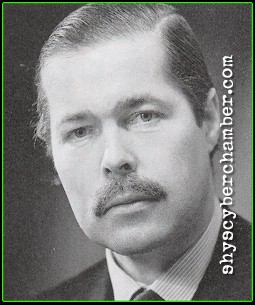 [
Lord Lucan ]
Before he
became immersed in gambling, Lord Lucan took a steady interest in
outdoor sports. During his army days, he had bobsleighed for
Britain, and later he dabbled in both racehorses and golf.
In the early 1960's, his passion was for powerboat racing. For
the Daily Express offshore powerboat race, held at Cowes, Isle of
Wight, in August 1963, Lucan spent a vast sum on designing and
building his own boat, the White Migrant. Confident of victory, Lucan
hired a helicopter and cameraman to record his triumph.
Lucan did lead the race at one stage, but White Migrant ran into
trouble, and sank. Still, Lucan remained in awe of speed, and
kept a greyhound named Sambo's Hangover. |
|
|
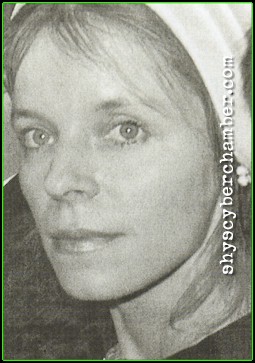 [
Lady Lucan ]
When Lord Lucan announced his engagement to Veronica Duncan in
October 1963, many of his friends expressed surprise that the future
Lady Lucan was a 'commoner'. Lucan had extremely elitist
attitudes that reflected his upper-class ancestry.
Veronica had been born in the coastal town of Bournemouth, Dorset, in
1937. Her father, an army major, died in a car crash when
Veronica was two, just before the birth of her sister Christina - and
two months before the outbreak of the Second World War.
Veronica's mother moved with the two little girls to Uckfield, in
Sussex, then out to South Africa, where she remarried, returning to
Britain with her second husband, RAF Officer James Margrie. In
England, Margrie took to running a country pub in Hampshire. The
girls were privately educated at St Swithins in Winchester, and had
their own ponies. Yet Lady Lucan viewed her childhood as having
been quite unhappy. In all probability, she was thinking of her
time in South Africa, where she had been put into a boarding school
and found it difficult getting accepted.
After a short spell at art college, she moved to London and spent 18
months working as a model. The turning point came when her
sister, Christina, married William Shand Kydd in January 1963.
Two months later, she met a friend of William's at a party - the 28
year old gambler and sportsman, John Bingham. |
|
|
At approximately 10.30 that evening,
Lord Lucan telephoned his mother who lived in St John’s Wood, telling
her there had been a catastrophe at the house, and he wanted her to
collect the children. She went straight there, found the place
occupied by police, and informed them that the Lucans were separated,
the children were wards of court, and that Lord Lucan currently
resided at a nearby flat. She then took the children to her home. The
police searched Lord Lucan’s flat. He was not there, but they found
his car keys, passport, cheque book, driving license, wallet and
glasses. His blue Mercedes car was parked outside. The battery was
flat. (It had been suffering from battery trouble for some time).
|
|
|
[
The Nanny ]
Mrs. Sandra Rivett began work as a nanny at 46 Lower Belgrave
Street towards the end of September 1974, less than six weeks before
she was murdered. She was the eighth nanny employed by Lady
Lucan in less than 18 months.
Sandra settled down well with the three Lucan children. Even
Lord Lucan, who was seeking grounds to gain custody of his children,
seemed to approve. 'He thought that in Sandra they'd found a
winner this time,' Lucan's mother said.
Born Sandra Hensby, in Basingstoke, Hampshire, Mrs. Rivett had
separated from her husband, Roger, a security guard at Gatwick
Airport, seven months before she joined the Lucans. After this
separation, Sandra Rivett's own small son was looked after by her
parents, Albert and Eunice Hensby.
Mrs. Rivett was a lively, red-headed woman, quick to laugh and win
affection. Yet the tragedy of her death was worsened by the
indifference to her as an individual. Little was written about
her in the press and her name was quickly forgotten by the public.
She was simply the nanny killed in Lady Lucan's house. |
|
|
Lord Lucan was driving another car
that night, a Ford Corsair he had borrowed from a friend some 2-3
weeks previously. (He had, in fact, insisted that he wanted the car
for that particular evening.) It was about 11.30pm when he arrived in
Uckfield, Sussex, at the home of his friends Ian and Susan
Maxwell-Scott. The house was 42 miles from Lower Belgrave Street, a
journey of about an hour at average speed, though he was a fast driver
and might have taken less time. Ian Maxwell-Scott was away, but his
wife admitted Lord Lucan and was surprised to see him in disheveled
daytime clothing. His flannels looked as though they had been stained
and something sponged off.
|
|
|
[
A Child Remembers ]
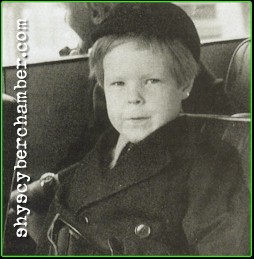
Lord Lucan's
eldest child, ten year old Frances (pictured right), made a statement
to the police which revealed that on 7th November her parents had gone
up to the nursery together after the time that Sandra Rivett was later
discovered to have died.
'Just after Mummy left the room, I heard a scream,' Frances said.
'It sounded as though it came from a long way away... I went to the
door and called Mummy but there was no answer and I left it. At
about 9.05pm, when the news was on TV, Daddy and Mummy both walked
into the room. Mummy had blood over her face and she was crying.
Mummy told me to go upstairs... I couldn't see if Daddy's clothes had
any blood on them.'
Frances said she later heard her father call out, 'Veronica, where are
you?'
Lady Frances was quite definite that her mother set out to look for
Sandra Rivett before the nine o'clock news began. The statement
was taken on 20th November, eight days after a warrant was issued for
Lucan's arrest.
On the night of her nanny's murder, Frances had been found by PC Baker
in her bedroom at the top of the house. |
|
|
This was Lord Lucan’s story, as told
to Susan Maxwell-Scott. He had been walking past the Lower Belgrave St
house, and had peeped in through the basement window. He had seen
someone struggling with his Lady Lucan in the basement kitchen. He let
himself in through the front door and ran down the stairs. He slipped
and fell in a
pool of blood, and the man had run off. He had calmed Lady Lucan
down and taken her upstairs to try and clean her up, but while he was
in the bathroom she had run out of the house shouting "Murder!". He
had panicked, realizing things looked very bad for him, and decided to
get out.
Between that time and arriving at the
Maxwell-Scotts he said had made three phone calls, one to Mrs.
Floorman, one to his mother, and he had also tried to telephone Bill
Shand Kydd, who was married to Lady Lucan’s sister but there was no
reply. Mrs. Maxell-Scott said that he did not tell her where he made
these calls from, but she got the impression they had been made after
he left the house. At 12.15 he rang his mother from the Maxwell-Scotts
house to check that she had the children, and rang Bill Shand Kydd
again, but there was no reply.
|
|
|
[ Lord Lucan's
Flat ]
Lord Lucan
occupied a spacious, five-bed roomed flat in this row of Georgian
houses in Elizabeth Street, Belgravia - not far from his estranged
wife's home at Lower Belgrave Street. Lucan's lifestyle gave the
impression of great wealth, but he had lost his huge inheritance at
gambling: the Elizabeth Street flat, was not his, but rented. |
|
|
Lord Lucan then wrote two letters,
both addressed to Bill Shand Kydd at his home in Bayswater. (They were
posted the following day. The envelopes were found to have
smears of blood on them. ) Mrs. Maxwell-Scott tried to persuade
him to remain so they could go to the local police the next morning,
but he said he had to "get back". He drove away. There has been no
validated sighting of him since.
Three days after the murder, the Ford
Corsair was found abandoned at Newhaven.
Bloodstains were found inside of both type A and type B, also, a
piece of bandaged lead piping, unstained, but very similar to the one
found in the murder house.
|
|
|
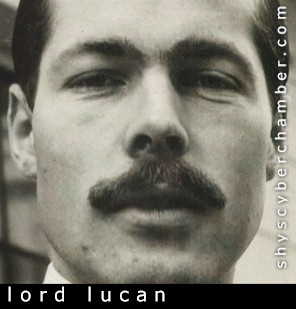
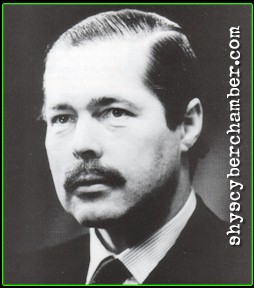
[ Lord Lucan ]
The young
John Lucan, photographed in 1953 during his National Service in the
Coldstream Guards - a prestigious British regiment. At the end
of his training, Lucan passed out as a Second Lieutenant. Even
at this time, he spent much of his spare time gambling. |
|
|
Richard John Bingham, (usually known
as "John") the future 7th Earl of Lucan was born on 18th
December 1934. He went to Eton where he discovered the great passion
of his life - gambling. In 1953 he joined the Coldstream Guards, where
he spent much of his off-duty time playing poker or visiting casinos.
After leaving the Army he joined a Merchant Bank, but by now, gambling
was his first priority. One night, after a substantial win at chemin-de-fer he decided to quit his job and become a professional
gambler. His gambling nickname was "Lucky".
In March 1963 he was introduced to
Veronica Duncan, whose sister was the wife of Bill Shand Kydd. They
were married the following November. Two months later, John Bingham’s
father died, and the couple became the 7th Earl and
Countess of Lucan. On 24th October 1964 their first child,
Lady Frances, was born. By then, they were living at the Lower
Belgrave St house.
Sally Moore in "Lucan: Not Guilty"
gives an incorrect account of Lord Lucan’s daily routine and indeed
she has never had any contact with Lady Lucan, the one person in a
position to know the truth. He was not an early riser, indeed he could
not be, as his nights were spent at the gaming tables, and he did not
return home until 6am. He slept until lunchtime, then went to lunch at
his club, the Clermont. Lady Lucan would join him there at 9pm.
|
|
|
[ Lady Lucan ]
After the Lucan's
wedding on 28th November 1963 - the marriage service was held at
Brampton Holy Trinity church - the couple seemed happy. But the
portraits of Veronica and each new child, such as with Frances to the
right, hid a broken marriage. She began to suffer from
depression, made worse by her husband's losing streak at the gambling
tables. |
|
|
In September 1967 their son George
was born, followed by another daughter, Camilla in June 1970. Lady
Lucan’s main concerns during that period were caring for the children,
and supervising the house and staff, and she had little time or
opportunity to develop independent interests of her own. She suffered
from post-natal depression after the birth of her children, and in
1968 Lord Lucan encouraged her to have treatment and she agreed if it
could be based at home. He took an interest in her condition, and
studied books on psychiatry. Lady Lucan believes that she was
prescribed drugs which were inappropriate for her condition, and
states that subsequently, doctors have expressed amazement at the poor
treatment she received. (I can attest from personal experience that
post-natal depression was much less well understood then than it is
now.) By now, however, the relationship was breaking down. Lady Lucan
became increasingly concerned about her husband’s continued heavy
losses at the gaming tables. She felt that he was dangerously addicted
to gambling, and should have treatment for it. He had also refused to
put money aside for the children’s education.
Lady Lucan instructed solicitors,
which caused a deterioration in the relationship and after a turbulent
Christmas 1972 they separated. From then on, Lucan was determined to
gain custody of his children. In March 1973 he obtained a court order
and took the two younger children while they were out with their
nanny, then collected Frances from school. For the next three months
Lady Lucan was cared for by hired nurses and during this time
voluntarily went into a psychiatric clinic for a week. Lucan had been
hoping that the medical reports would show that Lady Lucan was not fit
to have custody of the children,. Although the medical reports were a
dominant feature of the custody battle, Lady Lucan states that she
does not believe that her husband ever genuinely thought that she was
mentally ill, only that it was a ploy in the attempt to gain custody.
She did not have any prior history of mental illness, and her problems
appear to have been related to the post-natal depression,
inappropriately treated. Lord Lucan paid the medical bills, and
discussed Lady Lucan’s condition with the Doctor without her
knowledge. She feels strongly that he must have made statements that
would have coloured the Doctor’s opinion of her medical condition and
the required treatment. Lord Lucan would also telephone Lady Lucan and
provoke her into verbalising her negative feelings about him, which he
then tape-recorded, and later produced in evidence against her. It is
usual for Peers of the Realm to win custody of their children, and
Lord Lucan must have felt confident that he would do so, but in June,
to his surprise and mortification, the Court ordered that the children
be returned to their mother.
|
|
|
[
Family Titles ]
The Lucan family hold three peerages, or titles, carrying a seat in
the House of Lords. They are earldom, and the baronies of
Melcombe Bingham (a town in Dorset), and Castlebar (which is in the
Irish Republic).
The Lucan earldom is the highest of the family's titles, and was
created by royal favour in 1795.
It is one of only 200 or so earldoms and in order of precedence, only
a royal duke (a member of the royal family), a duke, and a marquess
are higher ranking.
The wife of an earl has the title of countess. Lucan's mother
added the title 'dowanger' as the widow of a nobleman. Until
Lucan is legally declared dead, his son George cannot become the 8th
Earl.
George, has, however, inherited the family peerage, choosing the title
of Lord Bingham.
[ Lucan's Mother ]
The Dowager Countess, Lucan's mother (pictured above), was a combative
woman who hired a leading barrister to represent her son's interests
and displayed absolute confidence that Lucan was incapable of murder. |
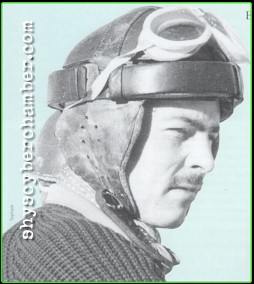 [ Lord Lucan ]
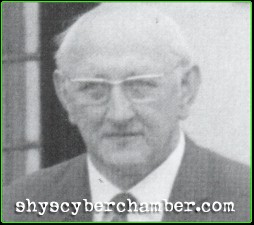 [ The Coroner ]
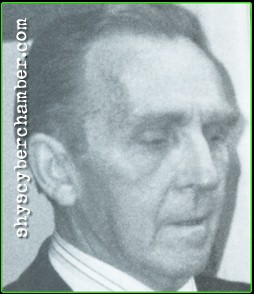 [ Sandra
Rivett's Parents ]
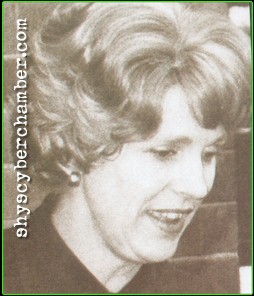 [ Sandra
Rivett's Parents ]
 [ Change in
the Law ]
 [ Lord Lucan's
Children ]
