|
|
Throughout a long, anxious weekend, her friends and family sat and waited
for a ransom demand, but none came.
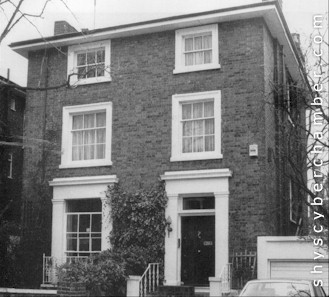
The police, piecing together Janie's last known movements, discovered that
on the day of her disappearance, she had left the Caelt Art Gallery in
Westbourne Grove, west London, where she worked, and driven straight home.
Finding that she had left her keys at the gallery, she had to ring the
bell. Camilla let her in and an apologetic, but excited, Janie had rushed
up the stairs, refused a cup of tea and packed for a weekend with her
boyfriend.
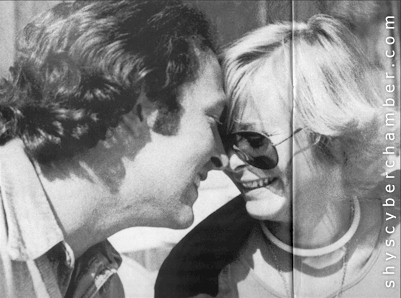
At 7pm, Kinkead-Weekes had telephoned to suggest they spend a quiet
evening at home. Janie had agreed and they planned a meal of smoked trout,
celery and cheese. Janie said she would buy the food on her way over. |
 |
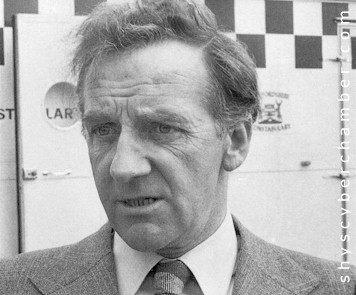
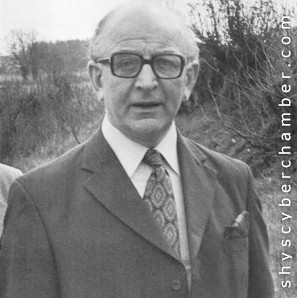
DETECTIVE CHIEF
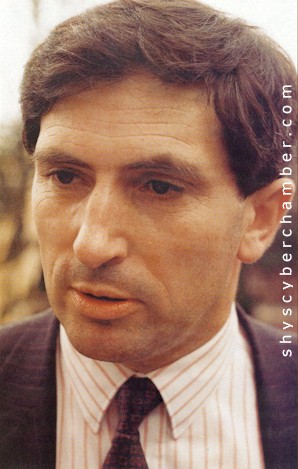
SUPERINTENDENT HENRY MOONEY :
Detective Chief
Superintendent Henry Mooney of Scotland Yard took over the
investigation after Janie Shepherd's Mini was discovered. His
examination of police records was to prove a turning point. |
|
|
When she left the Sampsons' flat in Clifton Hill at 8.40pm, she was
wearing jeans tucked into Cossack-style boots, a man's check shirt over a
thin polo-necked sweater, and a thick white cardigan with a reindeer
motif. I her big red satchel she had £40 in cash, a change of underwear,
and a black sweater with a vivid red polo-neck and bright green cuffs. She
also took a piece of tapestry that she was making and some balls of
coloured wool.
The contents of her bag strongly suggested that she was expecting to spend
a homely weekend with her friend.
When Janie left home that Friday night her car was clean and shiny. A week
earlier, she had decided to sell it and had cleaned and polished it for
potential buyers. She had placed an advertisement in the London Evening
Standard for four consecutive days and had put a large 'FOR SALE' notice
in the rear window. |
|
|
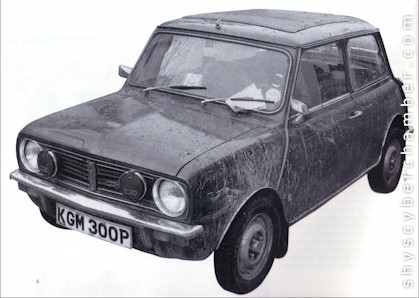
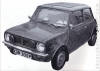 JANIE SHEPHERD'S MINI COOPER
:
Shepherd's Mini Cooper was discovered
in Elgin Crescent, London W11, on Tuesday 8th February 1977. It was
mud-streaked and had a slashed sun-roof. |
|
|
On Tuesday 8th February, four days after her disappearance, Shepherd's car
was found in Elgin Crescent, Notting Hill Gate. It was parked on a yellow
line and streaked with mud. Detective Roger Lewis of St John's Wood CID
had been put in charge of the investigation and, with no ransom demand
being yet made, was already in serious doubt that Janie Shepherd would
ever be seen alive again. The discovery of the car strengthened his fears.
There were two parking tickets on the windscreen. One was dated Monday 7th
February and timed at 11.45am, the other was dated Tuesday 8th February at
12 noon. The muddy state of the car was so noticeable that witnesses were
later found who remembered seeing it as early as 1.10am on the previous
Saturday.
Inside, the condition of the Mini was even worse. At this stage, Chief Superintendent
Henry Mooney of Scotland Yard's Murder Squad was called in to oversee the
investigation. He said that one look at the interior showed him that
'something outlandish' had taken place. There were two parallel slash
marks in the sun-roof. It was obvious that a struggle had taken place. |
|
|
LOVE OF LIFE :
Janie Shepherd was born in
Sydney, Australia, in 1953, to a prosperous middle-class couple. The first
tragedy her mother Angela had to endure was the death from a heart attack of her
husband, Anthony, when Janie was only 11 years old.
Several years later, Angela married John Darling, a wealthy banker and family
friend who rose to become chairman of British Petroleum in Australia.
Janie's parents frequently travelled to Europe on business, and so she was
educated at boarding school. She went on summer holidays with her parents
to Italy and Yugoslavia, and on winter skiing trips. Janie first visited
London in the early 1970s, quickly finding work as a bookkeeper in a boutique,
and as a cook in a Regent's Park restaurant.
In 1974, she returned to Australia where her parents set her up in boutique
selling Persian carpets.
She enjoyed the job, which involved plenty of travel to the Middle East, but
could not shake off her enthusiasm for London, so - aged 22 - she made the
decision to move back to England in March 1975. |
|
|
In the car, police found Shepherd's Cossack boots and red shoulder bag but
the £40 in cash and cheque card were missing. So were her change of
clothing, the tapestry and balls of wool. The 'FOR SALE' sign was still in
the back.
The police also found two receipts in the red handbag. One was from the
Europa Foods supermarket in Queensway; the other was from a self service
garage in Bayswater, showing that Janie had topped up the thirty one litre
(seven gallon) petrol tank of her Mini with fourteen litres (3 gallons) of
four star petrol on the night she went missing.
This enabled the police to make a rough assessment of how far the car
could have been driven into the country side. Given the amount of petrol
left in the tank, it looked as though the Mini could have travelled about
seventy five miles, but there was no clue as to any direction. An early
analysis of the soil embedded in the tyres showed traces of chalk and
flint, oak and beech leaves, and coloured fibres, which suggested that the
car had been stuck in mud and that Janie's tapestry had been used to give
the wheels leverage in an attempt to drive away.
That left a huge area to be explored - Oxfordshire, Surry, Hertfordshire,
and even Wiltshire. The detectives believed that somewhere in one of
these counties was the clue to Janie Shepherd's disappearance. |
|
|
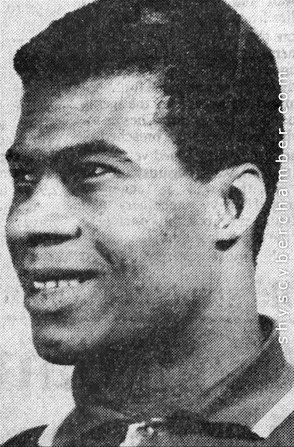
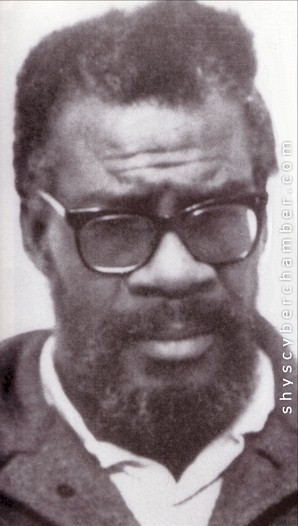
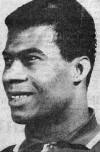 DAVID LASHLEY
:
A photograph taken of Lashley in 1970, when he was
convicted of five cases of rape and indecent assault. he was a powerful
man, who could easily subdue a woman. |
|
|
David Lashley was born on 30th September 193, in St Lawrence,
Barbados. His records show no signs of any juvenile delinquency.
Leaving school at the age of 13 in 1953, he went into apprenticeship
as a car-sprayer for the local Rootes factory.
He developed an ambition to go to London, and Rootes offered him a
place at their factory there. Lashley lived in a room at his
aunt's house in Southall, west London. In the early 1960s, he
met a young, blonde white woman who was pregnant by a former
boyfriend. Lashley would walk her to her home in west London at
night, worried about her being out alone on the dark streets.
Vulnerable and frightened, the 19 year old girl became dependant on
Lashley's kindness, and soon after the birth of her son they set up
home together. |
|
|
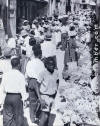
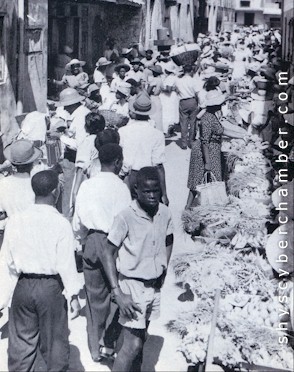
BARBADOS :
A popular street market in Barbados; the Caribbean island where David
Lashley was born. Barbados has long links with Britain and is a
member of the Commonwealth. |
|
|
Lashley loved his new family life. He was tender and considerate
towards the boy but when, in 1962, Jean gave birth to their own
daughter, Sandra, he began to change. In a violent row over a
cracked tea cup in the sink, Jean suffered three broken ribs.
Horrified by his own behaviour Lashley begged Jean both to forgive him
and marry him, which she did.
Soon after, a son was born and from that time Lashley became
obsessively jealous about his wife's past. He wanted her to
place her first son in a children's home, as he failed to see why he
should provide for another man's child.
The arguments became more and more violent and, on one occasion,
Lashley grabbed a chair and beat Jean with it until she lost
consciousness. Jean, who had herself been brought up in
orphanages, gave in after a time. She was frightened for her two
children and placed her illegitimate son in the National Children's
Home at Harpenden. |
|
|
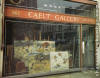 JANIE SHEPHERD :
Before she disappeared, Janie Shepherd had been working at the Caelt Gallery in
Westbourne Grove, west London. It was a small gallery, specialising in
paintings by young, relatively unknown artists. |
|
|
But this made no difference to the atmosphere at home or to Lashley's
jealousy. His sexual demands became more brutal and were devoid
of any feelings of love or affection. By now he had became a van
driver for a school outfitters in Hertfordshire and was convinced that
every time he left home his wife was indulging in an affair.
In 1965, Jean became pregnant again, but Lashley told her he could not
afford more children; she must have an abortion. He literally
dragged her to a back-street abortionist, who bungled the operation.
The baby died nine days after birth. By that time, Lashley was
so full of hate that he refused to attend the funeral. That was
the turning point. When Lashley started to stay out late at
night, Jean was indifferent.
But during that time, when the tabloids printed headlines about 'The
Beast of Shepherd's Bush', an unknown prowler who raped young women in
their cars, it never occurred to her that it could be Lashley. |
|
|
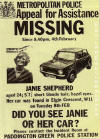
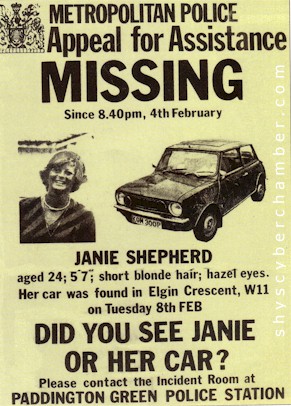
APPEAL FOR ASSISTANCE :
The police mounted a massive public appeal for information on Janie's
disappearance and displayed thousands of posters - like the one shown here - in
the hope of finding fresh witnesses. |
|
|
Then, one evening, Jean went out to make a phone call while a friend
minded the children. While she was out, Lashley returned home
and set about raping the friend on the kitchen floor. The girl
was in a state of shock when Jean returned. When confronted,
Lashley would say only, 'She asked for it.' A few days later, to
his wife's horror, Lashley was charged with the rape and the indecent
assault of five other women.
Scotland Yard's involvement in the Janie Shepherd case began when
forensic evidence revealed that the soil on the bodywork and tyres of
Shepherd's car came from as many as four different counties.
Police forces in these four counties were alerted, but the search began in
the Notting Hill area of west London, where Janie's car had been found.
The supermarket receipt indicated that Janie had brought smoked trout, as
she had promised her boyfriend, as well as yoghurt, tomatoes and chicory.
At the Europa store in Queensway, the checkout assistant - a schoolgirl
earning pocket money for the weekend - remembered Janie because 'she
looked like an actress or a model'. When the police searched the scruffy
back streets in the area, they found the food Janie had bought thrown into
various front gardens. |
|
|
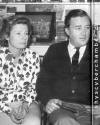 MR & MRS DARLING :
Mr and Mrs Darling, Janie's mother and step father arrived in London
from Tehran, Iran, four days after she vanished. They were willing to pay
any ransom demanded. |
|
|
On 11th February, detectives used helicopters to search the gardens of
derelict houses lying between St John's Wood and Notting Hill, as well as
the embankment of the Grand Canal, waste land and old bomb sites in north
London. They also used infra-red cameras to scour a one hundred and
thirteen kilometre (seventy mile) radius from Notting Hill over any
district with soil similar to that found on the abandoned car.
Body-sniffing dogs, trained by the same methods as drug-sniffing dogs,
were used for the first time. Detective Chief Superintendent (DCS) Henry
Mooney of Scotland Yard, the man responsible for the arrest - in 1968 -
and conviction of the Kray twins, made a direct appeal to the public for
information.
The police also distributed posters showing Janie smiling and a picture of
her dark Mini. Newspapers carried full descriptions of the clothes and
jewellery Janie was wearing when she left her flat. The jewellery included
a gold 'Woodstock' charm, a present from Roddy Kinkead-Weekes, which she
wore on a chain given to her by her mother. She had also worn a Gucci
digital watch on a grey leather wristband, a heavy gold bangle and a
distinctive gold Russian wedding ring.
Samples of the soil were examined by mineralogists from the chemicals
company ICI, and scientists from London University in an attempt to
pinpoint where Janie might be found. On Wednesday 9th February, her
distraught mother and stepfather, Angela and John Darling, arrived in
London from Tehran, Iran, where John had been working. DCS Mooney could
offer them little hope. The state of the car, which was still being
examined, suggested that the worst had happened. |
|
|
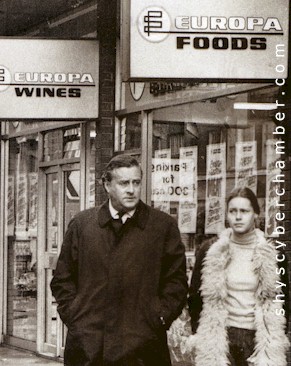
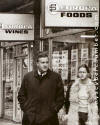 JOHN DARLING :
John Darling - Shepherd's Step Father - and his 18 year old daughter
follow the route that Janie took before she vanished. One of her stops was
at the Europa Foods store in Queensway, west London. |
|
|
Mr and Mrs Darling stayed in a flat in St James's, in the heart of London,
and prepared to keep vigil in the home of receiving a ransom demand. They
were willing to pay one without hesitation, but as the days passed, they
felt the need to do something practical.
DCS Mooney showed both shrewdness and sympathy by providing them with
results of the forensic evidence as it took shape day by day and, armed
with Ordnance Survey maps, Mr and Mrs Darling drove out to those parts of
the country where the soil was similar to that found in Janie's car.
For sixty five days, they explored copses, common lands, beauty spots,
hedgerows and little used lanes, bravely looking for the very
discovery they dreaded. Meanwhile, Detective Chief Inspector Roger
Lewis and a team of fifty officers and cadets were making similar
searches in the Chiltern Hills, north-west of London, an area that the
scientists thought might yield results and squads of police hunted
through other counties. |
|
|
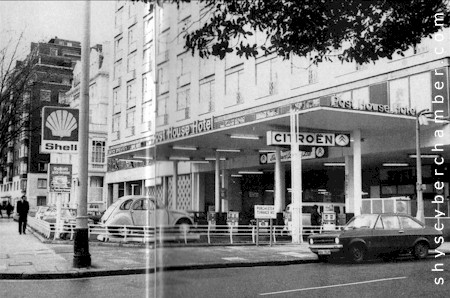
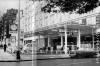 BAYSWATER PETROL STATION :
Receipts found in
Janie Shepherd's car showed that she had stopped at this petrol station in
Bayswater, west London, before shopping at the nearby Europa Foods. Her
destination was Knightsbridge to the south. |
|
|
The pressure on the police was increased by the knowledge that the longer
the search continued, the less chance there was of finding sufficient
evidence to identify the culprit.
Routine inquiries were also made. Known sex offenders questioned and this
resulted in what DI Lewis described as 'spin-off's' - arrests of other
crimes were uncovered. Altogether, eighteen people were detained in
connection with other offences as a result of the Janie Shepherd
investigation.
Inevitably, there were many misleading reports. The caretaker of a block
of flats in west London reported having seen a dark-coloured Mini, with a
blonde girl and a man of Arabic appearance inside, parked in his area. The
caretaker said he had noticed them because their car radio was very loud
and because the had gone out to explain to them that they were parked on
private property. |
|
|
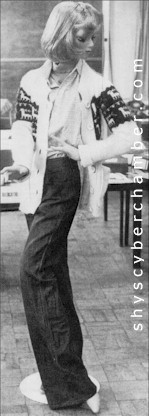
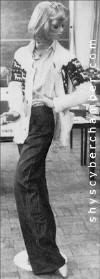 JANIE SHEPHERD MANNEQUIN :
In St Albans, Hertfordshire,
police dressed a mannequin in an outfit identical to the one Janie Shepherd was
wearing the night she disappeared. They hoped it would jog people's
memories. |
|
|
On 11th March, the police were called to a dry cleaners to examine a navy
blue cashmere coat that had been taken in, covered in mud, but which had
not been collected. When the police arrived, it had already been cleaned.
DCS Mooney examined all the records of Scotland Yard and at Notting Hill
looking for similar sexual attacks on women. The files showed that in June
1976, a young woman had been sexually assaulted in her car less than a
kilometre (half a mile) away from the street where Janie's car had been
found. The victim on that occasion had spent the evening with her
boyfriend, and around midnight had driven back to her flat in Chesterton
Road, North Kensington. As she was parking, a man approached and asked the
time. While she glanced at her watch, he wrenched the door open, pushed
her into the passenger seat and drove her to a railway arch in a back
street, where he held her captive for two hours at knife point, raping her
and attempting to strangle her.
As a woman walked past, pushing a sleeping child in a pram, her assailant
told the girl, 'If you call out, I'll kill you first, then the woman and
child.' He also told her how much he hated white women, slashed one of her
wrists, then he jumped out of the car and ran away. |
|
|
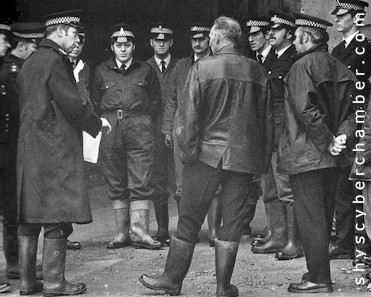
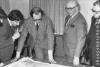 SCOTLAND YARD DETECTIVES :
Scotland Yard detectives study a map of derelict areas of north London where
they though Janie might be found. |
|
|
Somehow, she managed to drive herself home with one hand, keeping the
other in the air to try and stem the flow of blood. When she arrived, she
collapsed into the arms of a neighbour, who called the police. During her
four-day stay in hospital, she gave police a vivid description of her
attacker, helping to construct an Identikit of a black man with a scar on
his face.
The picture was shown on the British television show Police Five. It later
came to light that a female friend of the man had warned him to change his
appearance, which he did.
The police now examined their files in search of similar crimes. A suspect
who came high on their list, even though his file did not record him as
having a scar on his face, was David Lashley. In 1970, he had been
sentenced to twelve years' imprisonment for rape, indecent assault and
robbery. In four of the five cases with which he was charged, he had
assaulted and robbed women in their own cars. |
|
|
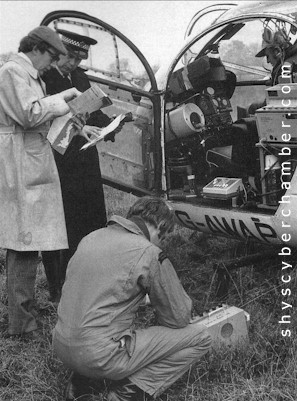
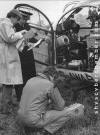 THE SEARCH FOR JANIE SHEPHERD :
Police helicopters used in the
search were equipped with infra-red cameras to detect temperature changes in the
ground, indicating the presence of a hidden body or a shallow grave.
Helicopter crews covered a 113km (70 mile) radius from Notting Hill. |
|
|
Lashley was paroled in 1976 - two years before the maximum remission
normally allowed - because he had come to the rescue of a warder during a
riot in prison.
DCS Mooney sent his men to Lashley's home in Beaconsfield Road, Southall,
west London. They returned with the information that Lashley did indeed
have a scar on his cheek. Lashley was taken in on 17th February for
questioning about the Chesterton Road case and on suspicion of abducting
Janie Shepherd. At an identification parade, Miss A, the woman from
Chesterton Road, picked him out unhesitatingly. Lashley was remanded in
custody in Brixton prison and charge with rape and attempted murder.
According to Mooney, Lashley confessed to the Chesterton Road case, though
Lashley himself was to deny this. He insisted that he knew nothing about
Janie Shepherd, and had an alibi for the night she disappeared. |
|
|
GROUND SEARCHES :
Ground searchers from five police forces are briefed before setting out on their
morning hunt. The public were asked to 'pay special attention to ditches
and fields not often visited in the winter months'. |
|
|
In a statement, Lashley said that on 4th February he had gone to the north
of England with a girlfriend and returned to London in the early evening.
At 5.30pm, he had been at work as a car-sprayer, and from 7pm he was at
home watching television. He had gone to bed at 9.30pm. His friends and
aunt, with whom he lived, corroborated the statement.
But what had been an intuitive move on Mooney's part impeded the search
for Janie's body. In custody, in Brixton jail, Lashley was protected by
law. He was under no obligation to see anybody unless it was in connection
with the charges that had been made. Nobody could force Lashley to talk.
Angle and John Darling, meanwhile, continued their daily searches through
the English countryside. But they were now resigned to never seeing their
daughter again, and hoped only that her body could be found to be given a
decent burial. |
|
|
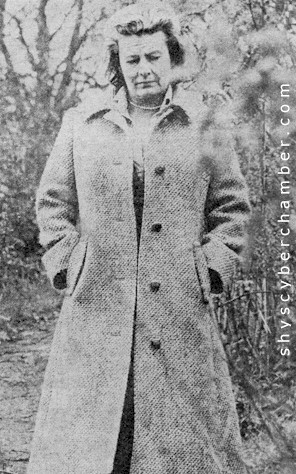
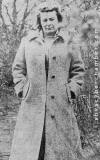 MRS DARLING :
Mrs Angela Darling, Janie Shepherd's mother, walks through the countryside in
the search for her daughter's body. She and her husband gave up looking
after three months and returned home to Australia. |
|
|
On three consecutive Friday nights, the police staged a reconstruction of
Janie's visit to the Queensway supermarket, working on the premise that
people are creatures of habit and might have noticed somebody hanging
around.
Some six hundred people were questioned during the investigation, but
finally the police had to cut the number of men involved in the search of
Janie's body. Then, on 12th April, 1977, nine weeks after Janie
disappeared, the Darlings abandoned their efforts, returned to Australia
broken-hearted, but convinced DCS Mooney was right in thinking that
Lashley had murdered their daughter. |
|
|
SCHOOL BOYS & NEIGHBOURS :
The two school boys and neighbours
Neil Gardiner (left) and Dean James who found Shepherd's body. They were
out cycling during the Easter school holidays. |
|
|
It was the Easter holidays and two boys, school friends and
neighbours, decided to go for a bike ride on Nomansland Common, near
Wheathampstead. The day was clear and bright, and the boys
cycled up the rough footpath, among gorse bushes and hawthorn trees.
Suddenly they spotted what they thought was a pile of rags and went to
investigate. But curiosity quickly gave way to fright, and they
dropped their bikes and ran. So it was on Monday 18th April, six
days after Angela and John Darling had returned to Australia, that
Dean James and Neil Gardiner, eleven and ten years old respectively,
found what the police of four counties had been looking for over the
past two and a half months. They had discovered the body of
Janie Shepherd.
At first the boys tried to convince themselves that they must have
seen a dummy. They crept back to retrieve their bikes, barely
daring to look at the bundle of rags, but Dean thought he saw what
looked like blonde hair. They pedalled home quickly, too
frightened to stop and tell anyone what happened. |
|
|
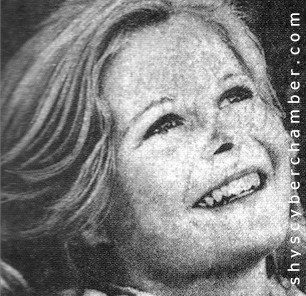
 JANIE SHEPHERD :
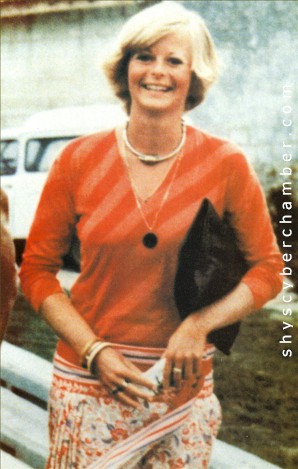
Janie Shepherd was 24 years old and was born in Sydney, Australia, she moved to
London in 1975. She was working at an art gallery at the time of her
death. |
|
|
It was dusk before Dean finally blurted out to his father, Peter
James, that he was sure he had seen a real body on the common.
Mr James immediately contacted the local police. The boys were
questioned, and their fright convinced the police that this was no
prank.
Accompanied by their fathers, the boys led the police to the spot in
the bushes. The body lay in a shallow dip, only about 23m (25
yards) from the B651 road from St Albans to Wheathampstead, in an area
used extensively by model aircraft enthusiasts and motorcyclists.
Detective Chief Superintendent Ronald Harvey, the head of the
Hertfordshire CID, was summoned and the area was cordoned off.
An urgent call was placed to Professor James Cameron, a leading
pathologist at the London Hospital, Whitechapel and his colleague
Bernard Sims, a forensic dentist. |
|
|
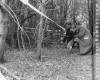 FINDING THE BODY :
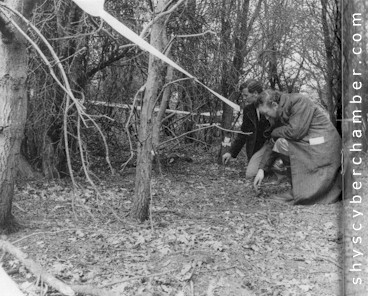
Detectives examine the spot on Nomansland Common in Hertfordshire where Janie
Shepherd's body was found. The body was so badly decomposed that it had to
be identified through dental records. |
|
|
After preliminary tests, the body was removed to St Albans mortuary.
By the time DCS Mooney arrived, the case had become the responsibility
of Ronald Harvey. The body was found fully clothed in jeans,
striped socks and a black sweater with a vivid scarlet polo neck and
bright green cuffs. There were gold rings on two fingers on the
right hand and on one finger on the left hand. Around the neck
was a gold chain with a 'Woodstock' charm attached to it. There
was no doubt that it was the body of Janie Shepherd.
At 11.15pm, Professor Cameron and Bernard Sims began a postmortem
examination that lasted four hours. Cameron noted ligatures on
the outside left ankle above the socks, indicating that the feet had
been bound before death with the right leg placed in front.
There were also ligatures on the upper arms, extensive bruising on the
upper arms and chest, and what may have been fingernail marks on both
the breasts. There was additional bruising on the back of the
left foot, the right shin, the right thigh and the left temple.
Janie Shepherd had clearly fought for her life.
Despite the bruising to the left temple, there was no indication of a
fracture of the skull, but the lungs and heart revealed signs of
asphyxia. Cameron concluded that the victim had died from
compression of the windpipe. By 3.15am, Bernard Sims had
completed his identification, using Janie Shepherd's dental charts. |
|
|
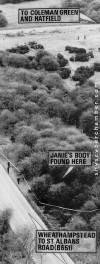 LOCATION OF THE BODY :
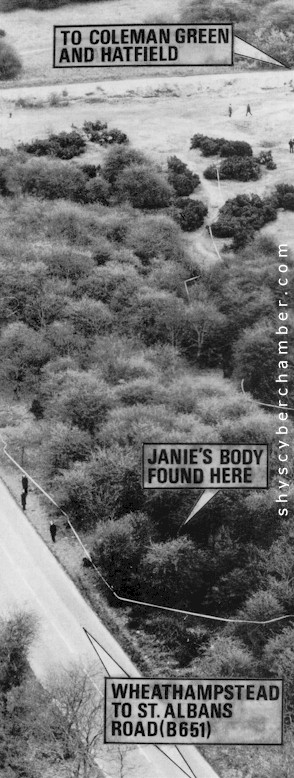
This aerial photograph shows where Shepherd's body was found. Soil samples
collected by the police did not match those found on the tyres of Janie's Mini.
The body was only five kilometres (three miles) from where her parents had
searched for weeks previously. |
|
|
On 19th April, Angela and John Darling were woken at 8am at their home in
Sydney, Australia, to be told of the discovery. Only a few weeks before,
the distraught couple had been in England searching for Janie, and had been
within five kilometres (three miles) of the spot where she was found.
The finding of a body usually sheds some light on the circumstances of death,
but in Shepherd's case, it confused the situation. When Janie left her
cousin's flat in Clifton Hill on the evening of 4th February, she had been
wearing a check shirt over a fawn sweater, plus a thick white cardigan, as well
as jeans and boots. When found, she was wearing the jeans, unzipped,
although still buttoned at the waist, but she was wearing the black, red and
green sweater she had packed in her satchel. Her underwear had also been
changed.
The area was thoroughly searched, but neither the missing garments, nor
Shepherd's tapestry and wool, were found. The postmortem revealed that she
had been sitting upright before her death, but the degree of decomposition made
it impossible to tell whether she had been raped or indecently assaulted.
Semen had been found inside her Mini, but at that time, there was not the
technology to identify semen groups and nothing conclusive could be learnt from
it. |
|
|
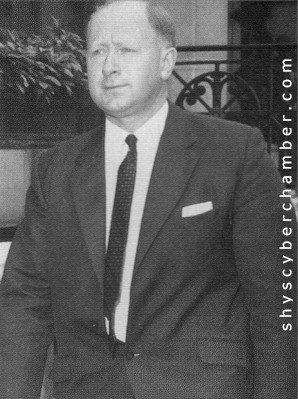
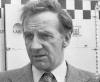 DCS RONALD HARVEY :
DCS Ronald Harvey of the Hertfordshire CID removed the body to St
Albans mortuary. He took over the Shepherd case from DCS Mooney
and had to duplicate much of the investigation work. |
|
|
The inquest on Janie Shepherd opened on 22nd April 1977, in St Albans.
The coroner, Dr Arnold Mendoza, adjourned the hearing for further
forensic tests to be made both on the body and the car. On 24th
October, the inquest was reopened before a jury. Professor
Cameron testified that Shepherd had died of compression of the
windpipe, but that he was unable to say whether the compression was
manual or caused by some hard object.
He added that Janie had been bound hand and foot and that the
extensive bruising on her body suggested she had either struggled
desperately or had been severely beaten. The court also heard
evidence from Alistair Sampson, who spoke of Janie's good health and
high spirits on the night of her disappearance, and from
Kinkead-Weekes, who gave evidence about her plans for the evening.
The court at St Albans also heard that, despite statements from a
total of 825 people, her killer had not been identified. The
jury, therefore, returned a verdict of murder by person or persons
unknown. That afternoon, Janie Shepherd was finally laid to
rest. Her remains were cremated at Garston Crematorium near
Watford, in a service attended by Angela and John Darling, Roddy
Kinkead-Weekes and a few close friends. |
|
|
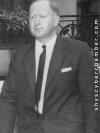 PROFESSOR JAMES CAMERON :
Professor James Cameron, the Home Office pathologist, performed the postmortem
on the body found at Nomansland Common, near the town of Wheathampstead in
Hertfordshire. |
|
|
When Angela and John Darling returned to Australia on 12th April 1977, their one
consolation was a firm assurance from DCS Mooney that one day he would bring
their daughter's murderer to justice. He promised to keep in touch, even
though he was to retire in June of that year, and he exchanged letters and
Christmas cards with Mr and Mrs Darling throughout the long wait.
Angela Darling never gave up hope. In June 1988, she once more wrote to
the Home Office requesting any fresh information. Whether she was aware
that David Lashley, Mooney's prime suspect, was due for release in February 1989
has never been disclosed, but the Home Office contacted the Hertfordshire police
with a suggestion that the case be reviewed.
The brief went to Detective Superintendent Ian Whinnett who called in Detective
Constable Mick Farenden, an officer who had been on duty on 18th April 1977,
when Dean James's father had reported the finding of the body. |
|
|
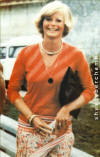 JANIE SHEPHERD :
Janie Shepherd, caught here in her usually happy mood, was the 'nice-looking
blonde' whom David Lashley said he saw go into a store in Queensway, west
London. He abducted her on her return to the Mini. |
|
|
Farendon had been celebrating the promotion of some colleagues but, within
hours, he had set up an incident room at St Albans police station. Eleven
years had elapsed, but Farendon was familiar with the contents of all the boxes
in which the evidence had been stored.
The Hertfordshire police had been made aware of Henry Mooney's opinions early in
the investigation, while Lashley was in Brixton Prison on remand for the rape
and attempted murder of Miss A.
At the time Mrs Darling wrote to the Home Office, Lashley was in Frankland
prison, Durham, a high-security jail where, even after 11 years, he was still a
Category A - or dangerous - prisoner. Whinnett and Farenden travelled
north to talk to the prison personnel and there they discovered some
extraordinary information. |
|
|
 DETECTIVE SUPERINTENDENT IAN WHINNETT :
The re-investigation into the Shepherd case - triggered by Angela Darling's 1988
letter to the Home Office - was conducted by Detective Superintendent Ian
Whinnett of the Hertfordshire police. |
|
|
Although there was no record of Lashley ever having received any formal
psychiatric treatment, prison officers had written down the reports on Lashley
from other inmates. The gist of these remarks, which could have been
dismissed as gossip or attempts by informers to curry favour, were consistent
over the years.
Lashley was eaten up with hatred for the police - and women. He had once
said, 'When I get out, there are two things I am going to do. First I am
going to get even with the police. Then, I am going to go on a rape and
murder campaign against females. If you think Hungerford was bad just wait
and see when I'm free.'
At the top of his police hit list was Henry Mooney and his family. It was
said that he planned to use a machete. As a result of this information, a
meeting was organised between officers of the Hertfordshire and Metropolitan
Police forces at which Mooney was present, even though he had retired. |
|
|
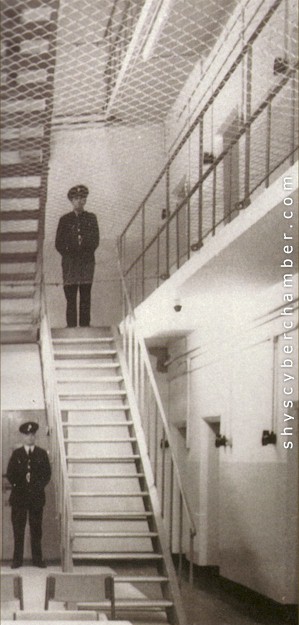
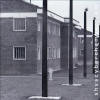 FRANKLAND JAIL IN DURHAM
:
It was at Frankland high-security jail, in Durham, that David Lashley revealed
to fellow to fellow inmate Daniel Reece that he had killed Janie Shepherd.
This is a view of the jail's modern section. |
|
|
The re-investigation began with a team of seven officers systematically reading
through every statement taken in 1977 and tracing the people who had made them.
It took Mick Feraden three months to find the checkout girl from the Europa
store. One by one, the witnesses were tracked down, but the man whom nobody -
prisoners, police officers and prison warders alike - wanted to see back on the
streets of London was finally delivered up to justice by a criminal with a
conscience.
The police were no nearer to finding conclusive evidence against Lashley, when
Daniel Reece, a prisoner from Frankland, recounted a conversation he had had
with Lashley in the sawmill where they worked. Lashley was a loner, but he
confided in Reece, who was serving a long sentence for rape and other offences.
It was not, however, the similarity of their crimes that cemented their
friendship, so much as their shared passion for fitness and body building.
The two men spent hours in the prison gym, practising weight-lifting.
Lashley regularly lifted 318kg (700lb), a weight only the strongest men in
Britain can achieve.
It was after reading a piece in a newspaper about a black man receiving a long
sentence for rape that an enraged Lashley turned to Reece, a white man, and
said, 'He should have killed her. If I had killed that one [Miss A] like I
did the other, I wouldn't be here now.' |
|
|
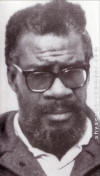 DAVID LASHLEY :
A picture of the 49 year old David Lashley taken in February 1988 while he was
in Frankland jail, Durham, in the north of England. |
|
|
Lashley went on to describe in extraordinary detail how he had abducted 'a
nice-looking blonde' after seeing her get out of her Mini and go into a shop in
Queensway. He had noticed the 'For Sale' sign in the rear window and
waylaid her on her return. He had grabbed her in the car and flourished a
butcher's knife, cutting the roof of the car to demonstrate how sharp it was,
and driven to some dark place in the Ladbroke Grove area where he ripped her
clothes to shreds with the knife and raped her.
Lashley told Reece that she had put up a terrific struggle, but he had insisted
on making her tell him how much she was enjoying it. He then demonstrated
to Reece how he had killed her. Having dressed the body, he had strapped
it into the passenger seat, driven out into the country and thrown the body into
some bushes.
This alleged confession, couple with Lashley's previous statements about his
plans after his release, disturbed Reece. Finally, he confided in a prison
officer after stating categorically that he would not, under any circumstances,
discuss the matter directly with the police. Reece said that his reason
for offering the information was his concern for the safety of white women on
the street. He believed that a criminal such as David Lashley should never
be released. |
|
|
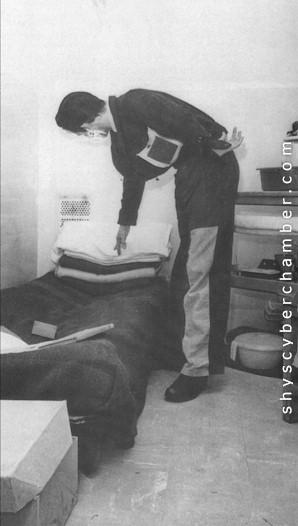
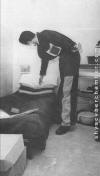 FRANKLAND PRISON GARB :
Prisoners in Frankland's maximum security win - and Lashley was one of them -
have to wear bright patches on their dark blue prison dress to distinguish them
from other inmates. |
|
|
It remains unclear exactly when the prison authorities released this report to
the Hertfordshire police. But after it was received, one particularly
disturbing detail emerged in the files. According to Reece, Lashley had
laughed as he described how the body had swayed in the front seat on the long
drive to Hertfordshire. Among the few sightings of a dark-coloured Mini on
the night of 4th February 1977, here was an account by a young couple who had
seen a blonde girl, apparently drunk, in a car being driven by a man with dark
hair.
The pathologists' report tallied with Lashley's description of the killing.
The details had not been released at the inquest and Reece, unaware of the
report, could not have made them up. The files on the case, which in 1969
sent Lashley to prison with a sentence of 12 years, were re-opened and the
victims questioned all over again. The similarity and patterns of the
attack were like those made against Janie Shepherd and Miss A.
All but one of the victims had been attacked in small cars outside their own
homes while parking. The only exception was a woman, returning home, had
believed Lashley's story that he was visiting a friend who lived in the same
mansion block. She had let him in through the front door but, as she
opened her own door, he had tried to push inside. Her screams had sent him
running. |
|
|
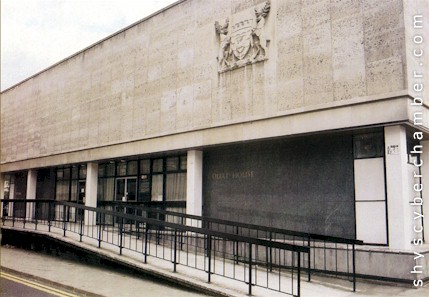
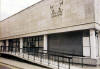 ST ALBANS MAGISTRATES COURT :
Lashley's committal proceedings were held at St Albans Magistrates Court, 32km
(20 miles) north of London. His appearance was accompanied by a heavy
police presence. |
|
|
One hour later, he raped a woman in her Morris Minor outside her home in
south-west London. All the women were blondes, All had been robbed
of cash, as well as raped and told that if they screamed, they would have their
necks broken. The attacker was tracked down by his own car number plates
and picked out separately by each woman at police identification parades.
By November 1988, a combined team of Hertfordshire and Scotland Yard detectives
was convinced it had enough evidence to prosecute Lashley. But there were
still some unresolved questions about procedure. It had to be decided
whether to interview Lashley about the murder of Janie Shepherd in prison, or
wait for his release in February 1989. The detectives decided to wait, but
in January 1989, the news of the re-opening of the Janie Shepherd case and of
the imminent release of the unnamed prime suspect - a vicious rapist - was
released to the press.
It became front page news and could have easily cost Daniel Reece his life.
When Lashley read the papers, he turned on Reece saying, 'You've grassed on me.
You are the only one I've confessed to.' |
|
|
JEAN LASHLEY :
Jean Lashley, who divorced Lashley in 1975, said that her husband 'must have
derived pleasure from giving me pain'. She must have symbolised all that
Lashley hated. |
|
|
Lashley was transferred instantly to Durham Prison, another high-security jail,
but Reece was beaten up a few days later by other prisoners. On Sunday
16th February, Lashley was transferred back to Frankland. It is customary
for a prisoner to be released from the prison where he was serving his sentence.
At 7am on Monday 17th February, Lashley walked towards the gates, escorted by
prison warders. As they went he turned to a prison officer and said, 'The
police are waiting for me, aren't they?' He was right: DS Whinnett and DC
Mick Farenden were outside. Lashley was free for barely 30 seconds before
they charged him with the murder of Janie Shepherd and bundled him into a
high-security van that had been standing by to take him to St Albans Magistrates
Court for remand on Thursday 10th March 1989, the police had been given further
vital evidence against him by prison officers at Parkhurst, the high-security
prison on the Isle of Wight.
There a prisoner named Robert Hodgson alleged that Lashley had as good as
confessed to the Shepherd killing in Wakefield prison, where, in 1981, they were
both doing time. Lashley had asked Hodgson what he was in for.
Hodgson replied that he had been convicted of killing a woman in a car.
'What did you do with the body?' Lashley is said to have asked. When
Hodgson said he had left it in the car, his fellow criminal Lashley replied,
'You should have done like me and shoved it in some woods.' It was
probably one boast too many. |
|
|
FIEND WHO PREYED ON WHITE WOMEN :
This heading in The Sun newspaper on 20th March 1990, gets to the essence
of Lashley's campaign of terror. His hatred of white women drove him to
commit a series of rapes and inevitably, murder itself. |
|
|
Lashley was remanded in Brixton prison and committal proceedings
began at St Albans Magistrates Court at the end of May 1989. Both Reece
and Hodgson gave evidence and a small account of the proceedings appeared in
The Times and The Guardian, as Lashley requested that reporting
restrictions should be lifted.
As a result, a third prisoner stated that Lashley had confessed to the crime.
On 2nd June 1989, Lashley was committed for trial for the murder of Janie
Shepherd. |
|
|
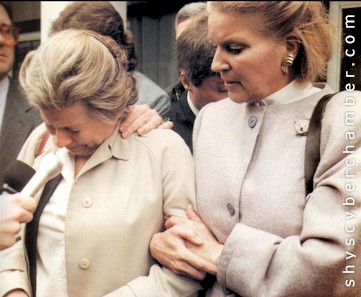
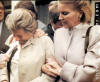 ANGELA DARLING :
Janie Shepherd's mother, Mrs Angela
Darling (pictured left),
accompanied by Janie's cousin, Camillia Sampson, walks sorrowfully from St
Albans Crown Court after the trial. When asked if Lashley should ever be
released, she replied: 'Never, never, never.' |
|
|
On Tuesday 7th February 1990, 13 years to the month after Janie
Shepherd disappeared, David Lashley walked into the dock of St Albans Crown
Court under a heavy guard of policemen. He had not withdrawn his threat to
'get' several prison warders and police officers. Lashley pleaded 'Not
Guilty' to the murder of Janie Shepherd, which had occurred sometime between 4th
February and 18th April 1977.
Michael Kalisher, QC, prosecuting, told the court that, although within a
fortnight of Janie's disappearance Lashley had been arrested under suspicion of
committing the crime, it had been thought that the evidence was insufficient for
a prosecution. Kalisher then read out the sworn statement from Daniel
Reece. 'The Crown will contend that the confession was so detailed, so
accurate, and so consistent with the known facts about the murder that it could
only have come from the murderer himself. It is overwhelming and, in a
sense, too horrifying to be anything other than the truth.'
During the three week trial, Daniel Reece, the chief witness, described
Lashley's account of how he had murdered Janie Shepherd. Reece claimed
that Lashley had held his own neck in one hand, and pressed the fist of his
other hand hard against his own windpipe. As he went through these
actions, Lashley explained that this was how he had killed Janie Shepherd. |
|
|
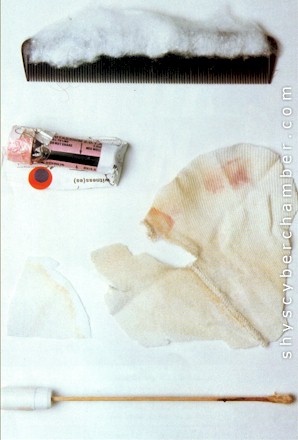
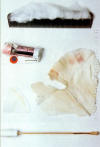 STATE OF THE ART :
In 1977, forensic science was not sophisticated enough to connect David Lashley
with Janie Shepherd's death. Had it been available, DNA profiling -
genetic analysis of sweat, saliva and semen - would have certainly identified
Lashley as the killer. Typical finds at the scene of a crime from which a
DNA 'fingerprint' can be obtained are (see above, clockwise): pubic hair,
trapped in a comb of cotton wool, blood and semen stains on a torn pair of
knickers, a vaginal swab containing semen, a semen stain on a piece of cloth,
and a blood sample.
The semen taken from Janie's Mini was
given DNA profiling thirteen years later. |
|
|
The pathologists report, made by Professor Cameron in April 1977,
had concluded that death had been caused by compression of the windpipe, but its
detailed findings had never been made public. Reece certainly could not
have known them. Reece said that Lashley had claimed to have eaten some of
the food Janie had bought, mentioning salmon rather than the smoked trout she
had purchased. But even that mistake made Reece's statement all the more
authentic.
Also, Lashley was supposed to have said that he had thrown the rest of the
contents of her shopping into the gardens around Queensway on his return to
Hertfordshire, and that he had almost panicked when the car stuck in the mud
after he had abandoned the body. He had to get out and push it to start
it. The forensic examination of the mud covered car after it was found on
8th February 1977 in Elgin Crescent bore the signs of wheel spin on the tyre.
This detail had not been made public either.
Police checks into Lashley's background had shown that he was quite familiar
with the area where the body was found. He had been a van driver for a
Hertfordshire school outfitters in the Hatfield and St Albans area, and he had
visited his stepson when he lived in the National Children's Home in Harpenden
during the 1960s. |
|
|
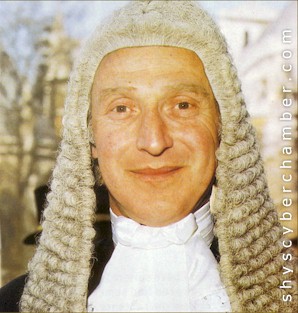
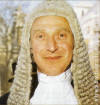 MICHAEL KALISHER, QC
:
Michael Kalisher, QC, appeared for the prosecution and called witnesses to whom
Lashley had confessed the murder of Janie Shepherd. Even though these
witnesses were felons, the jury believed them. |
|
|
Lashley and his wife, Jean, used to take the boy and his friends
out to play on Normansland Common. There were other minor points of
evidence against Lashley, such as the chewing gum packets, of a type he used,
which had been found in the Mini. Janie did not chew gum. Cigarette
butts of a brand Janie did not smoke were also found.
Technology could now identify semen groups and the semen found in the Mini gave
a reaction for an A-secretor. David Lashley was an A-secretor.
The police diligence had been extraordinary. They had kept in a small
plastic bag, the peanut shells found in Janie's Mini and also in Lashley's
Vauxhall Victor, which he used as a delivery van. Detectives had also
traced all the women involved in Lashley's previous crimes, and these women were
all willing to repeat their testimony against Lashley during his trial for
Shepherd's murder. |
|
|
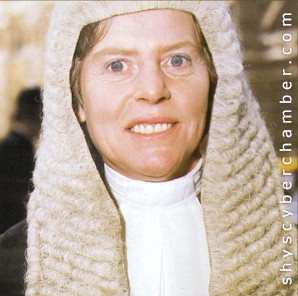
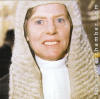 HELEN
GRINGROD, QC :
The defending QC, Helen Gringrod, was unable to help her client, David Lashley,
so overwhelming was the evidence against him. He had been dubbed 'The
Beast of Shepherd's Bush'. |
|
|
Lashley had an alibi. When first interviewed on 17th
February 1977, he had denied all knowledge of Janie's fate, stating that he had
gone to Leicester with a girlfriend. Then he had checked in at his place
of work for the following days orders and arrived at his aunt's home in Southall,
west London, where he had a room, at around 7pm.
According to Lashley, he had watched television and gone to bed at 9.30pm.
Thirteen years later his aunt, Mrs Eurthra Smith, corroborated his story under
oath. She had supported Lashley's alibi in 1977 and she stood by it again
in 1990.
He had gone to bed early, his aunt explained, and had complained of feeling
unwell. She had stayed up to watch the rest of the evening's programmes
and, after the closedown, had checked the front and back doors and all the rooms
in the house. Lashley was then fast asleep, she told the court. |
|
|
 JUSTICE AT LAST FOR MY JANIE :
The Daily Mirror's headline for 20th March 1990 sums up the relief that
was felt by Mrs Darling after David Lashley was jailed for the rest of his life
for the murder of her daughter. She had flown in from her home in
Australia for the trial. |
|
|
Throughout the case, Mrs Angela Darling sat in court wearing the
Woodstock charm on a chain and one of the rings that had been found on Janie's
body. When she took the witness box, the judge, Mr Justice Alliott,
expressed his concern for her well being, but Angela Darling told him she was
there at her own request.
She told the court that DCS Henry Mooney had told her many years before that he
suspected a man of the murder, but Mrs Darling said she could not remember when
she had first learned the name of this suspect. In the witness box she was
trembling and nervous, but she had sat unflinchingly through all the horrific
details of Janie's abduction, rape and murder listening to tales of the
humiliation and mutilation her daughter had suffered at her killer's hand.
ON Monday 19th March 1990, the jury retired for two and a quarter hours, and
returned with a unanimous verdict: 'Guilty'. There were cheers from the
public gallery and tears from Angela Darling before Justice Alliott could
quieten the court to pass sentence. Life imprisonment, the automatic for
murder, can, in practice, mean parole, after a term of seven to nine years.
But in Lashley's case, the judge chose his words extremely carefully. |
|
|
A LIFE APART :
David Lashley will probably remain a
Category A prisoner for the rest of his life and, under Rule 43, will be
segregated from other prison inmates. It is unlikely that he will ever be
transferred to an open prison. As a long-term prisoner, he will almost
certainly have a comfortable cell with a radio and possibly even a television
set.
A keep-fit enthusiast, he will also have the regulated used of the prison
gymnasium. After 20 years, at the age of 70, he may still be a dangerous
man. So far, he has shown no signs of remorse. |
|
|
'The decision is such that whoever is responsible must have the
most careful regard before you are ever allowed your liberty again,' he told the
bespectacled Lashley. 'In my view, you are such an appalling, dangerous
man that the real issue is whether the authorities can ever allow you your
liberty in your natural lifetime.' At these words, Lashley showed no
emotion.
The family of Janie Shepherd were triumphant. 'Justice has been done,'
said Angela Darling, 'which is marvellous. Certainly, the police have been
fantastic. We always prayed this would happen, and the police never
stopped.' |
|
|
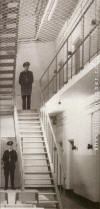 DETAINED :
David Lashley is detained in a
maximum-security prison, the name of which the Home Office refuses to release
for his own continued safety. |
|
|
 Roddy Kinkead-Weekes, who had
been questioned at length by the police in the first few days after Janie
disappeared, emigrated to Australia in 1984 and now lives in Perth with his wife
and two children.
He felt dismay that the prison authorities released Lashley in 1976 when he had
not served out his first sentence for rape. 'I am angry that those people
who were responsible for letting Lashley go free do not appear to be accountable
for their mistakes, at least not publicly,' he said. 'If Lashley had been
kept in prison for his full 12 years, Janie would still be alive. I am not
an advocate of capital punishment, but I do believe that people who behave like
animals should be locked up forever.'
Jean Lashley was also thankful
about her ex-husband's 1990 sentence: 20 years previously, in 1970, she had wept
with joy when Lashley was sentenced to 12 years' imprisonment, and had been
appalled by his early release.
After the Janie Shepherd trial,
Jean Lashley said, 'All along, people have hinted that because I am a natural
blonde it must have been something I did that turned him into a monster.
In fact, although I was always proud of my hair and looked after it, he never
commented on it. I don't know when blonde hair became an obsession with
him.'
In 1990, after 13 years,
the incident room in the Hertfordshire police headquarters was dismantled.
It was a small, square room, overlooking pleasant countryside, filled with
cardboard boxes containing all the evidence gathered since 1977, forensic
reports, maps, and large wall analyses of the cases against Lashley. DC
Mick Farenden, who had been involved with the case since the discovery of the
body on 18th April 1977, had the unpleasant task of packing up the clothes that
were taken from Lashley's home for forensic research, and of returning them to
him in prison. |
|
|
BACK TO TOP |