|
|
Kemper was 20 when he was released
into a halfway house to find the world had passed him by. He had gone into
hospital believing in the military power of America and hero-worshipping John
Wayne and the police force, and had come out into a world where his
contemporaries were demonstrating against the Vietnam War, fighting the boys in
blue in the streets and deriding all the conservative values he held dear. He
felt like an old fogy.
His special contempt was reserved for hippies. He thought they were low class
and immoral. He was particularly struck by the long haired girls he saw
everywhere on the highways, hitching lifts from strangers.
After three months at the halfway house, and despite all the warnings of the
doctors at Atascadero, the Californian Youth Authority paroled Kemper into the
care of his mother, Clarnell, who was working for the University of California
at Santa Cruz and living in the nearby small town of Aptos.
Mother and son argued incessantly. She wanted him to get on with his life, to go
to college and get a degree. Kemper was bright enough, but preferred to hang out
in local bars, particularly one called the Jury Room, where local police
gathered. He applied to join the force, but was rejected because, at six feet
nine inches and more than 20 stone, he was just too big.
Instead, he got a job manning the stop-go sign for a state road working gang,
and bought himself a motorbike. He hadn't had it long before he crashed it,
injuring his head. With the insurance payout he bought a 1969 two door sedan, a
Ford Galaxie.
Once he had earned enough money to get away from Aptos he moved North, to
Alameda near San Francisco, where he shared a rented flat with a friend. He
spent all his spare time cruising around the California highways, stopping to
pick up young female hitch hikers, learning to make himself pleasant and
agreeable. He also started to buy knives. It was getting to be time to put his
plan into operation. |
|
|
On the afternoon of 7 May 1972, a
Sunday, Kemper picked up two 18 year old college students, Mary Anne Pesce and
Anita Luchessa, near San Francisco. They were hitch hiking to visit friends at
Standford University, no more than an hour's drive away. |
 |
[
Mary Anne Pesce ]
Mary Anne Pesce was the first to die, strangled in Kemper's car while Anita
was locked in the boot. |
|
|
The girls got in the back seat. It
did not take Kemper long to find out that they did not know the area, and
instead of heading south for Standford, he drove inland on the freeways then
pulled off onto a side road.
When the girls asked him what he was doing, he pulled a 9mm Browning automatic -
he had borrowed it from a friend - from under the drivers seat and waved it at
them, driving with his free hand.
He parked on a dirt road and told the girls he was taking them back to his
apartment. One of them would ride in the front seat but the other would have to
get in the boot of the car.
From his cache beneath the drivers seat he pulled a pair of handcuffs and
secured Mary Anne's hands behind her back, then led Anita to the boot at
gunpoint.
Back in the drivers seat, he reached out to pull a plastic bag over Mary Anne's
head and wind a cord around her neck. The girl fought for her life, biting
through the bag and getting a grip on the cord with her mouth. Killing wasn't as
easy as he'd thought it would be. He took out a knife and began to stab at Mary
Anne, who dodged many of the blows and kept talking at him, pleading for her
life. Frustrated, Kemper, grabbed her face and cut her throat.
He opened the boot of the car, and told Anita he had to hit Mary Anne because
she fought back. He needed her to help him. As the terrified girl climbed out of
the boot, he lunged at her with another of his knives and kept stabbing until
she fell back inside. He tossed the knife after her, closed the boot, and drove
away.
He went back to his apartment in Alameda. His flat mate was out. He carried the
bodies, wrapped in blankets, into his room, where he dismembered them, taking
Polaroid photographs from time to time. |
|
|
[
Edmund Kemper ]
Ed Kemper studied psychology textbooks and claimed to a unique
psychiatric case, not covered by any standard clinical definition. In
fact he has an ego to match his grotesque physical statue. |
|
|
That done, he destroyed all the
girls possessions, took the body parts back to the car, and drove off to bury
them in the mountains. He kept the heads for a while, then tossed them into a
lonely ravine on one of his forays to the hills. Mary Anne's head was found a
few months later by some hikers, and identified from dental records, but the
trail for the killer had gone cold. The police had not bothered to look too hard
for the girls anyway; dozens of teenage girls ran away from home every month in
California.
Kemper did not go out looking for hitch hikers for a time, although he would
sometimes drive out to where he had left the bodies and sit for a while. He had
found out the girls home addresses from their identity cards and liked to drive
past their houses, imagining the grief and loss felt by their families.
In another motorcycle accident he broke his arm. It was a bad fracture, and he
had to have a metal plate set in it. In the enforced lay off from work he bent
his energies to getting his juvenile conviction wiped from his record. Having to
continually admit to it on application forms was making it difficult for him to
get work and impossible for him to buy a gun. |
|
|
[
Aiko Koo ]
Aiko Koo was a fifteen year old Korean girl who Kemper managed to pick up
because she was late for her dance class. She had been waiting at a bus stop for
a long time when smiling Ed Kemper offered her a lift. |
|
|
Then on September
14, he saw Aiko Koo hitching a lift at Berkeley bus stop. Aiko was tiny - the
giant Kemper was attracted to petite woman - and just 15 years old. A talented
dancer in both ballet and classical Korean styles, she had been on her way to
dance class and had missed her bus.
Once she was in the car, Kemper took her on a bewildering tour of the San
Francisco freeway system, then pulled out another borrowed gun, a .357 Magnum.
He told Aiko that he wasn't going to hurt her. He was feeling suicidal and he
said he needed someone to talk to.
He took her into
the mountains, over powered her - which wasn't difficult - and cut off her
breathing until she lost consciousness. After assaulting her, he strangled her
and put her body in the boot.
He drove to see his mother, then took the body back to his flat to dissect it.
The next day he drove back down to Santa Cruz to dispose of the pieces in the
mountains, but kept the head for a few days. It was still in the boot of his car
when he drove to Fresno for a meeting with a couple of court psychiatrists. They
were so pleased with his progress that they recommended his juvenile record be
sealed. In November, a court confirmed their judgment.
Kemper's arm was taking ages to heal, and he was running very short of money. He
could no longer afford the rent on his apartment, and in December he moved back
to his mother's house in Aptos, where the arguments started up again. He spent a
lot of time at the Jury Room, drinking with the off duty cops.
On January 8th, 1973 he took advantage of the clean slate the court had given
him to buy a gun, a .22 automatic. He was so thrilled he went up to the Santa
Cruz campus, set high on a hill above the town, that same evening. His mother
had got him a priority sticker for the car, so he could park and drive there
without looking too conspicuous.
It was raining, and there were no shortage of girls looking for lifts down into
town. There were in fact too many, in fact. Though he picked up two or three
students, he was worried that someone might have seen them getting into his car,
so he just took them where they wanted to go. |
|
|
[
Cindy Schall ]
Cindy Schall, 18, was hitching a lift back to college after a babysitting job
when Kemper picked her up. |
|
|
He had given up and was on his way
home when he saw a girl thumbing a lift in Santa Cruz itself. Cindy Schall, a
trainee teacher, had been babysitting and was on her way back to Cabrillo
Community College. Kemper showed her his gun, and told her the same story he had
told Aiko. He drove her out to the small town of Freedom in the hills, then
stopped and ordered her into the boot of the car. As she got in, he shot her in
the head. She died instantly.
He took the body back to his mother's house - she was out for the evening - and
hid it in a cupboard. Cindy had bled all over the plaster cast on his arm, so he
covered it with white shoe polish and settled down in front of the TV to wait
for his mother to come home.
In the morning, after his mother had gone to work, he sexually assaulted the
corpse, then dissected it in the bathroom, putting the pieces in black plastic
sacks. Leaving the head in his bedroom closet, he drove south through Monterey
and threw the sacks over a cliff.
The next day, a Highway Patrolman spotted one of the sacks and realised that an
arm was sticking out of it. Enough of the body was recovered for it to be
identified. When he heard this, Kemper panicked, and buried Cindy's head in the
garden outside his mother's bedroom window.
Less than a month later, on February 5th, another violent argument broke out
with his mother and he stormed off, saying he was going to a movie. Instead, he
drove up to the Santa Cruz campus. |
|
|
[
Rosalind Thorpe ]
Rosalind Thorpe's bloodstained bra was recovered with her body. Kemper shot
her in the head as he drove slowly into Santa Cruz. Alice Liu, trapped in the
backseat could only watch helplessly. |
|
|
It was another wet night, and
there were plenty of possibilities. He picked up Rosalind Thorpe as she came out
of a lecture. Kemper immediately decided the 23 year old linguistics student
would make an ideal victim. "Circumstances were perfect," he said later. "Nobody
else was around, the guard didn't notice me coming in, nothing would look
unusual going out, and she was not the least bit suspecting." |
|
|
[
Alice Liu ]
The girls' student identity cards were also recovered with their personal
effects.
Kemper dumped the girls' headless bodies at Eden Canyon. |
|
|
As they drove off the campus
together, Kemper saw another girl, Alice Liu, trying to get a ride. He stopped,
and Rosalind got out so Alice could get in the back seat.
The road from the university descended the hill into Santa Cruz in a series of
sweeping curves, with views ahead of the city lights and the dark ocean beyond.
He braked into a walking pace, then pulled his gun from under his thigh and shot
Rosalind in the head. She fell forward in the seat belt.
Alice trapped in the back seat, tried to dodge as Kemper turned to face her. The
first two bullets missed - he was having to shoot with his right hand, as his
favoured left was still in a cast - but the third hit the girl in the temple,
and she was still. He drove out of town until he found a quiet spot, then
transferred both bodies to the boot of the car.
Then he went home. Before he went to bed, he opened the boot, right there in the
street, and decapitated both the girls with his hunting knife.
The following day he brought in the heads and removed the bullets. He also
brought in Alice's body and sexually abused it before putting it back in the
boot.
He didn't bother to cut up the bodies. The thrill had gone. He just wanted to
get rid of them. He decided to drive up to the San Francisco area. He thought
the police would assume, when the bodies were found, that the killer would be a
local man. He visited a friend who lived in the area, then drove out after
midnight to dispose of the bodies in Eden Canyon. In the early hours he
continued to the coast and tossed the girl's heads and hands over a cliff called
Devil's Slide.
The bodies were found and identified a couple of weeks later. Police linked the
killings with that of Cindy Schall and with the murder of another student of
Cabrillo College, Mary Guilfoyle, whose body was found in January.
Mary had, infact, been killed by Herbert Mullin, another young Santa Cruz
resident who had embarked on a series of random killings at around the same time
as Kemper. It didn't make any difference, though Kemper knew he was going to
have to stop killing students.
He had broken many of his own rules, and was out of control. He was a bundle of
nerves and had developed ulcers. It was time, he decided, to carry out one last
bloody act, to make a "demonstration to the authorities", as he later put it,
that would prove he was not a man to be trifled with.
He brooded for a couple of months. He fantasised about mass murder, sneaking
around in the dead of night and slaughtering as many people as he could before
he was stopped. The only problem was that most mass murderers ended up cornered,
left with stark choices of suicide or being shot to pieces by the police. Kemper
did not want to die.
His thought kept coming back to his mother. How could she go on, knowing her
only son had killed all those girls? It would be more merciful to kill her.
During Easter week, he went to see his friend at the old apartment in Alameda
and put in some time at his old job. He worked a few hours on Good Friday, 20
April, then drove to Aptos. His mother had gone out straight from work, so he
sat drinking and watching TV.
He went to his room at midnight, but slept only fitfully. Whenever he awoke, he
got up and padded along to his mother's room to see if she had come home. She
finally returned at 4am. He talked to her briefly, then returned to his bed and
lay there until around five, when he was sure she was asleep.
He walked quietly back down the corridor, carrying a penknife in one hand and a
hammer in the other. He watched her sleep for a while, then brought the hammer
down on her temple with all the force he could muster.
She didn't stir, but she was still breathing. He flipped her onto her back and
swept the knife across her throat. There was no going back now. He removed her
head, dragged her body into a cupboard, and started to clean up.
He felt terrible. The sense of release he usually got from killing just wasn't
there. He needed time to think, realising with rising panic that people would
start wondering where his mother was over the holiday weekend.
He could tell them she had gone away, he supposed, but knew it was a thin story.
He though he could flesh it out by making one of her friends disappear at the
same time. He telephone Sally Hallett, a women in her late 50's who worked at
the university and who was fairly friendly with his mother. Kemper told her that
he was arranging a surprise family dinner to celebrate his return to work. Mrs
Hallett agreed to come over.
No sooner had the woman arrived than Kemper attacked her, grabbing her from
behind in a strangle hold and lifting her from the floor, holding her there
until she stopped trying to breathe. Then he went out to the Jury Room for a
drink.
On his return, he cut of Mrs Hallet's head and went to bed. He knew it was over.
There was nothing left to do but run.
On Easter Sunday morning he loaded his arsenal into the boot of the Galaxie and
began to drive. Drinking coke and swallowing caffeine tablets to keep him going,
he traveled all through Sunday and Monday heading East. He kept the radio on,
waiting for news that the bodies had been discovered.
By midnight on 23rd April he was over the Rocky Mountains and still hadn't heard
anything. He didn't know whether to be pleased or disappointed. His mood was
swinging wildly from elation to despair, with an edge of tiredness and
desperation creeping in.
Kemper made a decision. He knew there was nowhere for him to hide, and he risked
being killed if he tried to keep running, so he pulled over at a phone box in
Pueblo, a small town in Colorado, and rang the Santa Cruz police to confess.
The officer on duty thought it was a crank call, and told him to ring back in
the morning. Kemper sat in his car, fighting the urge to get his guns out of the
boot and go out in a blaze of glory. |
|
|
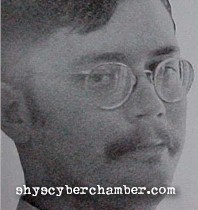 [
Edmund Kemper ]
Kemper preyed on hitch-hikers and used his knowledge of the freeways to drive
his victims to secluded murder sites. |
|
|
He rang back at 5am, told
the officer - whom he knew slightly from the Jury Room - who and where he was,
and that he had murdered eight people. "I have over 200 rounds of ammo in the
trunk and three guns," he bellowed down the line. "I don't even want to go near
it."
The officer kept him talking on the line while a colleague called the Colorado
Police. Kemper was still in full flow when he broke off to say that the booth
was surrounded by armed men.
Once Kemper started to talk, there was no stopping him. He waived his right to
an attorney and began to confess, in meticulous detail, to all the killings. The
confessions were put on tape and continued when Kemper returned to Santa Cruz.
When he'd finished talking, he went out with detectives - shadowed at a distance
by a group of newspapermen - to show them where he had hidden those parts of
victims that hadn't already turned up.
James Jackson, a public defender, was assigned to Kemper's case. It was a huge
task. Kemper had admitted to everything, taken the police to the bodies, showed
them personal items he had taken from the victims and handed over the murder
weapons he still had. Forensic teams had found bloodstains all over the seats
and the boot of the Galaxie.
Jackson's only hope was to present an insanity defense, based on the diagnosis
of schizophrenia Kemper had been given at the hospital. This was particularly
difficult task in Santa Cruz, where public confidence in the psychiatric
profession was at an all time low. Herbert Mullin had just been found guilty of
13 killings. Like Kemper, he had spent time in mental hospitals and been
released as cured.
Kemper certainly had no illusions about what lay ahead. The trial was just "a
matter to decide by which method I won't see society again.
And I certainly wouldn't trust me in society again." |
|
|
[
Edmund Kemper ]
Edmund Kemper wanted to join the police force after his release from the
mental institution. But the police turned him down, saying that he was simply
too big. He continued to spend many hours drinking in a cops' bar. |
|
|
The trial opened with a playing of
the confession tapes, but much of it was a procession of psychiatric witnesses.
For the defense, Kemper's sister Allyn testified to some of the strange events
from his childhood, and told how both she and her mother had suspected he had
some involvement in the killings of the young hitch hikers, especially when it
was revealed that the victims had been decapitated.
Kemper himself took to the stand to talk about his interior life. He came over
as shy and halting on the stand, not at all the wise cracking braggart revealed
on the confession tapes.
All the pleading, and Jackson's eloquence, had little effect. The jury took just
five hours to find Kemper guilty on all eight counts of murder.
There was no death penalty in California at the time, so Kemper was sentenced to
life imprisonment. The judge recommended that he never be set free. The sentence
did not disturb Kemper. Before his trial he said he had confessed because he
needed help and that in jail he'd be "locked up in a little room where I can't
hurt anybody and I'll be left to my fantasies."
There was no appeal. |
|
|
BACK TO TOP |
