|
|
A week later, on 6th November, a jogger discovered
the naked body of a young woman on the Chevy Chase Country Club golf course in
Glendale The dead girl had been strangled and sexually assaulted.
Police attempted to identify her by broadcasting an artist's sketch on a local
television news programme. Within minutes, a man called the police to say that
he believed the girl to be his daughter, Lissa Kastin, who had been missing from
home for three days. He was right.
Unlike Washington and Miller, twenty year old Lissa was not a prostitute, but
she had worked in Hollywood as a dancer and waitress, and presumably had come in
contact with many of the same people as the first two victims. Lissa had been
attacked by two men, and there was extensive bruising around her neck, wrists
and ankles. When Sergeant Frank Salerno viewed the body, he was in little doubt
that this was the work of the same killers who had murdered Washington and
Miller. |
 |
 [
Dolores Cepeda ]
Delores Cepeda was only twelve when her killers spotted her as she boarded a
bus. She was with her friend Sonja Johnson. |
|
|
News of the murders did cause a certain amount of
public concern, but since the victims had all been 'street people', it was easy
for respectable middle class Los Angeleans to distance themselves from their
deaths. |
|
|
[
Sonja Johnson ]
Sonja Johnson was fourteen years old and with Dolores Cepeda had
just stolen costume jewellery from a shop when they were abducted. |
|
|
That all changed on 20th November, with the
discovery of the bodies of Dolores Cepeda, aged twelve and fourteen year old
Sonja Johnson. |
|
|
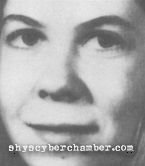 [
Kristina Weckler ]
Kristina Weckler was once Bianchi's neighbour. The twenty year old art
student studied in Pasadena and lived in Glendale. |
|
|
Hours after Dolores and Sonja had been found, a
third body was discovered in the hills overlooking Glendale. It belonged to
twenty year old student Kristina Weckler. All three had been victims of the
Hillside Stranglers.
News of these brutal killings, particularly those of the two school girls,
spread terror throughout the Los Angeles area. For the first time, ordinary
people in the city became aware that a serial killer was on the loose. The
police did not mention that they were certain two people were responsible for
the killings because they did not want the killers themselves to know that they
were aware of that fact. |
|
|
 [
Jane King ]
At twenty eight, Jane King was the Stranglers' oldest victim, but she looked
considerably younger than her years. She was a Scientology student who was
waiting at a bus when the Stranglers' spotted her. She also did part time work
as an actress and model. |
|
|
On 23rd November the naked body of a twenty eight
year old Scientology student, Jane King, was found dumped in some bushes beside
the Golden State Freeway. |
|
|
[
Lauren Wagner ]
Lauren Wagner was an eighteen year old business school student and was
studying to become a secretary. |
|
|
Six days later, eighteen year old Lauren Wagner,
also a student, was found strangled in Glendale. These latest victims had not
been sexually assaulted; they had been tortured and mutilated. The 'Stranglers'
tastes were becoming even more extreme.
As the press raged and the public panicked, the Los Angeles Police Department
formed the Hillside Strangler task force under the leadership of Lieutenant
Edwin Henderson. By the end of November the team had recruited more than 100
detectives from various Los Angeles law enforcement agencies, and a reward of
$140,000 had been offered for information leading to the arrest of the Strangler
(still singular, despite the certainty that two men were involved).
Evidence was thin on the ground. What was certain was that none of the victims
had been killed where they were found. They had been brought to their final
resting places by car and dumped. They had all been strangled, sexually
assaulted by two men, and in the later cases they had been beaten and tortured.
All appeared to have been carefully bathed after death, presumably with the
intention of removing clues. Police knew that one of the killers was a
non-secretor, but then again, so were twenty percent of the population in Los
Angles.
The task force did have a few leads, however. A boy came forward to say that, on
the evening of their disappearance, he had seen Dolores Cepeda and Sonja Johnson
approach a car and speak to someone through the passenger window. The boy's
description of the car was initially very vague, but under hypnosis he was able
to remember it was a large, two colour sedan. |
|
|
[
Identikit of the Hillside Strangler ]
In November 1977, the Glendale Police
- criticized by the press for their lack of
results and desperate for a lead - released this drawing of a man wanted in
connection with the death of Lissa Kastin. |
|
|
There was an even better lead on the Lauren Wagner
murder. Beulah Stofer, a middle-aged widow, telephoned the police to say that
she believed that she had unwittingly witnessed the girl's abduction.
On the evening of 29th November, the night Lauren Wagner disappeared, Mrs Stofer
had heard her dog barking in the front garden. She had gone out to investigate,
and when she looked across the street she had seen Lauren's car pull up. Seconds
later a large two coloured sedan had pulled up alongside and two men had got
out. They had gone up to Lauren's car and appeared to order her out. An argument
had ensued, during which Mrs Stofer heard Lauren say to the men, "You'll never
get away with this." Lauren had then got into the back of the sedan and it had
driven away. Mrs Stofer was able to give a reasonable description of the two
men: one was about forty years old, Latin looking with bushy hair; the other was
younger, perhaps thirty years old with acne scars on his neck.
Detective Sergeant Bob Grogan of the Hillside Strangler task force was sent to
interview Mrs Stofer. When he arrived at her home, he found her in a state of
hysteria. Minutes earlier, she had received a threatening phone call. A man with
a rough east coast accent had warned her that if she told anyone what she had
seen, she was as good as dead. Grogan had no doubt that Mrs Stofer had just been
speaking to one of the Hillside Stranglers. |
|
|
 [
Kimberly Martin ]
Kimberly Diane Martin was seventeen, was a prostitute who thought it was
safer working for an agency - calling herself Donna - rather than use a pimp. |
|
|
On 14 December, the Stranglers struck again. A
nude body was found on a building site on Alvarado Street in downtown Los
Angeles. She was identified as Kimberly Diane Martin, a seventeen year old
prostitute.
The previous evening, a downtown call-girl agency had received a request from a
client for the company of "a young blonde, preferably wearing black underwear".
The agency had taken the routine precaution of asking for the customer's
telephone number. The man gave a number, which he assured the agency was his
home at the Tamarind apartment building in Hollywood. If the agency had bothered
to check, they would have found that it in fact belonged to a payphone in the
Hollywood Public Library. But they didn't check, and dispatched Kimberly Martin
to Hollywood, with the promise of a $150 fee for her efforts. The next time she
was seen was on Alvarado Street, strangled and brutalized. |
|
|
 [
Cindy Lee Hudspeth ]
Cindy Lee Hudspeth was a twenty year old telephonist who had once worked in a
bar frequented by Buono. She was strangled and left in the boot of her car. |
|
|
There were no more stranglings in 1977, and the
police and the public started to relax and little. The, on 17th February 1978, a
yellow Datsun was found crashed on a cliff below the Angeles Crest Highway. At
first police assumed that it was an unreported accident, probably a stolen car,
but when they opened the boot they found the naked body of the car's owner,
twenty year old telephonist Cindy Hudspeth. She had been strangled and sexually
assaulted by two men, one of them a non-secretor.
Los Angeles was once again thrown into hysteria, but there were no more killings
during the summer and the uproar gradually subsided. And by winter, the citizens
of Los Angeles were convinced that the nightmare was finally over.
For the police, however, the job went on. They knew that the killings could
start again at anytime, and it was their responsibility to assume that the
Hillside Stranglers were still alive and well and living in the Los Angeles
area. But as the months passed, with on dead end after another, it became
increasingly obvious that the task force was getting nowhere.
The next chapter of the Hillside Strangler saga was set, not in the foothills of
Los Angeles, but more than 1,000 miles to the north in Washington state. |
|
|
[
Karen Mandic ]
Karen Mandic was a twenty two year old student at Western Washington
University who worked part time to pay for her studies. She met Bianchi while
working as a clerk at Fred Meyer's hardware store. |
|
|
Bellingham is a small industrial town on the
coast, less than 20 miles from the Canadian border With the population of around
50,000, it is a tight-knit, conservative community where violent crime is a
rarity. On 12th January 1979, however, the town was the scene of a brutal double
murder. The bodies of two university student, Karen Mandic and Diane Wilder,
both twenty two years old, were found in the back of a car. They had both been
strangled and sexually assaulted. |
|
|
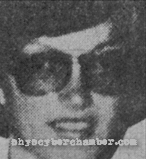 [
Diane Wilder ]
Diane Wilder was a twenty seven year old student who quit her teaching job to
study Arab culture at Western Washington University. She shared her student
residence with Karen Mandic, and accompanied her on the fateful night. |
|
|
The girls had been reported missing earlier that
day by Karen's boyfriend. He told the police that Karen and Diane had been hired
the previous evening by a man from a local security firm to house sit a property
in Bayside while the burglar alarm was being repaired. The job was supposed to
take only a couple of hours, and they were to be paid $100. Neither girl had
returned to their room at Western Washington University. The security guard's
name was Kenneth Bianchi. |
|
|
[
Kenneth Bianchi ] |
|
|
At first Police Chief Terry Mangan was not unduly
concerned. He assumed that the two girls had taken off somewhere for the
weekend, but he decided to make a few enquiries anyway. He checked first with
Mark Lawrence, owner of the Coastal Security Management, the only security
company of any size in the town. Lawrence told him that he did indeed have a
Kenneth Bianchi on his payroll and went on to describe him as a devoted family
man and a conscientious employee. However, he did stress that Bianchi had no
authority to go offering people house-sitting jobs.
Bianchi was called in and was extremely plausible. He flatly denied knowing
either Karen Mandic or Diane Wilder, and he certainly had not offered either of
them any sort of employment.
Mangan thanked Bianchi and allowed him to leave, but the detective had a gut
feeling that something was not quite right. He asked Lawrence if he had any
clients with property in Bayside. Lawrence said he had on that was currently
empty.
Mangan sent two of his officers to the house, 'just to have a look around'. When
they arrived, everything seemed to be in order, but they did notice a single,
man's footprint on the tiled floor of the kitchen. The print was still damp,
suggesting that someone had been in the house within the past few hours.
By midday, there was still no sign of the girls and Mangan was becoming more
than a little uneasy. He decided to broadcast a description of Karen's car, a
green Mercury Bobcat. Four hours later he received a call from a woman saying
that she had seen the car parked in a cul-de-sac on the outskirts of town.
Detective Bill Geddes was the first officer on the scene. He approached the car
and peered in through the rear window. There, huddled together in the back seat,
were the bodies of the two missing girls.
Bianchi was the most obvious suspect and he was duly brought in for questioning.
He repeated his claim that he had never met either of the girls. He was relaxed,
polite and co-operative, and for a while his interrogators suspected that they
must have the wrong man. |
|
|
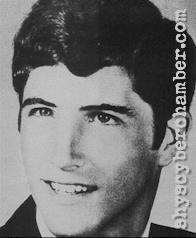 [
Kenneth Bianchi ]
At high school in Los Angeles, Kenneth Bianchi prided himself on his clean
cut image. But underneath, he was mutating into a psychotic killer. |
|
|
Police asked permission to search Bianchi's home,
and he agreed without hesitation. During their search, detectives found no
evidence to suggest that Bianchi was a sex murderer, but they did find ample
proof that he was a thief. Stashed in the basement of the house was a variety of
electrical goods that matched those reported stolen from places where he had
worked as a security guard.
The discovery of the stolen goods was a godsend to the Bellingham police. They
charged Bianchi with grand theft and sent him to the county jail to await trial.
This gave them time to start building a murder case against him.
The first items of evidence to connect Bianchi with the killings were found in
his truck - the keys to the Bayside property and a scarf, similar to one known
to belong to Diane Wilder.
The most damning evidence, however, was gathered during the autopsies of the two
girls. They had both been strangled from above and behind, suggesting that the
killer had been standing above them. Perhaps he had been following them down a
flight of stairs, the pathologist conjectured. A forensic team returned to the
Bayside property and, on the steps leading down to the basement, they found a
few long, blond hairs that could well have come from the head of Karen Mandic,
and a single pubic hair that matched those of Kenneth Bianchi.
Back at the police laboratory, detailed examination of the dead girl's clothes
produced carpet fibres that matched those found in the empty house. There was no
longer any doubt that both the victims had been at the property and in all
probability they had died there.
Despite the wealth of physical and circumstantial evidence against him, Bianchi
remained resolute in his denial. As he sat in his cell at the county jail,
Bellingham police ran a nationwide check on his background.
They knew that he had arrived in Bellingham about seven months earlier and,
since he still held a California driver's license, they assumed that he had
lived there before moving north. |
|
|
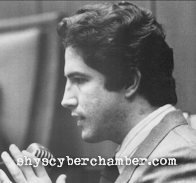 [
Kenneth Bianchi ]
Kenneth Bianchi, having already confessed to several Hillside stranglings
testifies at Buono's preliminary hearing in Los Angeles, in July 1981. He signed
a plea bargain agreement to testify against his cousin; in return he would not
be executed. |
|
|
Police Chief Terry Mangan telephoned the Los
Angeles Police Department to see if anything was known about Kenneth A. Bianchi.
His call was taken by Lieutenant Phillip Bullington, an officer who had worked
on the Hillside Strangler task force. As he listened to the description of the
Bellingham murders, he felt certain that there must be a connection. Bullington
ran a check on Bianchi's drivers license and found that he had lived in the same
Glendale apartment building where Kristina Weckler had once lived, where Kim
Martin was last seen, and directly across the street from where Cindy Hudspeth
had lived and from where she had been abducted.
Officers from the Hillside Strangler task force flew up to Bellingham and within
hours of their arrival they had identified jewellery found at Bianchi's house as
having belonged to murder victims in the Los Angeles area. Even before they
interviewed Bianchi, they were in no doubt that he was one of the Hillside
Stranglers. |
|
|
[
Angelo Buono ]
Angelo Buono seen here in 1979, moved into his house on Colorado
in 1975. He lived there alone, but brought in many young women
for sex - he was considered the neighbourhood stud. |
|
|
As evidence continued to pile up against him,
Kenneth Bianchi continued to protest his innocence, and talked freely and openly
to his interrogators. During hours of interviews, one name cropped up again and
again: Angelo Buono - Bianchi's cousin. Detectives, who knew that two men had
been responsible for the Los Angeles killings, were immediately interested in
the man who Bianchi described as "his one true friend in Los Angeles'.
Angelo Buono turned out to be a car upholsterer who lived at 703 Colorado Street
in Glendale. He was forty five years old, swarthy and had bushy hair, matching
the description given by Beulah Stofer of one of the men she had seen abducting
Lauren Wagner. Buono did have a criminal record, but only for minor offences,
certainly nothing violent. As the police looked deeper, however, they discovered
that Angelo Buono was a very unsavory character indeed. He had been married four
times and fathered eight children, who referred to him as 'The Buzzard'. All of
his wives had left him after being systematically beaten and sexually abused. He
was also reputed to be a pump for under aged prostitutes, girls whom he would
usually batter and sexually abuse for his own gratification.
Angelo Buono obviously had a taste for sexual violence, but knowing that was a
far cry from proving that he was one of the Hillside Stranglers. He was
interviewed several times by police, and his house was searched, but detectives
found nothing that could connect him with the killings.
In Bellingham, the case against Bianchi that had once looked so watertight was
showing signs of falling apart. He had changed the emphasis of his story from
denying having killed Karen Mandic and Diane Wilder, to having no recollection
of killing the two girls. Doubts were raised about his sanity and in February, a
month after his arrest, his lawyer called in a series of psychologists and
psychiatrists to examine him. These included Dr Donald Lunde of Stanford
University medical School, a specialist in criminal insanity and author of
Murder and Madness. |
|
|
[
Dr John G. Watkins ]
Dr John G. Watkins, a professor of psychology at the University of Montana,
examined Kenneth Bianchi under hypnosis on 21st March 1979 at William County
Jail. |
|
|
Dr Lunde concluded that Bianchi might be suffering
from a genuine case of amnesia and suggested that he undergo a course of
hypnosis, supervised by Dr John Watkins of the Department of Psychology at the
University of Montana. Bianchi, helpful as ever, readily agreed to co-operate.
Dr Watkins hypnotized Bianchi, and during the session Bianchi's voice, posture
and manner suddenly changed. The charming, relaxed facade fell away as he became
agitated and aggressive. It was a phenomenon that Dr Watkins had witnesses
several times before.
"Are you Ken?" Watkins asked.
"Do I look like Ken?" Bianchi snapped.
"I'm Steve, Steve Walker."
Watkins was soon convinced that he had unearthed a second personality in his
patient. 'Steve Walker' was the antithesis of Kenneth Bianchi, a crude, sadistic
bully who proceeded to boast about the murders he had committed both in
Bellingham and California.
"Killing a broad don't make any difference to me," 'Steve' bragged. "Killing
any-fuckin-body doesn't make any difference to me."
Under hypnosis, not only did Bianchi/Walker confess to the murders, he
implicated Angelo Buono as his partner. "Angelo is my kind of man," Steve
beamed. "There should be more people in the world like Angelo."
He described in lurid detail how he and Buono had driven around at night, using
fake police badges, and arresting young women. Once the women were in the car,
he explained, they had been taken to Buono's house, tortured, forced to have sex
with both of them and then murdered. The favoured method of killing had been
strangulation, but they had experimented with several other techniques,
including gassing and lethal injections, but none of these had been successful.
When they had finished with their victims, they had bathed their bodies
carefully to remove any clues, driven them to some remote spot and dumped them. |
|
|
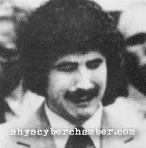 [
Kenneth Bianchi ] |
|
|
Dr Watkins finished his session with Bianchi and
immediately pronounced that his patient was suffering from 'multiple personality
disorder'. Two of the Los Angeles detectives, Sergeants Pete Finnigan and Frank
Salerno, from the Hillside Strangler task force, who were sitting in on the
session, were less convinced.
Finnigan and Salerno were certain that Bianchi was manipulating the doctor, but
they also realised that their case was in jeopardy. If Bianchi and his lawyers
could convince the judge that he was insane, he would never stand trial and
would probably be sent to a mental institution for a few years, and then let
loose to do it all over again. Worse still, if Bianchi were found to be insane,
his testimony against Angelo Buono would be inadmissible in court, and without
it the police simply didn't have a case.
It was absolutely essential for the prosecution to discredit the multiple
personality theory. To this end, they brought in their own expert, Dr Martin
Orne of the Department of Psychiatry of the University of Pennsylvania Medical
School. Orne, aware of the advantages to Bianchi of his multiple personality
being confirmed, set a number of traps for him. Bianchi fell into all of them
and, at the end of the session, the psychiatrist announce that he was certain
that Bianchi was faking.
To further undermine the multiple personality theory, police found a wide range
of books on psychology at Bianchi's house, including several volumes of hypnotic
techniques, along with the novels Sybil and the Three Faces of Eve, both of
which dealt with multiple personalities. Bianchi had obviously planned his
defense in great detail. The prosecution team was delighted, but knew that they
were still on shaky ground. They did not want to go to court with two
conflicting medical experts competing for the jury's confidence. They needed
absolute proof that Bianchi was a fraud.
The discovery that finally discredited the multiple personality claim came from
Detectives Salerno and Finnigan as they continued their meticulous research into
Bianchi's past. They came across a transcript of Bianchi's academic record from
Los Angeles City College. It was littered with inconsistencies. To start with,
his date of birth was incorrect, and it listed him as having attended courses
that were held before he had even arrived in Los Angeles. It was clearly a
forgery. The two detectives obtained an original transcript from the registrar
at the college: to their delight, they found that it belonged to a psychology
graduate from California State University - a man called Steve Walker. |
|
|
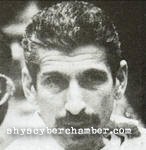 [
Angelo Buono ] |
|
|
Angelo Buono survived his first year in Folsom
Prison, California, in almost continual isolation. Fearing that he would be
killed, he refused to leave his windowless cell to take exercise. Instead, he
sat surrounded by the hundreds of volumes of the transcript of his trial,
attempting to read them. |
|
|
[
Kenneth Bianchi ]
Kenneth Bianchi is taken into the courtroom at Bellingham, Washington, for
the arraignment in the murder of Karen Mandic and Diane Wilder. After his
arrest, he had first been held at Bellingham City Jail, then Whatcom County
Jail. |
|
|
Kenneth Bianchi was kept away from other prisoners
at Washington's Walla Walla Prison. His fascination with alternative identities
continued. He legally changed his name to Anthony D'Amato - the surname is
Italian for 'of the beloved' - and then to Nicholas Fontana. These changes,
however, did not prevent other inmates knowing he was one of the Hillside
Stranglers.
Always restless, Bianchi began to petition for a transfer to another prison.
Officials at Walla Walla in Washington State were prepared to grant the request,
and arrangements were made to transfer Bianchi to a less harsh jail at Reno,
Nevada.
His adoptive mother planned to move to Nevada to be able to visit him every day.
Bianchi's bags were already packed when the Los Angeles Attorney General's
Office heard of the scheme and ensured that the transfer was halted. |
|
|
BACK TO TOP |
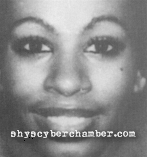 [
Yolanda Washington ]
 [
Judy Miller ]
 [
Lissa Kastin ]
